
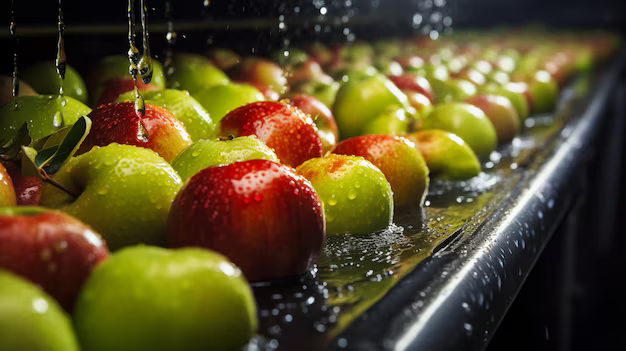
Consumer awareness of food safety has never been higher — and nowhere is this more consequential for food manufacturers than at the very first stage of fruit processing: washing. Pesticide residues, surface bacteria, dust, soil particles, and wax coatings applied during post-harvest handling are all present on fresh fruit arriving at a processing facility, and every one of them poses a risk to the safety, shelf life, and regulatory compliance of the finished product. For fruit processors, pulp plant operators, and juice manufacturers across Pakistan, investing in the right fruit washing machine is not a preliminary step before real processing begins — it is the quality and safety foundation on which everything that follows depends. Understanding how these machines remove pesticides and surface contaminants, and what separates effective washing from merely wetting the fruit, is essential knowledge for any food processor serious about product integrity.
What is a Fruit Washing Machine?
A fruit washing machine is an industrial food processing system designed to clean fresh fruit at scale — removing pesticide residues, soil, dust, surface bacteria, fungal spores, and post-harvest chemical treatments from the fruit surface before the fruit enters the main processing line for pulping, juicing, slicing, or packaging.
Unlike simple water rinse systems, industrial fruit washing machines combine mechanical action, controlled water flow, and in many configurations, approved washing agents or ozone treatment to achieve genuine surface decontamination rather than superficial wetting. The machines are engineered to handle large volumes of fresh fruit continuously without causing bruising, skin damage, or physical deterioration that would compromise the quality of the downstream processed product. In Pakistan’s growing fruit processing industry — where mango, citrus, guava, tomato, and apple processing operations are expanding to serve both domestic and export markets — the fruit washing machine occupies a critical food safety position at the intake stage of every processing line.
Key Features & Benefits
A well-specified industrial fruit washing machine delivers measurable food safety, product quality, and operational advantages over manual or rudimentary washing methods:
- High-Pressure Spray and Immersion Washing Combination: The most effective fruit washing machines combine an initial immersion stage — where fruit soaks in a controlled water bath that loosens soil and surface residues — with high-pressure spray nozzles that mechanically dislodge loosened contaminants from the fruit surface, achieving a two-stage cleaning action that neither method alone can replicate.
- Brush Roller Systems for Surface Scrubbing: For fruits with firm, textured, or irregular surfaces — citrus, apples, mangoes — rotating brush roller assemblies provide gentle mechanical scrubbing that removes embedded soil, wax coatings, and surface residues from crevices and surface irregularities that water spray alone cannot reach, significantly improving pesticide removal efficacy.
- Ozone or Food-Safe Chemical Dosing Capability: Quality fruit washing machines support integration with ozone generation systems or approved food-grade sanitising agent dosing units that enhance pesticide breakdown and microbial load reduction beyond what water washing alone achieves — critical for export-grade produce destined for markets with stringent maximum residue limit requirements.
- Continuous Flow Design for High Throughput: Industrial fruit washing machines are built for continuous operation — fruit enters at one end and exits clean at the other in a steady, uninterrupted flow that matches the intake rate of downstream pulping, sorting, or packaging equipment without creating bottlenecks at the processing line entry point.
- Food-Grade Stainless Steel Construction Throughout: All product-contact surfaces — water tanks, conveying systems, brush rollers, spray headers, and discharge sections — are fabricated from food-grade stainless steel that resists corrosion from washing water, sanitising agents, and fruit acids while supporting the thorough cleaning between production runs that food safety audits require.
Industrial Applications
The fruit washing machine serves a wide range of food processing operations across Pakistan and the broader South Asian fruit processing industry:
- Mango Pulp and Puree Processing Plants washing freshly harvested Sindhri, Chaunsa, and Langra mangoes before pulping to remove post-harvest fungicide treatments, soil contamination, and surface bacteria — protecting both the pulp quality and the compliance status of export-destined product against the maximum residue limits enforced by Gulf, European, and North American import regulators
- Citrus Juice and Concentrate Facilities cleaning oranges, kinnow, and lemon before juice extraction — where surface pesticide and wax residues on citrus peel can transfer directly into pressed juice if not removed before extraction
- Tomato Ketchup and Paste Manufacturing washing fresh tomatoes at high throughput volumes before crushing and pulping — removing field soil, pesticide spray residues, and surface microbial load that would otherwise compromise the microbiological quality of the finished tomato product
- Apple and Stone Fruit Processing cleaning apples, peaches, and plums before slicing, pulping, or juice extraction in processing facilities supplying the domestic packaged juice and export dried fruit sectors
- Fresh-Cut Fruit and Vegetable Packaging Operations washing produce destined for retail fresh-cut packaging where food safety standards are particularly stringent — consumers of fresh-cut products have no further cooking step to eliminate residual contamination before consumption
- Guava and Tropical Fruit Pulp Plants processing guava, papaya, and passion fruit for domestic and export pulp markets — fruits that are frequently harvested with significant soil and pesticide residue loads that must be removed before pulping to protect both product safety and equipment hygiene
How to Choose the Right One
Selecting the correct fruit washing machine for your processing facility requires matching the machine’s design and capability to your specific fruit type, throughput volume, and food safety requirements:
- Match the Washing Mechanism to Your Fruit Type: Different fruits require different washing approaches. Firm, textured fruits like citrus, apples, and mangoes benefit from brush roller scrubbing in addition to spray and immersion washing. Soft, delicate fruits like berries, figs, and ripe guava require gentler immersion and low-pressure spray systems that clean without causing bruising or skin damage that would compromise downstream pulp quality. Specify the washing mechanism based on your primary fruit — not on what is cheapest or most available.
- Calculate Throughput Capacity Against Your Processing Line: Your fruit washing machine must be able to clean fruit at a rate that matches or exceeds the intake capacity of your downstream pulping, sorting, or juice extraction equipment. Determine your peak hourly fruit intake in kilograms and select a machine rated for at least 20 percent above this figure to provide operational headroom during harvest season peak volumes.
- Assess Pesticide Removal Requirements Against Your Target Market: If your finished product is destined for export to the EU, GCC, or other regulated markets, your washing process must demonstrate measurable reduction of pesticide residues to within the maximum residue limits of those markets. This may require ozone treatment or approved sanitising agent integration in addition to mechanical washing — confirm your washing system’s validated pesticide reduction efficacy before finalising the specification.
- Evaluate Water Consumption and Recirculation Design: Industrial fruit washing consumes significant volumes of water. Quality machines incorporate water recirculation systems with filtration that reduce fresh water consumption per kilogram of fruit processed — an operational cost consideration that also supports environmental compliance requirements increasingly enforced at Pakistan’s food processing facilities.
- Confirm Hygiene Design and Cleaning Access: The washing machine itself must be cleanable to food safety standards between production runs. Confirm that the machine’s water tank, brush rollers, spray headers, and conveying surfaces are all fully accessible for inspection and cleaning — and that the machine’s design excludes hollow sections, dead-end pipework, and other configurations where stagnant water and microbial growth can develop undetected.
Why Quality Matters
A fruit washing machine that fails to remove pesticide residues effectively is not simply underperforming — it is creating a food safety liability that passes directly into every kilogram of pulp, juice, or fresh-cut product leaving your facility. In Pakistan’s increasingly regulated food export environment, where maximum residue limit testing is conducted by import country authorities on every consignment, a washing process that provides only superficial rinsing rather than genuine surface decontamination will eventually produce a failed test result — with consequences that include shipment rejection, facility blacklisting, and loss of export certification that can take years to recover.
Beyond pesticide removal, washing machine build quality directly affects the hygiene of the machine itself. A poorly designed water tank with inadequate drainage accumulates organic matter and develops microbial growth that recontaminates the fruit being washed — turning the cleaning stage into a source of contamination rather than its removal. Brush rollers that cannot be thoroughly cleaned between runs transfer pathogens from one production batch to the next. These are not theoretical risks — they are documented failure modes in facilities that prioritised purchase price over food safety design.
For fruit processors competing in Pakistan’s domestic retail market and building export relationships with international buyers, the food safety credibility of your washing stage is a commercial asset that your facility’s reputation depends on.
Conclusion
The role of a fruit washing machine in a food processing line extends far beyond simple cleaning — it is the primary pesticide removal and surface decontamination stage that determines the food safety baseline of every product batch your facility produces. Choosing the right machine, with the correct washing mechanism for your fruit type, adequate throughput capacity, validated pesticide reduction performance, and food-grade construction that supports genuine hygiene assurance, is one of the highest-value specification decisions a fruit processing entrepreneur or plant manager can make. For food processors currently designing or upgrading their fruit intake and preparation infrastructure, you can explore fully specified, food-grade configurations and technical options for a dependable Fruit Washing Machine engineered to meet the food safety, throughput, and hygiene demands of professional fruit processing operations.