

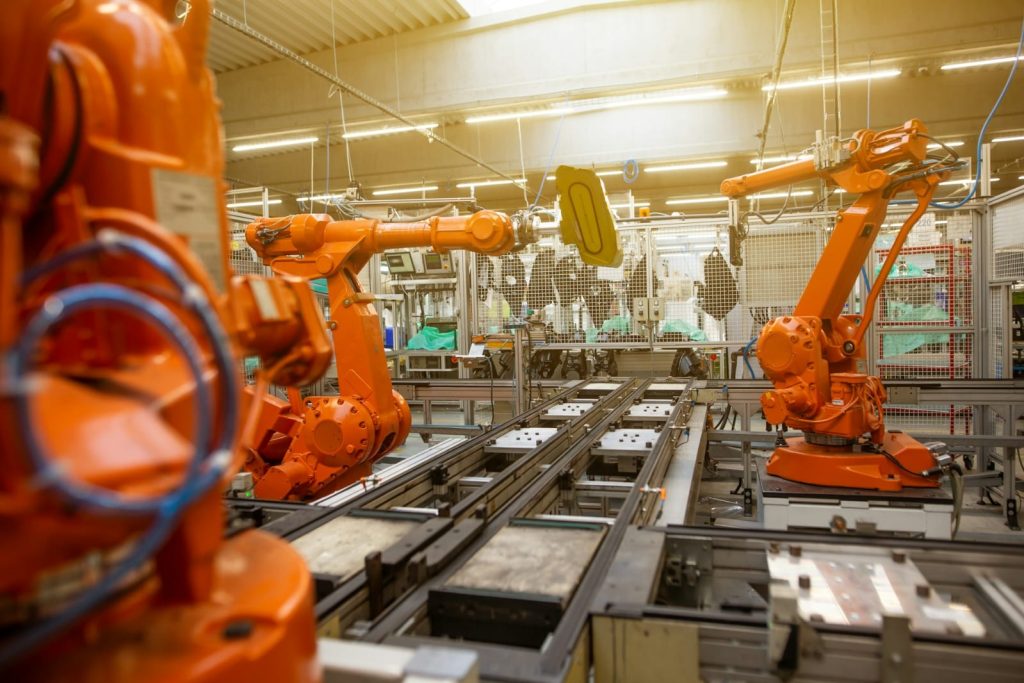
The brochure version of Industry 4.0 looks tidy. A clean dashboard, a single vendor logo in the corner, sensors and controllers and robots speaking the same language. The factory floor version is messier. On any given automated line in Europe today, you will find a programmable logic controller from one manufacturer, servo drives from another, pneumatic actuators from a third, vision systems from a fourth, and a safety relay rack assembled from yet another supplier. The line works. The procurement team behind it does not always have it so easy.
This vendor mosaic is the part of digital transformation that rarely gets written about. Most of the conversation around modern manufacturing focuses on what factories produce, or how AI is changing what gets monitored. The quieter shift is happening in how factories actually buy, across the long list of suppliers that any real production environment depends on.
The vendor map nobody draws
Walk a typical packaging line, automotive sub-assembly cell, or pharmaceutical filling station and you will count, conservatively, eight to fifteen distinct brands on the bill of materials. The control architecture might be Allen-Bradley or Siemens or Schneider. The drives are often Danfoss, ABB, or Control Techniques. The HMI is its own decision. Pneumatic components such as cylinders, valves, fittings and air-preparation units are typically Festo, SMC, or Camozzi. Sensors split across Balluff, IFM, Pepperl+Fuchs, and a dozen smaller specialists. Then come connectors, terminal blocks, cabinet accessories, and the long tail of consumables.
Each of those brands has its own ordering portal, its own technical helpline, its own lead-time conventions, its own end-of-life cadence. Some require authorized-distributor accounts. Some have minimum order quantities that make sense for OEM volumes but punish a maintenance team replacing a single failed component. The brand fragmentation is not a bug of how modern manufacturing evolved. It is a feature, with specialization producing better components within each domain, but it transfers complexity downstream to whoever has to source them.
When one supplier is already multi-brand
The complexity does not always live across companies. Sometimes it lives inside one.
Consider Schneider Electric. A single line might use a Modicon PLC, a Magelis HMI, an Altivar drive, a TeSys contactor stack, and an EcoStruxure software layer tying them together. They share a corporate parent, a sales channel, and a marketing language. But Modicon came from a 1996 acquisition. Telemecanique products, still in production and still present in European factories, came from a 1988 merger. Square D was absorbed in 1991. Invensys, with its Foxboro and Triconex industrial control assets, in 2014. Inside the Schneider corporate envelope, a procurement officer is already working across what used to be five or six separate companies, each with its own legacy SKU structure.
This is why specialists in the European distribution market, like those handling Schneider Electric components across multiple legacy and current product families, have become procurement infrastructure in their own right. They flatten the internal complexity of a major manufacturer into a single search interface. They cross-reference active product codes with the legacy ones they replaced. They publish stock availability without making the buyer log into three different B2B portals.
The same logic applies to ABB, with its inheritance of ASEA, Stromberg, and Bailey. It applies to Rockwell Automation, sitting on top of decades of Allen-Bradley product evolution. Almost every major automation brand is, internally, a small museum of acquired companies whose components still ship in volume.
The pneumatic parallel
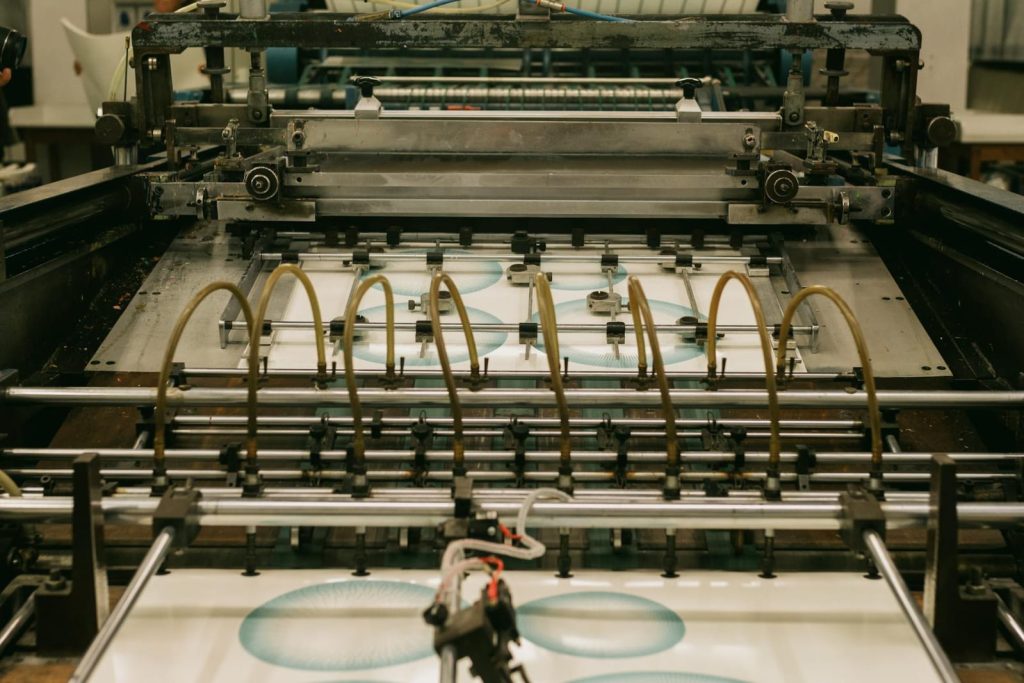
Run a parallel inventory of the same factory and you find a second, equally complex map: the pneumatic and motion-control layer. Cylinders, rotary actuators, grippers, vacuum components, proportional valves, air preparation units. This is a domain where the dominant brands, including Festo, SMC and Camozzi, have built deep and largely independent catalogs that rarely intersect electronically with the electric-automation stack.
The implications for procurement are quietly significant. A maintenance engineer chasing a failed pneumatic gripper is not browsing the same supply chain as the engineer chasing a failed drive on the same line. They might call different distributors, fill different forms, wait different lead times. Even within the pneumatic world, cross-referencing between Festo and Camozzi or between SMC and a smaller competitor is a manual exercise: datasheets, dimension tables, port size compatibility, mounting hole patterns.
The platforms that consolidate this work, offering catalogs covering pneumatic components from specialists such as Camozzi alongside electric-automation parts in the same checkout, solve something more than convenience. They eliminate the time-tax of switching mental models between two very different supplier ecosystems for what is, from the factory’s point of view, a single production line.
The procurement layer of Industry 4.0
If most Industry 4.0 narratives focus on what happens on the line, with better data, predictive maintenance, and digital twins, the parallel story is what happens behind it. A procurement layer is emerging that abstracts away the vendor fragmentation manufacturers have lived with for thirty years.
What does that layer look like in practice? It looks like multi-brand catalogs with real, queryable stock. It looks like cross-reference databases linking active SKUs to discontinued ones, and components from brand A to functional equivalents from brand B. It looks like buying interfaces that accept part numbers, MPNs, photos, or natural-language descriptions equally well. It looks like delivery commitments measured in 24-48 hours of continental ground transit, not in the four-to-six-week air-freight windows that used to be acceptable when the nearest authorized distributor was on a different continent.
European platforms like ITAutomationParts illustrate one shape this is taking: combining catalog breadth across electric and pneumatic automation domains, supported by direct supplier relationships rather than third-party reselling, and operating at the kind of logistic distance that lets a Tuesday-morning failure get an answer by Wednesday afternoon.
What comes next
The next phase is already visible. AI-driven cross-reference engines are starting to suggest functional substitutes for end-of-life components in seconds, where a senior engineer once spent half a day with catalogs and a calculator. API integrations between buyer ERPs and supplier platforms are moving from pilot projects into production, automating the routine reordering of consumables and standard spare parts. Predictive maintenance systems are pre-staging replacements before failure events happen.
None of this changes the underlying truth that modern manufacturing is, and will remain, a multi-brand exercise. The brands themselves are specialists for good reasons. What is changing is the layer between them and the people who have to make them work together. That layer used to be human, built on phone calls, fax-era distribution networks, and tribal knowledge passed between maintenance technicians. It is becoming digital, multi-brand by design, and finally fast enough to keep pace with the production floor it serves.
