

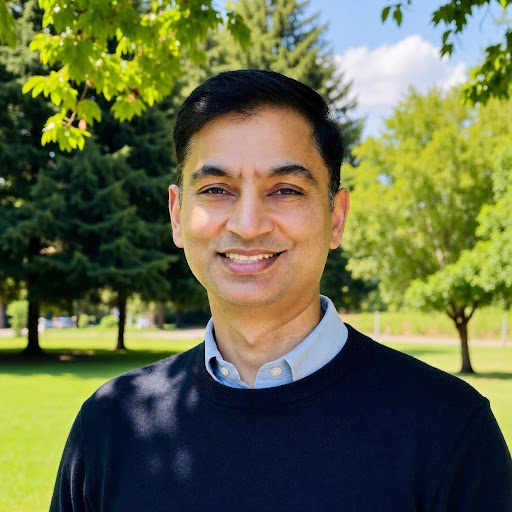
Kamal Mann | Author, The Trusted Machine
Most engineering textbooks are written from theory toward practice. The Trusted Machine: AI, Automation, and Security in Industry 4.0 by Kamal Mann works the other way around. It begins with twenty years of production experience across telecommunications, financial infrastructure, and industrial IoT, and builds outward into a framework that working engineers and students can actually use. That distinction is precisely why faculty at Wilmington University’s College of Technology have begun directing students to specific chapters, with formal curriculum adoption currently under consideration.
A Gap That Standard Programmes Have Not Filled
Industrial AI presents engineering problems that conventional curricula are not designed to address. In a factory or on a remote edge node, machine learning systems do not operate under the controlled conditions most academic models assume. Connectivity is intermittent, failure carries physical consequences, and security threats arrive from operational technology networks never built with cybersecurity in mind.
The Trusted Machine addresses this directly, covering how distributed systems and machine learning behave in industrial environments, how zero-trust security frameworks apply to edge platforms, and how automation can be designed to remain reliable when conditions degrade. Faculty at Wilmington University’s College of Technology have identified chapters on edge computing, zero-trust architectures, and industrial automation security as directly relevant to their students’ professional preparation, pointing to the book as a resource that bridges what universities teach and what industry requires.
“The value of an industrial AI system is not measured in its performance under ideal conditions. It is measured in its behaviour when conditions degrade.”
Written from the Inside Out
The credibility of The Trusted Machine lies in its origins. Kamal Mann spent five years as Principal Security Authority and Lead Architect on GE Digital’s Predix Mobile SDK, designing systems that managed heavy industrial assets in remote locations entirely without network connectivity. Before that, he architected carrier-grade VoIP and IMS platforms across European telecommunications networks and led engineering on a high-availability distributed computing gateway processing millions of financial transactions globally. The zero-trust frameworks, fault-tolerant architectures, and edge computing paradigms the book describes are not illustrative examples. They are the systems he built, and the failure modes he encountered under real operational pressure.
A Reference for Practitioners and Students Alike
The adoption at Wilmington University reflects a broader recognition that The Trusted Machine occupies a rare position in the industrial AI literature. It is rigorous enough to serve as an academic reference and practical enough to be useful to working engineers navigating the same challenges. As organisations across manufacturing, energy, and logistics move from experimentation to production-scale industrial AI, the questions the book addresses are becoming the central questions of the field. Faculty directing students to its chapters are preparing them for a professional environment where those questions will define their work.
About the Author
Kamal Mann is a Senior Staff Software Engineer at Apple Inc. with twenty years of experience across telecommunications, financial infrastructure, industrial IoT, and AI-driven automation. He is the author of The Trusted Machine: AI, Automation, and Security in Industry 4.0, currently being used by faculty at Wilmington University’s College of Technology as a reference for students in engineering and technology programmes.