

Commercial staircases face continuous pressure from heavy foot traffic, frequent hand contact, moisture, cleaning chemicals, and changing weather conditions near building entrances. Therefore, every railing component must provide dependable strength, corrosion resistance, and long-term visual appeal.
This updated SS handrail fittings guide for 2026 explains the most important fittings for commercial staircases, the differences between stainless steel grades, current railing design trends, and the key factors buyers should evaluate before choosing a supplier.
Architects, contractors, railing installers, distributors, and property developers can also explore the complete range of railing solutions available from UNIKIM.
Why SS Handrail Fittings Remain the Commercial Standard
Commercial properties such as hotels, hospitals, shopping centres, offices, schools, and transportation facilities cannot rely on weak or poorly manufactured handrail hardware. Loose brackets, rusted connectors, or unstable posts can create safety risks, inspection failures, and costly maintenance problems.
SS handrail fittings remain a preferred solution because they offer several important advantages.
Strong Corrosion Resistance
Stainless steel resists rust, humidity, rain, and regular cleaning more effectively than many painted or untreated metals. Grade 304 stainless steel performs well in most indoor commercial environments. Meanwhile, Grade 316 provides stronger protection against salt, moisture, chlorides, and demanding outdoor conditions.
For coastal buildings, pool areas, exterior staircases, and humid environments, SS316 is normally the more reliable choice.
Reliable Structural Strength
Commercial handrail systems must tolerate repeated loading and lateral pressure. Properly designed brackets, connectors, base plates, posts, and anchors help distribute these forces throughout the railing structure.
However, fitting quality alone does not guarantee compliance. Contractors must also consider the substrate, fixing method, post spacing, handrail height, and applicable local building standards.
Lower Maintenance Requirements
Painted hardware may chip, peel, fade, or require recoating. Stainless steel does not depend on a painted surface for corrosion protection. As a result, building owners can reduce refinishing expenses while maintaining a clean architectural appearance.
Routine cleaning and periodic inspection are usually sufficient for correctly specified stainless steel systems.
Flexible Architectural Appearance
Stainless steel fittings work with glass, wood, wire rope, round tubes, square tubes, and mixed-material railing systems. Buyers can choose brushed satin, polished mirror, matte black, or customised surface treatments to coordinate with different interior and exterior designs.
This versatility makes stainless steel suitable for both modern commercial spaces and more traditional staircase designs.
Main Types of SS Handrail Fittings for Commercial Projects
A successful railing system requires more than one type of component. Each fitting performs a specific structural or decorative function.
1. Handrail Brackets
Handrail brackets connect the top rail to a wall, glass panel, post, or supporting structure. Since users repeatedly apply pressure to the handrail, brackets must remain stable without bending or loosening.
Common options include:
- Wall-mounted handrail brackets
- Post-mounted brackets
- Glass-mounted brackets
- Adjustable saddle brackets
- Fixed-angle brackets
- Round and square tube brackets
For complete post-supported staircase solutions, buyers can explore the post handrail system product range.
The correct bracket depends on the handrail profile, mounting surface, expected load, finish, and installation environment.
2. Elbows, Tees, and Tube Connectors
Commercial staircases rarely follow one continuous straight line. They include slopes, corners, landings, returns, and changes in direction. Elbows and tube connectors create smooth transitions between these sections.
Common connector types include:
- Adjustable elbows
- Fixed 90-degree elbows
- Straight tube connectors
- Tee connectors
- Flush joiners
- Handrail returns
- Corner connectors
Precision manufacturing is important because poorly aligned connectors can create visible gaps, sharp edges, or uneven handrail joints.
3. Base Plates and Base Covers
Base plates secure railing posts to concrete, steel, timber, or another supporting surface. Because the base plate transfers force from the post into the substrate, it is one of the most important structural elements in the entire system.
A commercial-grade base plate should offer:
- Suitable plate thickness
- Correct anchor-hole positioning
- Accurate welding
- Stable post alignment
- Appropriate stainless steel grade
- Compatibility with the mounting surface
Decorative base covers can conceal anchors and improve the finished appearance, but they should never replace proper structural fixing.
4. Cable Railing Fittings
Cable railing systems provide a clean, open appearance while preserving visibility around staircases, balconies, terraces, and walkways. A complete system may require tensioners, terminals, wire rope, threaded fittings, swage components, and intermediate supports.
Buyers can review UNIKIM’s cable railing systems and compatible stainless steel cable products for commercial or residential projects.
Projects combining natural materials with metal components may also benefit from cable railing with wood posts. This configuration offers a warmer appearance while retaining the strength and minimal visual obstruction of stainless steel cable.
Cable systems require accurate tensioning. Therefore, installers must follow the engineering design and avoid excessive spacing or uncontrolled cable deflection.
5. Glass Railing Fittings
Glass railing systems are widely used in commercial lobbies, hotels, shopping centres, office buildings, and premium staircases. They help maximise natural light and maintain an open architectural appearance.
A professional glass railing systems supplier should offer components such as:
- Glass clamps
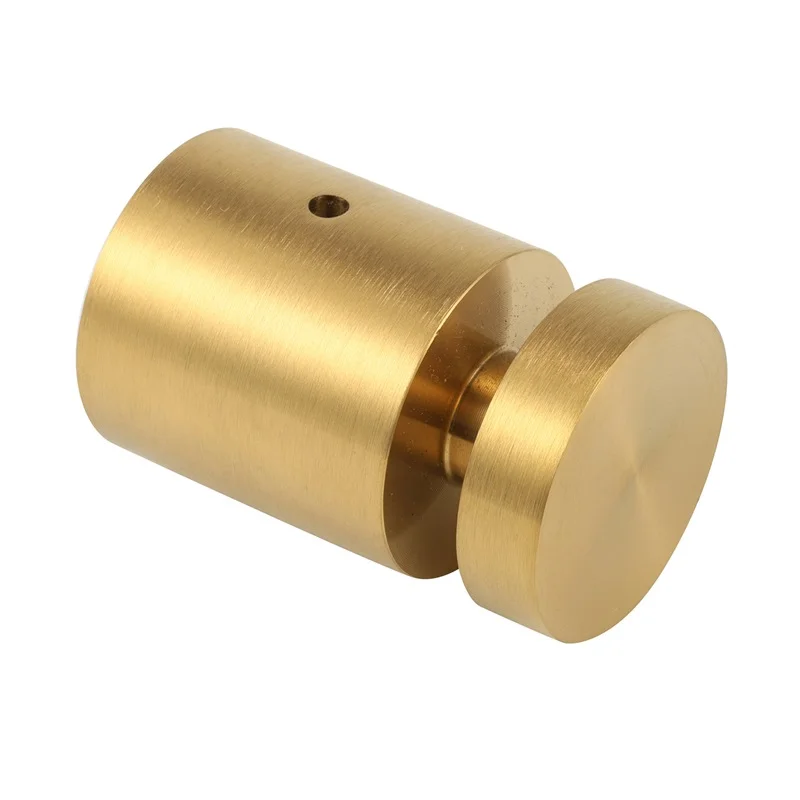
- Standoffs
- Spigots
- Base shoes
- Slot tubes
- Handrail brackets
- Glass adapters
- End caps
- Supporting posts
For projects requiring a minimal and uninterrupted appearance, consider frameless glass railing systems.
Glass thickness, hole position, edge distance, panel dimensions, mounting substrate, and fitting capacity must all be confirmed before installation. Working with an experienced commercial glass railing supplier can help reduce specification mistakes and installation delays.
6. End Caps and Decorative Components
End caps close open tube ends and create a more professional finish. Although these parts may appear decorative, they also prevent dirt, moisture, and debris from entering hollow handrail tubes.
Available styles may include:
- Flat end caps
- Domed end caps
- Flush-fit caps
- Welded caps
- Press-fit caps
- Decorative finials
Hotels, retail spaces, offices, and luxury developments often place particular importance on these finishing details because visitors can easily notice incomplete or poorly matched railing components.
Choosing Between SS304 and SS316
Material grade is one of the most important purchasing decisions.
SS304 Handrail Fittings
SS304 is suitable for many indoor commercial applications, including:
- Office staircases
- Shopping centres
- Interior hotel railings
- Schools
- Hospitals
- Indoor walkways
- Dry residential environments
It provides a practical balance between corrosion resistance, strength, availability, and price.
SS316 Handrail Fittings
SS316 contains molybdenum, which improves resistance to chlorides and aggressive environmental conditions. It is generally recommended for:
- Coastal projects
- Poolside railings
- Marine environments
- Exterior staircases
- High-humidity locations
- Areas exposed to de-icing salt
- Industrial environments
Using SS304 in a highly corrosive environment may create staining, surface corrosion, or premature maintenance requirements. Therefore, buyers should base material selection on the actual project environment rather than price alone.
What Buyers Should Check Before Selecting a Supplier
Choosing the right SS handrail fittings supplier is just as important as choosing the correct product.
Confirmed Material Composition
Request documentation that identifies the stainless steel grade. Reliable suppliers should be able to provide material information, test reports, or other supporting documentation when required.
Do not rely only on product appearance. SS304, SS316, and lower-grade materials can look similar before installation.
Quality-Control Procedures
A dependable manufacturer should inspect critical factors such as:
- Product dimensions
- Thread accuracy
- Welding quality
- Surface finish
- Material composition
- Load-related specifications
- Packaging condition
- Batch consistency
Importers and contractors should ask how the supplier manages incoming material inspection, production checks, and final quality control.
Certification and Project Documentation
Commercial buyers may require ISO, CE, SGS, material test reports, technical drawings, or project-specific documentation. Requirements vary by market, so buyers should confirm which documents are available before placing an order.
Certificates should also be checked for relevance and validity rather than accepted without review.
Manufacturing Capacity
Large projects often involve hundreds or thousands of components. A supplier with in-house manufacturing may provide greater control over production schedules, custom dimensions, surface finishing, and quality consistency.
Buyers evaluating Chinese manufacturing options can review the UNIKIM company profile on Made-in-China for additional supplier and product information.
OEM and Customisation Support
Commercial staircase projects frequently require non-standard components. Useful customisation capabilities include:
- Custom dimensions
- Special hole positions
- Modified mounting plates
- Branded packaging
- Laser-marked logos
- Satin or mirror polishing
- Matte black finishing
- Project-specific drawings
- Sample development
A capable OEM supplier should review drawings before production and identify potential manufacturing or installation problems early.
Complete Product Availability
Managing several suppliers can create differences in finish, tolerance, packaging, and delivery schedules. A manufacturer offering brackets, posts, cables, glass fittings, connectors, and handrail components can simplify procurement.
A broader range also makes it easier to maintain a consistent finish across the full staircase installation.
Major SS Handrail Fitting Trends in 2026
Commercial railing design continues to move toward cleaner lines, mixed materials, and simplified installation.
Matte Black Finishes
Matte black fittings are increasingly used in hotels, offices, retail interiors, restaurants, and modern residential developments. The dark finish creates strong contrast with clear glass, light-coloured walls, wood, or concrete.
UNIKIM offers a dedicated collection of matte black railing designs for projects requiring a more contemporary appearance.
For cable-based designs, explore matte black cable railing systems. Glass railing projects can also use products such as the matte black stainless steel glass handrail cap.
The coating process, surface preparation, and handling method should be checked carefully because inconsistent finishing can lead to colour variation or premature surface damage.
Frameless Glass Integration
Architects continue to specify frameless glass where visibility, light, and minimal visual obstruction are important. This trend increases demand for precisely machined standoffs, base shoes, glass clamps, and slot-tube handrails.
Consulting an experienced glass railing system manufacturer during the design stage can help coordinate glass thickness, fitting dimensions, panel layout, and installation tolerances.
Mixed-Material Railing Systems
Wood, glass, stainless steel, and cable are increasingly combined within one staircase design. For example, wood-post cable railing systems combine natural visual warmth with slim stainless steel infill.
Contractors can also compare different components through the broader cable railing product category.
Dark Architectural Hardware
Dark metal hardware is no longer limited to small decorative projects. It now appears in large commercial interiors, hospitality spaces, and premium residential developments.
The matte black design collection includes options that coordinate with black window frames, dark lighting fixtures, and modern interior finishes.
Sustainability and Long Service Life
Stainless steel provides a long service life and is recyclable. When fittings remain functional for many years, building owners may reduce the need for frequent replacement, refinishing, and material disposal.
However, sustainability depends on correct material selection, responsible manufacturing, efficient shipping, proper installation, and ongoing maintenance.
Why Supplier Capability Affects Project Performance
A railing fitting may be physically small, but its failure can affect an entire staircase. Incorrect threads, poor welding, mismatched finishes, or late delivery can delay installation and increase project costs.
For contractors, developers, distributors, and importers, a capable supplier should provide:
- Accurate product specifications
- Technical drawings
- Stable material quality
- Consistent surface finishing
- OEM manufacturing support
- Suitable packaging
- Production updates
- Export documentation
- Reasonable lead times
- Responsive communication
Product demonstrations and installation references may also help buyers evaluate a supplier. The UNIKIM Railings YouTube channel provides additional product and railing-system content.
Practical Specification Checklist
Before ordering SS handrail fittings, confirm the following information:
- Installation environment
- Indoor or outdoor application
- Required stainless steel grade
- Handrail tube diameter or profile
- Post dimensions
- Glass type and thickness
- Cable diameter and tensioning method
- Mounting substrate
- Surface finish
- Required quantity
- Applicable building standards
- Technical drawing requirements
- Packaging requirements
- Delivery schedule
- OEM or branding requirements
For balustrade projects, buyers should also distinguish between handrail fittings, posts, infill components, and vertical supports such as a baluster.
Providing complete project information allows the supplier to recommend more suitable components and prepare a more accurate quotation.
Benefits for Contractors, Importers, and Developers
Selecting appropriate stainless steel fittings at the beginning of a project can create several commercial benefits.
Faster Installation
Compatible components and accurate dimensions reduce on-site cutting, reworking, and alignment problems.
Lower Procurement Risk
A complete supplier reduces the need to coordinate finishes and tolerances across multiple manufacturers.
Better Long-Term Appearance
Correctly specified stainless steel maintains a professional appearance with routine cleaning and maintenance.
Improved Project Consistency
Purchasing posts, brackets, connectors, cables, and glass fittings from one source can improve visual and dimensional consistency.
Greater Customisation Flexibility
OEM support allows project teams to develop specialised fittings instead of forcing a standard component into an unsuitable application.
Reduced Maintenance Exposure
Correct material selection can reduce rust, staining, coating damage, and premature component replacement.
Final Summary
Commercial staircases operate in demanding, highly visible environments. Therefore, their handrail systems require fittings that combine strength, corrosion resistance, dimensional accuracy, and architectural quality.
SS304 remains a suitable choice for many indoor applications, while SS316 generally provides stronger protection for coastal, outdoor, humid, and chloride-exposed environments. Brackets, connectors, base plates, glass fittings, cable terminals, and end caps must all be selected as part of one coordinated system.
Most importantly, buyers should evaluate the supplier’s manufacturing capacity, material control, technical documentation, customisation support, quality procedures, and delivery reliability before confirming an order.
Review this complete guide to the best SS handrail fittings for commercial staircases when planning specifications or comparing suppliers.
For product recommendations, drawings, OEM manufacturing, wholesale pricing, or project quotations, contact UNIKIM with your required material grade, dimensions, finish, quantities, drawings, and installation environment.
Frequently Asked Questions
What are SS handrail fittings?
SS handrail fittings are stainless steel components used to connect, support, secure, and finish railing systems. Common examples include brackets, elbows, connectors, glass clamps, standoffs, base plates, flanges, end caps, cable terminals, and post supports.
Why are SS handrail fittings suitable for commercial staircases?
They provide strong corrosion resistance, structural durability, low maintenance requirements, and a professional appearance. These qualities make them suitable for offices, hotels, hospitals, shopping centres, schools, transport facilities, and public buildings.
Which stainless steel grade is best for handrail fittings?
SS304 is generally suitable for indoor and relatively dry environments. SS316 is usually recommended for outdoor, coastal, marine, poolside, and high-humidity applications because it provides stronger resistance to chlorides and corrosion.
Can stainless steel fittings be used outdoors?
Yes. However, the material grade and finish must match the environment. SS316 is usually the preferred option for demanding exterior installations. Regular cleaning is still necessary, especially in coastal or polluted areas.
What fittings are required for a commercial staircase?
The final component list depends on the design. It may include posts, base plates, base covers, handrail brackets, elbows, tube connectors, end caps, glass clamps, standoffs, wire rope, cable tensioners, and mounting anchors.
Are matte black stainless steel fittings durable?
They can be durable when the base material, surface preparation, coating system, and curing process are properly controlled. Buyers should ask the supplier about coating specifications and handling recommendations.
Can SS handrail fittings be customised?
Yes. Manufacturers may offer custom dimensions, hole positions, mounting plates, finishes, logos, packaging, and project-specific designs. Custom production normally requires detailed drawings, quantities, and application information.
What information should I send when requesting a quotation?
Provide the product type, stainless steel grade, dimensions, tube profile, glass thickness, cable diameter, surface finish, quantity, installation environment, packaging requirements, and technical drawings when available.
How should stainless steel handrail fittings be maintained?
Clean the surface periodically using mild detergent, clean water, and a soft cloth. Avoid abrasive tools and unsuitable chemicals. Coastal and industrial installations may require more frequent cleaning.
How can I verify fitting quality before placing a bulk order?
Request samples, drawings, material documentation, surface-finish confirmation, inspection information, packaging details, and production photographs. For major projects, buyers may also arrange pre-shipment inspection or third-party testing.