

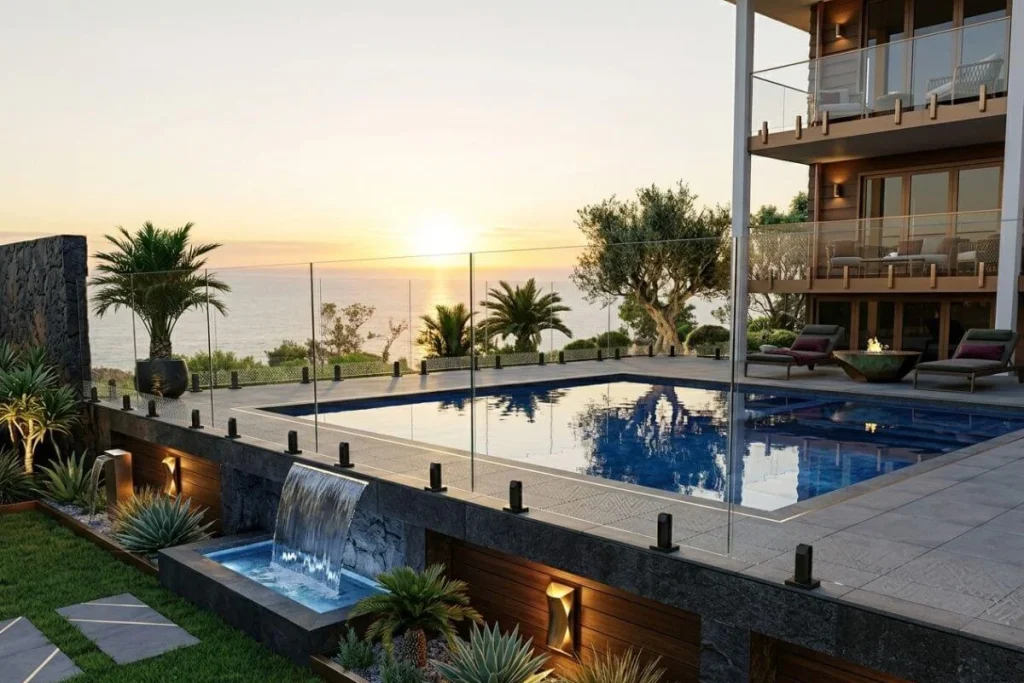
Modern architectural pool designs have largely moved away from bulky aluminum posts and traditional wooden barriers. Today, developers, architects, and homeowners heavily favor clean, frameless glass pool fencing to preserve sweeping backyard views while satisfying essential safety codes. When designing these minimalist structures, contractors must choose between two primary hardware configurations: floor-mounted (surface-mounted) glass spigots and side-mount (fascia-mounted) spigots.
This hardware decision involves more than just visual preference. Your chosen mounting method directly influences structural load paths, installation difficulty, total project cost, drainage, and long-term corrosion resistance. While looking over alternative sleek configurations like stainless steel cable railing systems is common for surrounding patios, pool perimeters require dedicated solid barriers to prevent accidental access.
                      [Glass Spigot Engineering Paths]
                                     │
           ┌─────────────────────────┴─────────────────────────┐
           ▼                                                   ▼
[Floor-Mounted Spigots]                             [Side-Mount Spigots]
- Vertical load distribution                        - Edge-fascia load distribution
- Standard surface anchoring                        - Maximizes interior floor space
- Faster alignment tweaking                         - Keeps drainage pathways clear
Anatomy of the Hardware: Structural Definitions
Floor-Mounted Glass Spigots
Floor-mounted spigots are heavy-duty stainless steel clamps bolted directly into horizontal substrates like concrete slabs, tiled pool surrounds, or timber decking joists. The hardware grips the bottom edge of thick safety glass panels, allowing the glass to function as a self-supporting barrier. To ensure structural longevity, builders utilize robust hardware like 304 and 316 handrail brackets to tie adjacent wall connections securely into the landscape.
Side-Mount Glass Spigots
Side-mount (or fascia-mount) spigots anchor into the vertical face of concrete edge beams, deck rim joists, or structural balcony slabs. Because the glass panels hang off the side of the structure, this layout keeps the walking area around the pool perimeter completely free of hardware brackets.
Technical Performance Analysis
| Engineering Metric | Floor-Mounted Spigots | Side-Mount Spigots |
| Load Distribution | Direct vertical weight transfer | Lateral torque on edge fascia |
| Footprint Impact | Uses ~2 to 4 inches of deck perimeter | Preserves 100% of usable floor area |
| Installation Speed | Fast (standard top-down drilling) | Complex (requires precise vertical alignment) |
| Drainage Pathway | Water flows around individual spigots | Unobstructed edge-runoff path |
| Upkeep Access | Easy (fittings are fully accessible) | Difficult (requires reaching over deck edges) |
Deep Dive: Structural Loads, Drainage, and Costs
1. Structural Strength and Load Paths
Floor-mounted spigots transfer lateral wind pressures and physical impact loads downward into the ground. This direct path makes engineering calculations simple and provides excellent resistance against high wind gusts.
Side-mount spigots exert significant leverage on the outer edge of your structural slab. If the deck fascia is unreinforced or showing signs of aging, heavy glass panels can warp or compromise the edge over time. Therefore, side-mounting requires a rigorous check of your structural foundation. For adjacent multi-level steps, contractors often combine these glass assemblies with specialized hardware found in a cable railing installation kit to handle specific handrail loads.
2. Space Efficiency and Visual Minimalism
If you are working with a tight balcony or a compact backyard layout, side-mount spigots preserve every inch of walking space. This layout is a popular choice for high-end infinity pools and modern commercial hotels.
Floor-mounted systems introduce small hardware details along the pool deck line. However, developers can easily blend these surface fixtures with contemporary design themes by choosing modern finishes like matte black powder-coated brackets or a high-end stainless steel glass clamp 304 316 golden round glass clamp.
3. Drainage and Environmental Upkeep
Water accumulation next to pool hardware speeds up mineral staining and surface scale buildup. Floor-mounted spigots lift the glass panels roughly two inches off the deck, allowing pool splashes and rainwater to drain out underneath the fence line.
Side-mount assemblies keep the pool deck completely flat, allowing water to flow off the edge without encountering any brackets. However, inspecting the fasteners on side-mounted spigots requires looking over the edge of the deck structure. For properties that combine glass fences with tensioned wire accents, reviewing our maintenance guide on how to maintain stainless steel cable railing helps keep all your stainless hardware looking pristine.
Material Specifications: Glass and Alloys
Choosing the right raw materials is critical to passing local pool safety code reviews.
Glass Thickness Standards
Frameless pool installations typically utilize thick, heavy-duty safety glass. The specific panel configuration depends on your local code requirements:
- 10 mm Tempered Glass: Used for standard, low-exposure residential indoor installations.
- 12 mm Tempered Glass: The global standard for outdoor frameless pool fences, offering an optimal balance of structural rigidity, optical clarity, and weight.
- 15 mm+ Laminated Glass: Specified for high-exposure commercial resort decks or properties located in high-wind zones.
Choosing the Right Stainless Steel Alloy
Pool water chemicals and salt mist will quickly tarnish low-grade metals. For long-lasting durability, choose marine-grade alloys designed for wet environments:
                        [Stainless Steel Alloys]
                                    │
       ┌────────────────────────────┴────────────────────────────┐
       ▼                                                         ▼
[Grade 304 Stainless]                                     [Grade 316 Stainless]
- Best for inland residential pools                       - Mandatory for saltwater pools
- High humidity resistance                                - Contains 2% Molybdenum for pitting defense
- Standard cost efficiency                                - Best choice for marine & coastal zones
Contractor Installation Guide for Floor-Mounted Spigots
Because floor-mounted spigots offer lower labor costs and high structural reliability, they remain the default choice for most residential projects.
1.Perimeter Marking:Layout Map.
Mark out the pool fence line on the concrete deck using high-visibility chalk lines. Keep a consistent 2-to-3-inch clearance gap away from the pool edge slab.
2.Anchor Hole Excavation:Core Drilling.
Drill holes into the concrete or stone base using a professional diamond core drill rig. Clean out all dust and slurry from the holes to ensure proper chemical adhesion.
3.Spigot Leveling:Hardware Placement.
Set the spigot bases into the drilled holes. Use a precision spirit level and adjustment screws to make sure the hardware stands perfectly vertical.
4.Grouting or Gasket Securing:Structural Anchor.
Pour high-strength non-shrink structural grout into the holes around the spigots (or tighten mechanical expansion anchors), and let the foundation cure completely.
5.Panel Insulation and Locking:Glass Setting.
Slide the 12 mm glass panels carefully into the spigot channels using rubber isolation pressure plates. Tighten the set screws to lock the panels securely into place without any direct metal-to-glass contact.
Expanding Your Modern Outdoor Living Space
When mapping out your pool surround, consider blending different high-end architectural fixtures across your yard:
- Auxiliary Lounge Decks: Installing a robust stainless steel deck cable railing system around a nearby dining area keeps the space open and well-ventilated.
- Multi-Level Steps: Reviewing the best stainless steel cable railing system for stairs ensures your yard transitions match your modern poolside aesthetic.
- DIY Projects: For standalone outdoor renovations, reading up on stainless steel cable railings for DIY decks provides helpful, practical tips for your installation crew.
- Main Entrance Coverings: Installing a stainless steel glass canopy system over your patio doors coordinates beautifully with frameless glass fencing.
- Front Steps: Integrating a front porch vertical interior cable railing fence kit for stairs adds a clean architectural transition leading down to the pool deck.
Engineering Tip: For long, continuous outdoor perimeter sections, specifying a high-tensilestainless steel cable for outdoor railingrun helps lower your total material costs while maintaining a clean look.
Supply Chain Management and Sourcing Partnerships
Using certified, high-quality hardware ensures your pool fence passes its safety inspection on time and stands up to the elements for decades.
To browse specialized structural components and check material options, explore our comprehensive guides on ss cable railing kits and the latest top trends in stainless steel cable railing systems for 2026.
For international commercial sourcing, review our certified testing metrics on the Unikim Made-in-China factory profile. You can also watch hardware structural testing videos on the Unikim Railings YouTube channel, or stay informed on upcoming product updates by following the official Unikim LinkedIn corporate page.
Final Verdict
Choosing the right spigot system comes down to balancing your project budget with your specific layout requirements. Floor-mounted spigots are the more practical choice for most residential swimming pool fences because they offer straightforward installation, simpler maintenance, and high structural stability at a lower total cost. However, if your design demands absolute visual minimalism and every inch of deck space matters, side-mount spigots provide a striking floating aesthetic that justifies the extra engineering complexity.
To browse our current product inventory, visit the URailing homepage. You can read more about our rigorous factory load testing on our about us page, or get in touch with our technical team via the URailing contact page to review project specifications.
FAQs
Can I install floor-mounted spigots directly onto an existing wooden deck?
Yes, but you must add extra solid wood or metal reinforcement blocks beneath the deck boards. Spigots exert intense leverage under high wind loads, so anchoring them only into thin surface deck boards can cause the wood to split or pull loose over time.
Why is marine-grade 316 stainless steel mandatory for pool environments?
Pool water contains corrosive chemicals like chlorine and salt. Grade 316 stainless steel includes 2% molybdenum, which provides exceptional defense against chemical pitting, surface oxidation, and tea-staining.
How much space should be left between the bottom of the glass panel and the pool deck?
Most building codes require a standard gap of roughly 2 inches (50 mm). This space allows pool splashes, dirt, and heavy rainwater to clear the deck quickly without pooling against the glass base.
Do floor-mounted spigots require structural grouting during installation?
When anchoring into solid concrete, using an engineering-grade, non-shrink chemical epoxy or structural grout ensures the spigot base remains perfectly rigid and completely free of movement.