

The personal-development genre has expanded into one of the most widely read areas of nonfiction. Readers now have access to countless books promising greater happiness, improved productivity, stronger relationships, emotional healing, and professional success. However, the large number of available titles can also make it difficult to identify books that offer genuine depth rather than familiar motivational advice.
A valuable personal-development book should do more than provide temporary encouragement. It should introduce meaningful ideas, challenge established assumptions, and help readers examine their habits, choices, experiences, and definitions of success. The strongest books in this field often remain relevant because they address lasting human concerns such as purpose, discipline, uncertainty, emotional resilience, and the ability to rebuild after adversity.
The following five titles approach personal growth from distinctly different perspectives. Together, they demonstrate that development is not limited to achievement or productivity; it can also involve patience, acceptance, healing, self-awareness, and the courage to create a more intentional life.
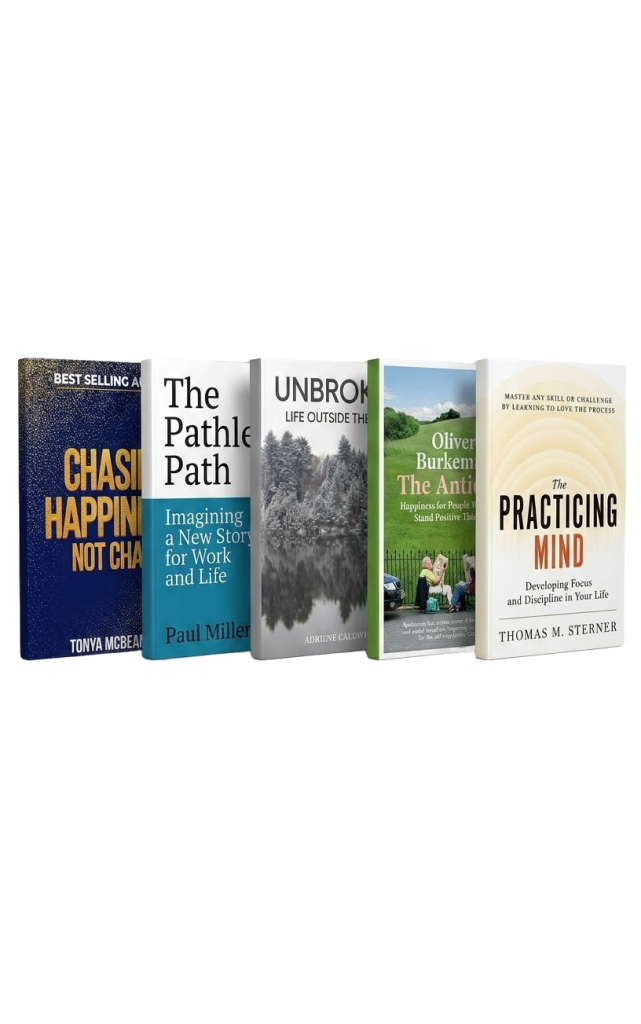
In The Practicing Mind, Thomas M. Sterner presents personal growth as a process built through patience, concentration, and consistent practice. Sterner is an author, speaker, coach, and founder of the Practicing Mind Institute, whose work focuses on discipline and present-moment awareness.
The book explains that people often become so concerned with reaching a goal that they lose patience with the process required to achieve it. Sterner encourages readers to focus on steady improvement rather than perfection or immediate results. His approach is especially relevant for those dealing with distraction, frustration, or unrealistic expectations about progress.
Oliver Burkeman’s The Antidote: Happiness for People Who Can’t Stand Positive Thinking offers a thoughtful challenge to the culture of constant optimism. Burkeman is a British author and journalist known for writing about psychology, productivity, happiness, mortality, and the limitations of conventional self-help.
Rather than suggesting that negative emotions should always be eliminated, Burkeman explores how accepting uncertainty, discomfort, and failure may lead to greater emotional stability. The book provides an intelligent alternative to advice based entirely on positive thinking and encourages readers to develop a more honest relationship with life’s difficulties.
Tonya McBean’s Chasing Happiness, Not Chaos focuses on the movement from emotional instability toward greater clarity, healing, and intentional living. McBean is an author whose work addresses personal transformation, resilience, and the emotional patterns that influence people’s decisions and relationships.
The book encourages readers to examine why chaos can become familiar and why choosing peace may require difficult but necessary changes. Its themes are especially relevant for those seeking healthier boundaries, greater self-awareness, and freedom from patterns that repeatedly disrupt their emotional well-being.
In The Pathless Path, Paul Millerd examines the traditional expectations surrounding work, ambition, and professional success. Millerd is an independent writer and former strategy consultant whose work explores freedom, identity, meaningful work, and unconventional approaches to life.
Drawing on his own decision to leave a conventional career, Millerd questions whether promotions, income, status, and productivity automatically create fulfillment. The book is particularly relevant for readers facing burnout, career uncertainty, or the realization that the path they have followed may no longer reflect what they genuinely value.
In Unbroken: Life Outside the Lines, Adriene Caldwell presents a deeply personal exploration of trauma, survival, identity, and resilience. Caldwell’s writing draws from difficult life experiences and reflects on the long process of moving forward after adversity.
The book acknowledges the lasting impact of childhood trauma, family instability, foster care, and emotional hardship without allowing those experiences to become the final definition of a person’s life. Its strength lies in its honesty and its recognition that healing is rarely simple or immediate. It offers a meaningful perspective for readers interested in stories of survival, perseverance, and personal reconstruction.
These five books demonstrate the remarkable range of modern personal-development writing. The Practicing Mind teaches readers to respect gradual progress, while The Antidote shows that emotional well-being does not require denying fear or uncertainty. The Pathless Path invites readers to question inherited definitions of success, and Chasing Happiness, Not Chaos examines the choices required to create emotional peace. Unbroken: Life Outside the Lines reveals the strength involved in surviving hardship and rebuilding a sense of identity.
What connects these titles is not a single formula for success but a shared commitment to meaningful personal examination. Each book recognizes that growth can take many forms. It may involve becoming more disciplined, accepting what cannot be controlled, leaving an unfulfilling path, breaking destructive patterns, or finding the courage to rebuild after painful experiences.
For readers seeking personal-development books with substance, emotional relevance, and distinct perspectives, these five works provide an accessible and thought-provoking collection. They remind us that meaningful change is rarely created by motivational slogans alone. It begins with reflection, honesty, consistent effort, and a willingness to reconsider how life has been understood and lived.
