

Driveway Resurfacing vs. Replacement
A driveway takes more abuse than almost any other part of a property. It absorbs the weight of vehicles every day, bakes under summer sun, and then gets hit with freeze-thaw cycles all winter. Eventually, every driveway shows its age — but that doesn’t always mean it’s time for a full teardown.
Homeowners often default to one of two extremes: patch it forever, or rip it all out and start over. The smarter approach sits in the middle, and knowing which option fits your situation can save thousands of dollars and a lot of unnecessary stress.
Is the Problem on the Surface or Underneath?
Asphalt and concrete driveways are built in layers. Marini Paving CT On top is the wearing surface — the part you see and walk on. Underneath is the base, a compacted layer of gravel or stone designed to support the surface and handle drainage.
Most cosmetic issues — fading, minor surface cracking, small potholes, discoloration — are surface-level problems. These can typically be fixed with resurfacing (also called an overlay), where a new layer of asphalt or a resurfacing compound is applied over the existing driveway.
Structural issues are a different story. If you’re seeing any of the following, the base itself may be compromised, and resurfacing won’t fix it for long:
- Wide cracks that run in multiple directions (often called “alligator cracking”)
- Sections of the driveway that sink, shift, or feel uneven underfoot
- Standing water that pools in the same spots after every rain
- Cracks that reappear in the same place shortly after a patch job
When the base has failed, a fresh layer on top is like putting a new coat of paint over a wall with a crumbling foundation — it looks fine for a short while, then the same problems resurface, literally.
The Case for Resurfacing
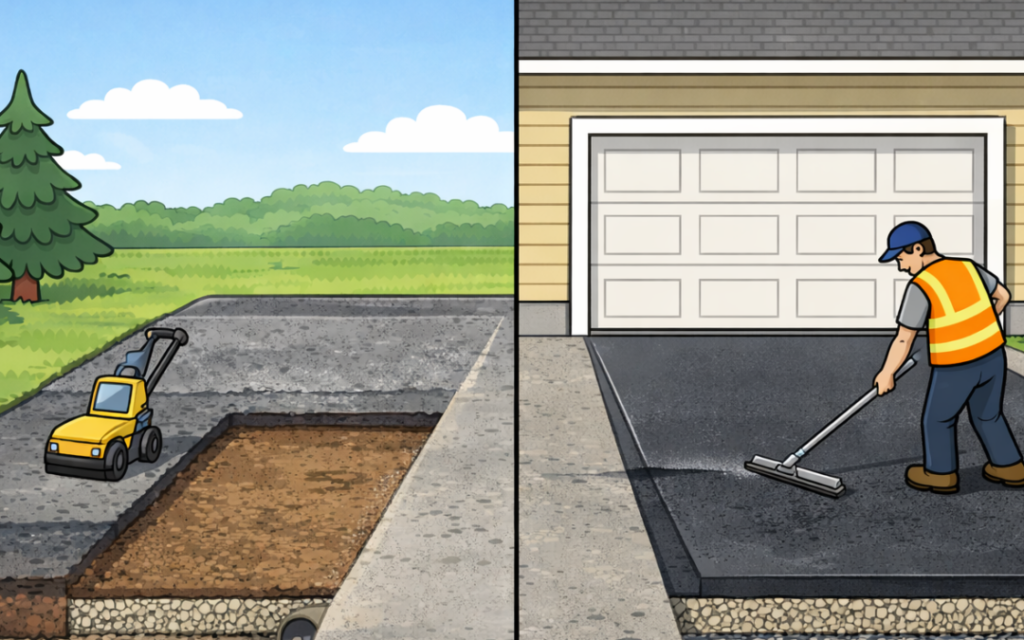
Resurfacing makes sense when the base is sound but the surface has taken a beating from years of sun, salt, and traffic. The benefits are straightforward:
Cost. Resurfacing typically runs 40–60% less than a full replacement, since you’re not paying for excavation, base repair, and disposal of old material.
Speed. A resurfacing project can often be completed in a single day for a residential driveway, compared to several days for a full replacement (excavation, base prep, paving, and curing time).
Extended lifespan. A well-done overlay, paired with regular sealcoating every 2–3 years, can add 8–15 years to a driveway’s life.
The catch is that resurfacing is only as good as what’s underneath it. A reputable contractor will inspect the base before recommending this route — and should be upfront if they think it’s not the right fix.
The Case for Full Replacement
Full replacement means removing the existing driveway down to the base (or replacing the base entirely), regrading for proper drainage, and installing fresh material from the ground up.
This is the right call when:
- The driveway is more than 20-25 years old and has multiple structural issues
- Drainage problems have caused erosion or washout beneath the surface
- You’re changing the driveway’s footprint, shape, or material (e.g., switching from gravel to asphalt, or adding a paver border)
- Previous patches and overlays have failed repeatedly
Yes, it’s a bigger investment upfront. But a properly installed driveway — with correct base depth, compaction, and slope for drainage — can last 20-30 years with routine maintenance, which often makes it the more cost-effective choice over the long run.
Questions to Ask Before Hiring a Contractor
Whichever direction you’re leaning, the contractor’s assessment matters more than the price quote. A few questions worth asking during an estimate:
What does the base look like, and how do you know?
A contractor who can explain what’s happening beneath the surface — not just what they see on top — is doing their due diligence.
How will this affect drainage?
Water is the number one enemy of any driveway. Improper grading is one of the most common causes of premature failure.
What’s your timeline for sealcoating after installation?
Fresh asphalt typically needs to cure for 6-12 months before sealcoating. A contractor who tells you to seal it immediately may not have your driveway’s long-term health in mind.
Can I see examples of similar projects?
Photos of completed driveways — especially ones similar in size, slope, or material to yours — give you a realistic expectation of the finished product.
A Regional Note: Climate Matters
Where you live plays a bigger role in this decision than most people realize. In regions with harsh winters — like Connecticut and the broader Northeast — freeze-thaw cycles are one of the most aggressive forces acting on a driveway. Water seeps into small cracks, freezes, expands, and widens the crack a little more with every cycle. This is why a driveway that looks “fine” in October can develop significant new cracking by spring.
Contractors who work regularly in these climates — companies like Marini Paving & Masonry in Connecticut, for example — tend to build in extra base depth and drainage considerations specifically to account for this. If you’re in a similar climate, it’s worth asking any contractor you’re considering how their approach accounts for seasonal freeze-thaw stress, since a method that works fine in a milder climate may not hold up the same way in yours.
This is also where sealcoating earns its keep. A properly timed sealcoat acts as a protective barrier against water intrusion, road salt, and UV damage — the three biggest contributors to premature cracking in cold-climate driveways. Whether you go the resurfacing or replacement route, ask your contractor how sealcoating fits into the maintenance plan afterward.
Conclusion
There’s no universal right answer between resurfacing and replacement — it genuinely depends on the condition of what’s under the surface, your budget, and how long you plan to stay in the home. The best move is getting an honest, base-level assessment from a contractor before committing either way. A small upfront investment in a proper inspection can save you from paying for the wrong fix twice.