
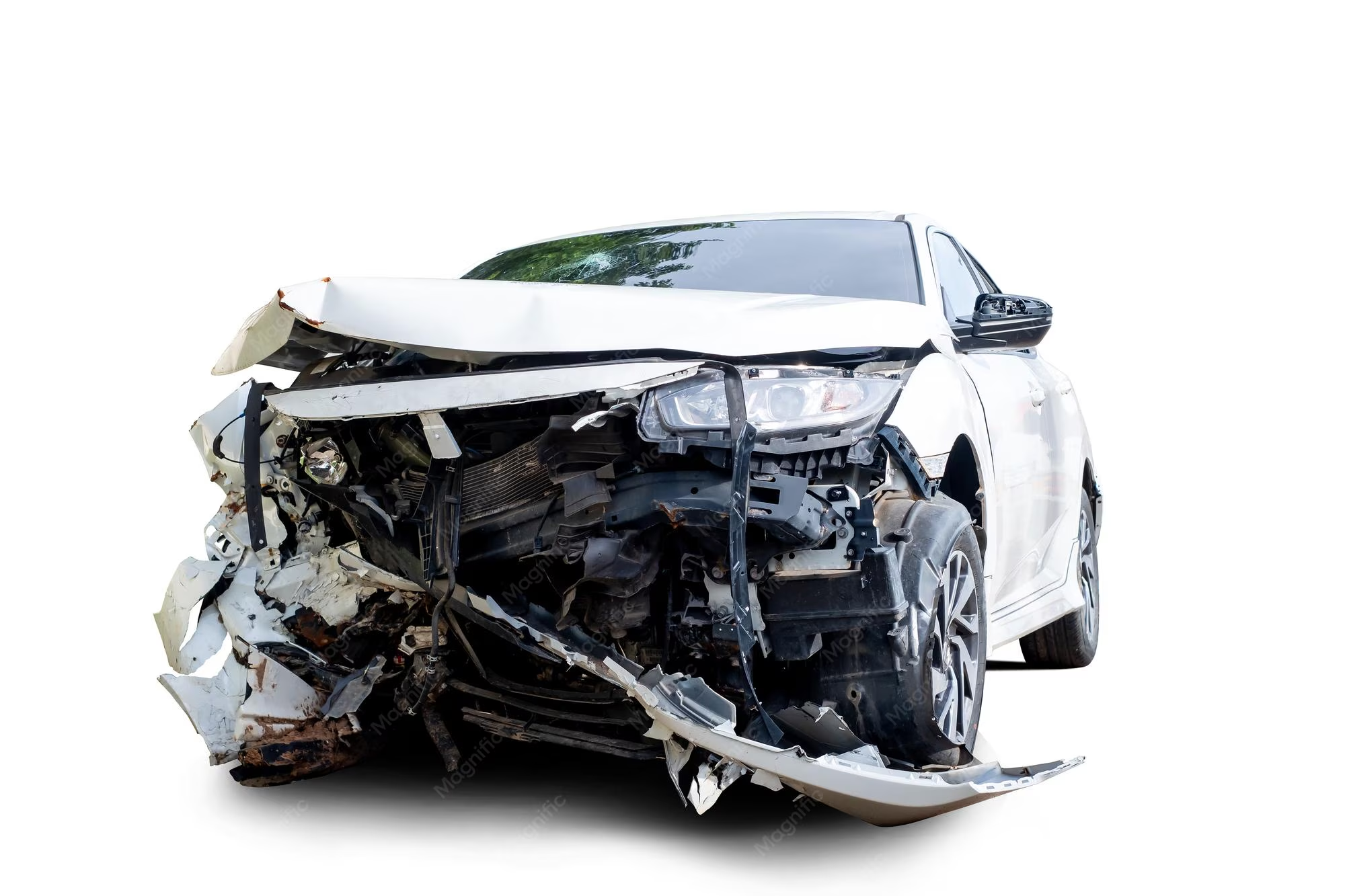
When your car gets hit and the other driver is at fault, most people’s attention goes immediately to one question: how do I get my car fixed? That instinct is understandable, but it skips over a financial reality that significantly affects whether repairing the car actually makes sense — one that insurance companies are rarely in a hurry to explain to you.
That reality is called diminished value, and once you understand how it works in Virginia, the math on repairing versus trading your wrecked vehicle starts to look very different.
What Diminished Value Actually Means
Diminished value is the difference between what your car was worth before an accident and what it’s worth after — even after repairs are completed. The assumption most people carry into the post-accident process is that a fully repaired car is worth the same as a car that was never in an accident. That assumption is wrong, and it’s wrong in a way that costs car owners money every time they decide to repair and move on without accounting for it.
A car with an accident history disclosed on its Carfax report sells for less than a comparable vehicle with a clean history, every time. Buyers pay less because the accident happened, regardless of how thorough the repair was. The structural integrity may be fine. The paint match may be perfect. The car may drive exactly as it did before. But the accident is on the record, and that record costs you money the moment you try to sell or trade the car.
The gap between pre-accident value and post-repair value is typically somewhere between 10 and 25 percent depending on the vehicle’s age, make, model, and the severity of the damage. On a car worth $28,000 before an accident, that’s potentially $3,000 to $7,000 in value that doesn’t come back no matter how good the repair work is.
Virginia’s Diminished Value Rules — and What You’re Actually Entitled To
Virginia is what’s known as a “third-party diminished value” state, meaning that if the other driver was at fault, you have the right to file a diminished value claim against their insurance in addition to your property damage claim. You aren’t just entitled to have your car repaired — you’re entitled to be made whole for the full financial impact of the accident, which includes the reduction in market value that follows the car even after repairs.
In practice, insurance companies don’t advertise this. Many adjusters handle the property damage claim — getting the car repaired — without ever mentioning that a separate diminished value claim exists. Drivers who don’t know to ask for it simply don’t receive it. The insurance company saves money, and the driver absorbs a loss they were legally entitled to recover.
To pursue a diminished value claim, you typically need an independent appraisal that documents the car’s pre-accident value and the market value reduction attributable to the accident history. That appraisal needs to be defensible — not just a number pulled from a calculator, but a properly documented comparison based on actual market data. Insurance companies will push back on inflated or poorly documented claims, so the quality of the appraisal matters.
Where the Repair Decision Gets Complicated
Here’s where diminished value changes the repair calculus: if you’re going to absorb a 15 percent reduction in market value regardless of whether you repair the car, the question becomes whether the repaired car is actually worth keeping. In some cases the answer is clearly yes — the car was recently purchased, the repairs restore it to genuinely good condition, and the diminished value is manageable relative to the car’s overall worth. In other cases the calculation looks very different.
For older vehicles, high-mileage cars, or situations where the repair estimate is approaching a significant portion of the car’s pre-accident value, the diminished value loss on top of repair hassle, rental car time, and the disruption of dealing with a body shop for weeks tips the balance toward trading the damaged vehicle rather than putting it through the repair process at all. Trading a wrecked car in Virginia before repairs begin means you’re starting fresh in a replacement vehicle without carrying the accident history, the diminished value loss, or the uncertainty about what the repair will ultimately reveal once the shop gets into it.

What the Trade Process Actually Looks Like
A lot of drivers assume that trading a wrecked car is complicated or that dealers won’t take a damaged vehicle — or that they’ll only offer scrap value. The reality in Virginia’s current auto market is more nuanced. Dealers regularly take damaged vehicles, and the trade-in value for a wrecked car in reasonable mechanical condition is often meaningfully higher than what a junkyard would pay.
The key is getting an honest, market-based assessment of what the vehicle is actually worth in its current condition — and comparing that directly to what the repair-then-trade path would net after accounting for diminished value, out-of-pocket costs if the repair exceeds the insurance payout, and the time involved. Understanding exactly what to expect when trading a wrecked vehicle makes it possible to make that comparison clearly rather than guessing at numbers on either side.
Most drivers who go through that comparison are surprised at how close the two paths are — and in many cases, the trade comes out ahead when all the costs are honest. The diminished value loss alone often narrows the gap significantly. Add in the simplicity of skipping months of repair logistics, and trading starts to look a lot less like a last resort and a lot more like a straightforward financial decision.
Virginia drivers in Alexandria, Charlottesville, Richmond, and Roanoke who want a clear-eyed assessment of both options don’t have to figure it out alone. Getting an honest evaluation of what a wrecked vehicle is actually worth in today’s market costs nothing and takes far less time than most people expect.
