
Introduction to Digital War Trauma
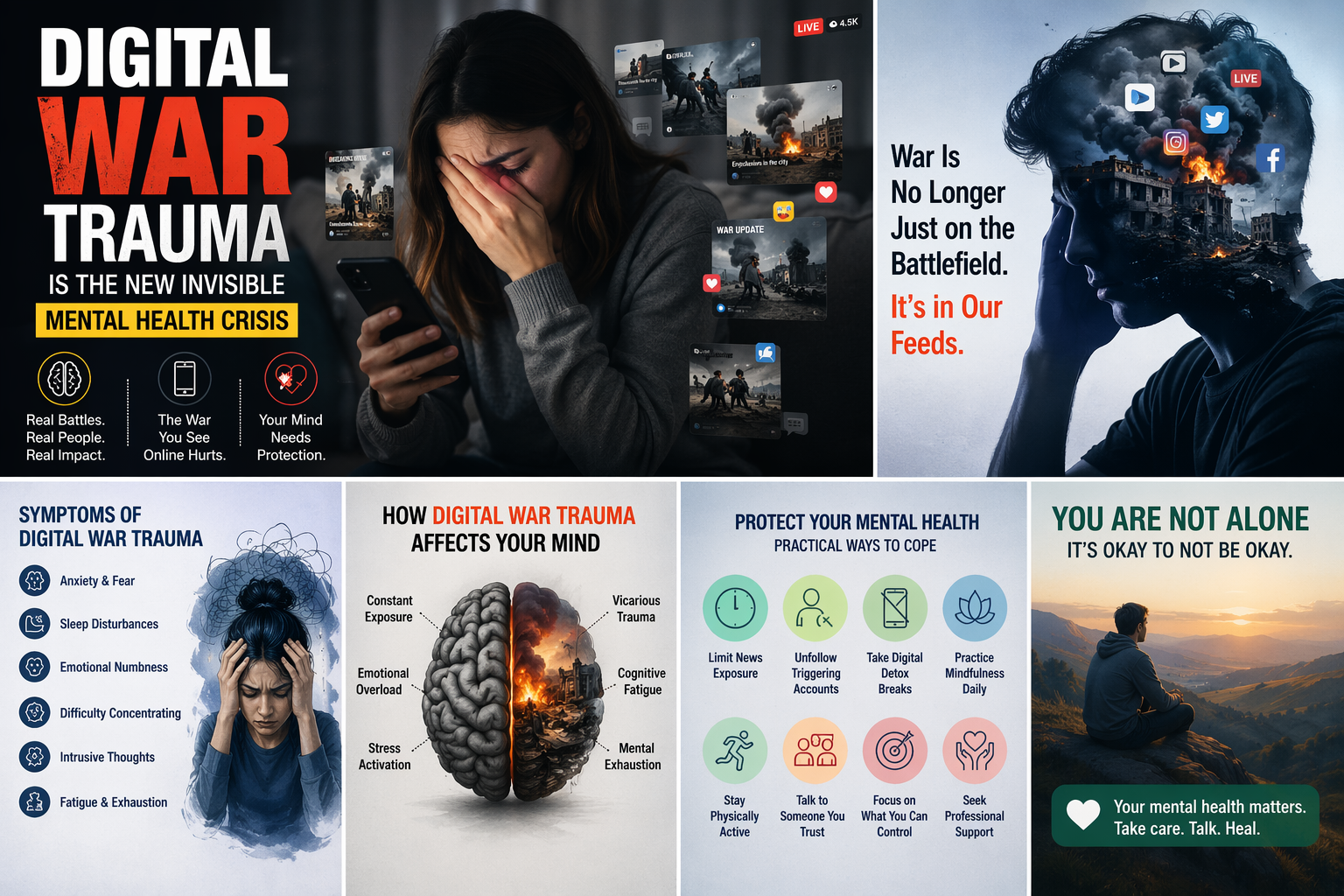
In the modern digital age, conflict is no longer confined to distant battlefields. It enters our homes through smartphones, social media feeds, and nonstop news alerts. This constant exposure has created a growing psychological concern known as Digital War Trauma.
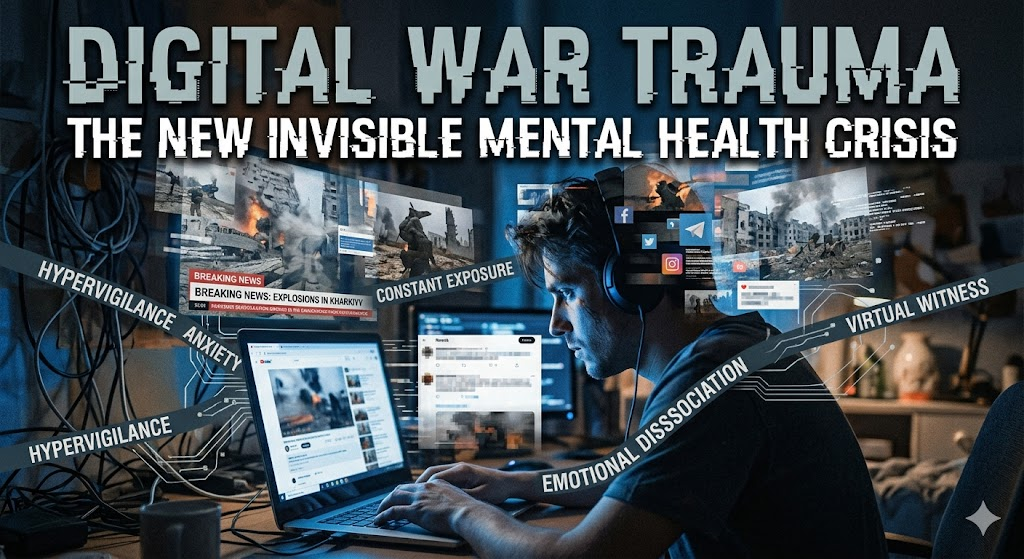
Unlike traditional trauma, which requires physical presence in a war zone, Digital War Trauma can develop simply by repeatedly viewing distressing war-related content online. As global connectivity increases, so does the emotional burden carried by everyday users.
What Is Digital War Trauma?
Digital War Trauma refers to the psychological and emotional stress caused by continuous exposure to war-related imagery, videos, and reports through digital platforms.
This includes:
- Graphic footage of violence
- Real-time conflict updates
- Social media livestreams from war zones
- Emotional commentary and political discussions
The human brain processes vivid digital content in a way that can mimic real-life experiences, triggering emotional responses such as fear, anxiety, or helplessness.
Difference Between Physical and Digital Trauma
Traditional trauma occurs when a person directly experiences or witnesses a life-threatening event. In contrast, Digital War Trauma happens indirectly.
Even though the individual is physically safe, their brain may still react as if they are in danger due to:
- Repeated exposure
- Emotional storytelling
- Visual intensity of content
This creates a blurred line between observation and experience.
The Rise of Digital Conflict Consumption
24/7 News Exposure
Modern news cycles never stop. Updates about global conflicts are available every second, leaving little time for emotional recovery.
Algorithmic Amplification
Social media platforms prioritize content that generates engagement. Unfortunately, emotionally intense war content often receives higher visibility, increasing repeated exposure.
For reference on digital media influence, see:
https://www.icrc.org/en/document/media-digital-war-and-human-suffering
Psychological Mechanisms Behind Digital War Trauma
Fight-or-Flight Activation
When exposed to violent content, the brain activates its survival system. This can result in:
- Increased heart rate
- Heightened alertness
- Stress hormone release
Even though there is no physical danger, the body reacts as if there is.
Vicarious Trauma Explained
Vicarious trauma occurs when a person is emotionally affected by witnessing others’ suffering. Digital platforms amplify this effect by repeatedly showing distressing content.
Symptoms of Digital War Trauma
Emotional Symptoms
- Persistent anxiety
- Sadness or emotional heaviness
- Feeling helpless about global events
Cognitive Symptoms
- Difficulty focusing
- Overthinking or rumination
- Mental fatigue
Physical Symptoms
- Sleep disturbances
- Headaches
- Restlessness
Why Digital War Trauma Is an Invisible Crisis
This condition is often overlooked because:
- It has no official medical classification
- Symptoms develop gradually
- Emotional distress is often normalized
- Exposure is considered “just news consumption”
As a result, many people do not realize their mental strain is linked to digital exposure.
High-Risk Groups
Certain individuals are more vulnerable to Digital War Trauma:
- Teenagers and young adults
- Journalists covering conflicts
- Human rights activists
- Social media users with high screen time
- Individuals with prior anxiety disorders
Impact on Mental Health
Long-term exposure to war-related digital content can contribute to:
- Chronic stress
- Emotional numbness
- Anxiety disorders
- Sleep disruption
- Reduced attention span
Over time, this may affect daily productivity and emotional stability.
Role of Social Media Platforms
Social media platforms are designed to maximize engagement. This often leads to:
- Repeated exposure to distressing content
- Viral spread of graphic footage
- Lack of content filtering in real time
These systems unintentionally increase psychological strain on users.
Connection With Misinformation
Digital war environments are often filled with:
- Edited videos
- Misleading headlines
- Propaganda content
This creates confusion and emotional instability, making it harder for users to process reality accurately.
Coping Strategies for Digital War Trauma
Healthy Media Consumption
- Limit time spent on news platforms
- Avoid doomscrolling before sleep
- Follow verified sources only
Emotional Recovery Techniques
- Deep breathing exercises
- Mindfulness meditation
- Physical activity like walking
Professional Support Options
If symptoms persist, seeking professional help is recommended. Therapy options may include:
- Cognitive Behavioral Therapy (CBT)
- Trauma-focused counseling
- Stress management therapy
Prevention Strategies
- Digital literacy education
- Awareness of algorithm influence
- Balanced media consumption habits
- Regular mental health breaks
Future of Digital Mental Health
As digital environments continue to evolve, researchers are increasingly focusing on:
- Online trauma exposure
- Media psychology
- Algorithmic mental health impact
Digital War Trauma may soon become a key area of study in global mental health research.
Frequently Asked Questions (FAQs)
1. What is Digital War Trauma?
It is psychological distress caused by repeated exposure to war-related content through digital media.
2. Is Digital War Trauma a medical diagnosis?
No, it is not officially classified but is recognized as a growing psychological concern.
3. Who is most affected by Digital War Trauma?
Heavy social media users, journalists, activists, and young audiences are most vulnerable.
4. Can social media really cause trauma?
Yes, repeated exposure to violent or distressing content can trigger trauma-like responses.
5. How can I reduce its effects?
By limiting exposure, taking digital breaks, and practicing mindfulness techniques.
6. Is it similar to PTSD?
It can produce similar symptoms, but it is usually considered a form of secondary or vicarious trauma.
7. When should I seek help?
If anxiety, fear, or sleep problems persist for weeks, professional support is recommended.
Conclusion
Digital War Trauma represents a new and emerging challenge in the modern world. As global events become increasingly accessible through digital platforms, the emotional impact of witnessing conflict has become unavoidable for many people.
Understanding this phenomenon is essential for protecting mental health in the digital age. By setting boundaries, improving media habits, and prioritizing emotional well-being, individuals can reduce its impact and regain psychological balance.
