
In industrial systems where precision matters, measuring very small quantities of fluid can be a real challenge. This is where the combination of a Coriolis effect mass flow meter and low-flow measurement capability becomes highly valuable. A flow meter for low flow rate is essential in industries such as pharmaceuticals, chemicals, food processing, and research laboratories, where even minor inaccuracies can affect product quality and process efficiency.
What Is a Coriolis Effect Mass Flow Meter?
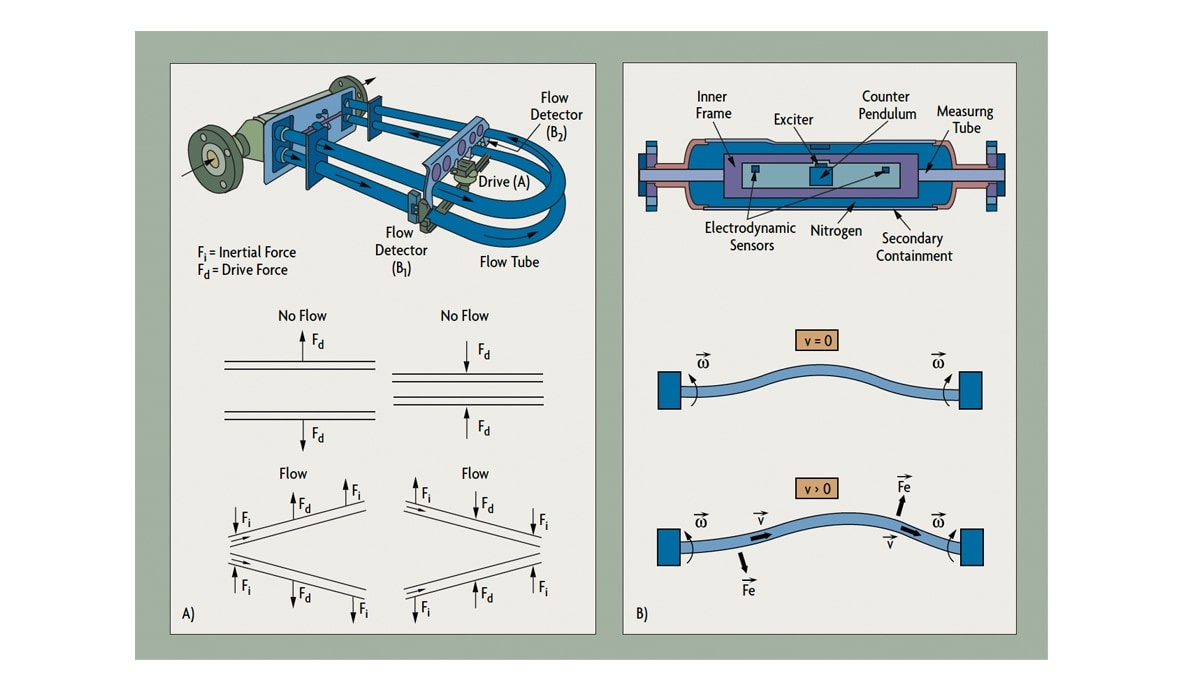
A Coriolis effect mass flow meter is a highly accurate instrument that measures the mass flow rate of fluids directly. It works based on the principle of the Coriolis Effect, which describes how moving objects behave within a rotating system.
Inside the meter, one or more tubes vibrate at a specific frequency. When fluid flows through these tubes, the inertia of the moving mass causes a slight deformation or twist. Sensors detect this change and convert it into a precise measurement of mass flow.
Unlike traditional meters, this technology does not depend on volume, making it highly reliable even when temperature, pressure, or density changes.
Importance of Flow Meters for Low Flow Rate
A flow meter for low flow rate is designed to measure very small quantities of fluid accurately. These applications often involve delicate processes where precision is critical.
Low flow rate measurement is commonly required in:
- Chemical dosing systems
- Pharmaceutical production
- Laboratory experiments
- Fuel injection systems
- Food flavoring and additive control
In such cases, even a slight deviation can lead to waste, safety risks, or inconsistent results.
Why Coriolis Mass Flow Meters Excel at Low Flow Rates
Exceptional Sensitivity
One of the biggest advantages of a Coriolis mass flow meter is its ability to detect extremely small changes in flow. This makes it ideal for low flow rate applications where traditional meters may fail.
Direct Mass Measurement
Because it measures mass directly, the meter eliminates errors caused by fluid property variations. This is particularly useful when dealing with low volumes, where even small environmental changes can impact accuracy.
High Precision at Micro Levels
Coriolis meters can maintain high accuracy even at very low flow rates, often outperforming other technologies such as turbine or positive displacement meters.
Stable Performance
Even in fluctuating conditions, the Coriolis effect mass flow meter provides consistent readings, making it reliable for continuous low-flow operations.
Applications of Low Flow Coriolis Meters
Pharmaceutical Industry
In pharmaceutical manufacturing, precise dosing of ingredients is critical. A flow meter for low flow rate ensures exact measurement of liquids used in drug formulation.
Chemical Injection Systems
Many chemical processes require controlled injection of small amounts of additives. The accuracy of a Coriolis mass flow meter helps maintain consistency and safety.
Food and Beverage Processing
In food production, small quantities of flavoring or coloring agents must be measured accurately. Coriolis meters ensure product quality and uniformity.
Research and Laboratories
Scientific experiments often involve very small fluid volumes. A Coriolis effect mass flow meter provides the precision needed for reliable results.
Advantages Over Other Low Flow Measurement Technologies
While several technologies are available for measuring low flow rates, Coriolis meters offer distinct benefits:
- Higher accuracy compared to thermal or differential pressure meters
- Ability to measure multiple parameters such as density and temperature
- No need for recalibration due to fluid property changes
- Minimal maintenance due to fewer moving parts
These advantages make the Coriolis mass flow meter a preferred choice for critical low-flow applications.
Challenges in Low Flow Measurement
Despite its strengths, using a flow meter for low flow rate comes with certain challenges.
Cost Considerations
Coriolis meters are generally more expensive than other flow measurement devices. However, their accuracy often justifies the investment.
Installation Sensitivity
Proper installation is essential to avoid external vibrations that may affect readings, especially at very low flow levels.
Size and Design Limitations
For extremely small-scale applications, selecting the right size and configuration is important to ensure optimal performance.
Choosing the Right Flow Meter for Low Flow Rate
When selecting a Coriolis effect mass flow meter for low flow applications, consider the following factors:
- Flow range requirements
- Type of fluid (liquid or gas)
- Accuracy level needed
- Operating environment
- Budget and long-term maintenance
Choosing the correct model ensures maximum efficiency and reliability.
Future of Low Flow Measurement Technology
With advancements in sensor technology and digital systems, modern Coriolis mass flow meters are becoming even more efficient. Features such as smart diagnostics, remote monitoring, and data integration are enhancing their performance in low flow applications.
As industries continue to demand higher precision, the role of advanced flow measurement systems will only grow stronger.
Conclusion
The combination of a Coriolis effect mass flow meter and a flow meter for low flow rate provides a powerful solution for industries that require precise fluid measurement. Its ability to deliver accurate, reliable, and consistent data makes it an essential tool in modern processes.
Whether used in pharmaceuticals, chemical dosing, or laboratory research, the Coriolis mass flow meter stands out as one of the most effective technologies for handling low flow rate measurement with confidence and precision.
