
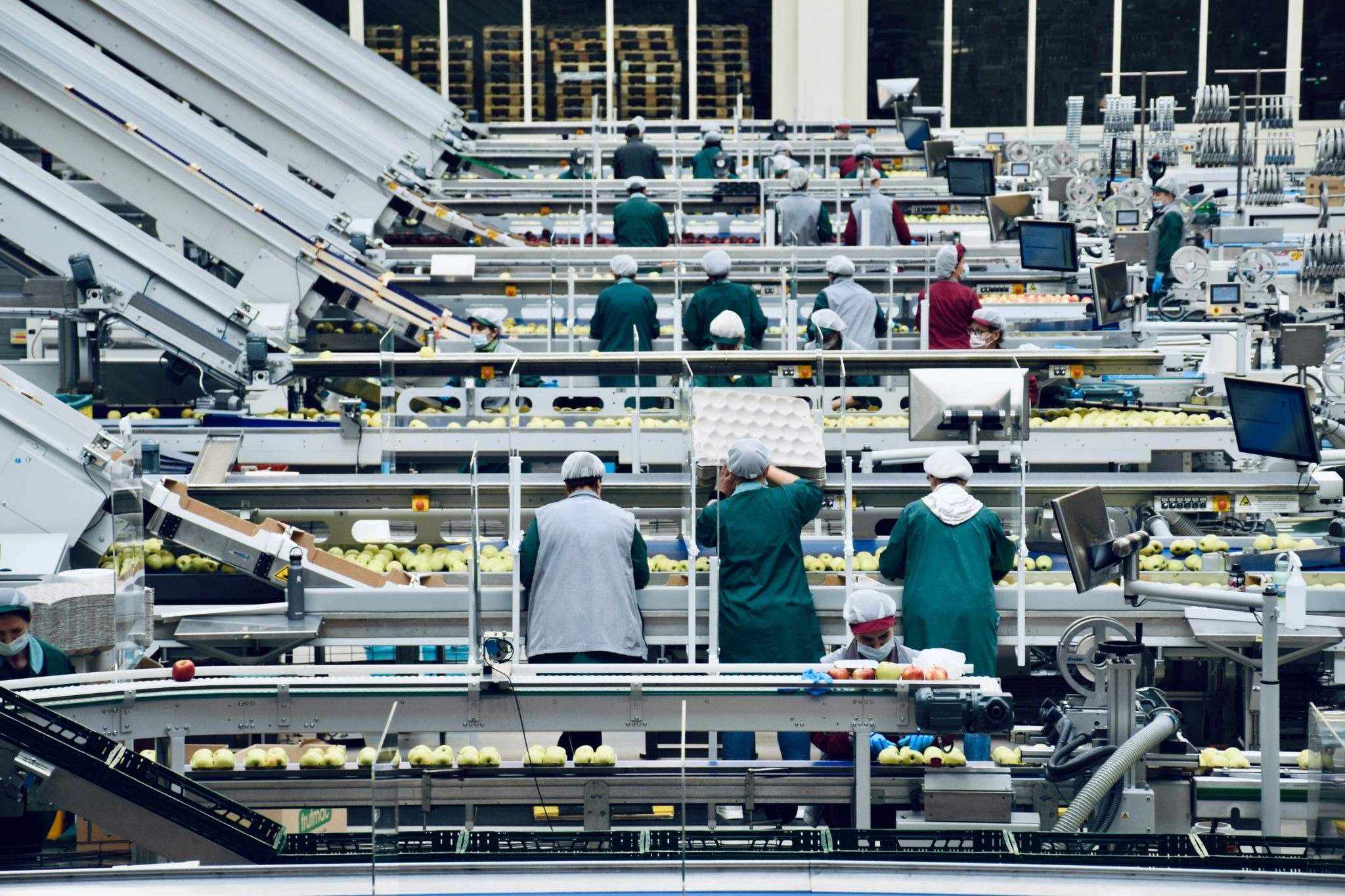
A year after new tariffs were introduced with the promise of revitalizing domestic manufacturing, the conversation is still largely focused on jobs: how many could return, how many could be created, and how quickly production can shift back home.
But beneath that conversation sits a more uncomfortable reality: bringing jobs back does not guarantee the system is ready to support them.
“There’s a quiet assumption inside the tariff debate that if production comes home, the factory floor is ready to absorb it,” says Garth Coleman, CEO of Canvas Envision. “That’s not what we’re seeing.”
The gap between expectation and reality is not about labor supply alone. It is about operational readiness, something that has quietly lagged behind years of digital investment.
The False Promise of Reshoring
At a policy level, the logic behind tariffs is straightforward: incentivize domestic production, reduce reliance on imports, and rebuild local manufacturing capacity. Implicit in that logic is the idea that once production returns, the workforce and infrastructure will follow.
But manufacturing is no longer a system that can scale by simply adding people.
Over the past two decades, the industry has undergone a profound transformation, but not evenly. Engineering, design, and planning functions have been extensively digitized. Product data is now highly structured, accessible, and continuously updated through advanced systems.
Execution on the factory floor, however, tells a different story.
A Digital Divide Inside the Same System
“Engineering teams have spent two decades digitizing product data,” Coleman explains. “While most manufacturers still translate those changes into floor execution through PDFs, tribal knowledge, and word of mouth, which simply can’t keep up.”
This disconnect has created a kind of internal digital divide. On one side, highly sophisticated systems manage product definitions and changes in real time. On the other, frontline workers are often left to interpret static documents that may already be outdated by the time they are used.
The result is not just inefficiency. It is variability.
When instructions are disconnected from source data, execution becomes dependent on interpretation. Two workers may perform the same task differently. Updates may be inconsistently applied. Knowledge is passed informally, and often incompletely, across teams and shifts.
As manufacturing processes grow more complex, this gap becomes harder, and more expensive, to ignore.
The Risk No One Is Pricing In
The real risk is not simply that factories will struggle to fill roles. It is that they may struggle to operate effectively even when roles are filled.
Reshoring production without addressing execution systems introduces a form of systemic fragility. Errors compound. Training takes longer. Output becomes less predictable. And scaling production—one of the central goals of bringing manufacturing back—becomes significantly more difficult.
In this context, the idea that jobs alone can restore manufacturing strength begins to fall apart.
What matters is not just how many people are on the floor, but how effectively they can perform the work required of them.
Jobs Without Readiness
This is where the economic conversation around tariffs and manufacturing begins to shift.
Job creation, while important, does not automatically translate into productivity or competitiveness. Without the systems needed to support consistent, accurate execution, new roles can introduce as many challenges as they solve.
Workers entering the industry today are expected to operate within increasingly complex environments. Yet the tools and processes guiding their work often reflect a much earlier era. One built around static documentation and informal knowledge transfer.
The mismatch is subtle, but consequential. It slows onboarding, increases dependency on experienced workers, and limits the ability of organizations to adapt quickly to change.
The Question That Remains
The push to bring manufacturing back is unlikely to slow down. Economic pressures, geopolitical shifts, and supply chain resilience will continue to drive reshoring efforts in the years ahead.
But as that shift accelerates, a more fundamental question is beginning to emerge:
Are factories actually prepared to execute the work they are trying to bring back?
Until that question is addressed, the success of reshoring will depend on more than policy. It will depend on whether manufacturing can close the gap between what it knows, and what it can consistently do.
