
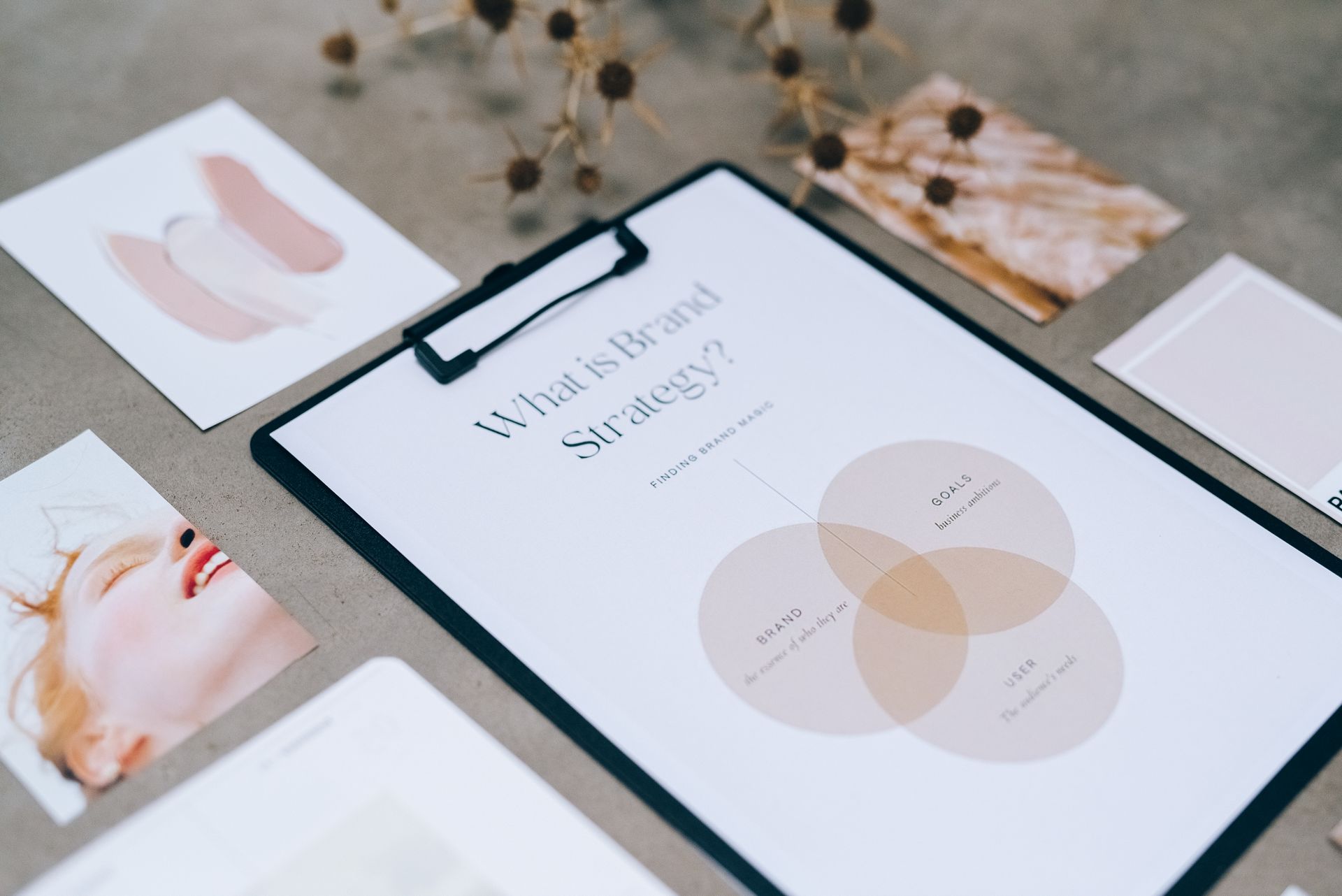
Most founders treat branding as something you do after you’ve made money — a logo refresh you’ll get to once the seed round clears. That order is backwards. A clear brand identity is one of the few growth levers you can pull early, cheaply, and almost entirely with decisions rather than cash. The startups that get this right aren’t the ones with the biggest design budgets. They’re the ones who knew exactly what they stood for before they opened Canva.
This is a practical guide to building a brand identity on a startup budget — strategy first, visuals second, and a realistic breakdown of what you should actually pay for in India in 2026.
What “Brand Identity” Actually Means (and What It Doesn’t)
A brand identity is not your logo. It’s the complete system of decisions — verbal and visual — that makes your company recognisable and consistent everywhere a customer meets you. The logo is one output of that system. So are your colours, your tone of voice, the way your onboarding emails sound, and the photo on your founder’s LinkedIn.
The confusion is expensive. Founders spend ₹500 on a Fiverr logo, slap it on a template website, and wonder why the brand feels thin. The problem was never the logo. It was that no decisions sat behind it. A 2024 study widely cited from the University of Loyola found that consistent use of a signature colour can lift brand recognition by up to 80% — but only if there’s a deliberate system to be consistent with.
Think of brand identity in three layers:
- Strategy — who you’re for, what you stand for, and how you’re different. This is free and the most important part.
- Verbal identity — your name, tagline, tone of voice, and core messaging.
- Visual identity — logo, colour palette, typography, imagery, and how they’re applied.
Spend in that order. Get the cheapest layer right first, because every rupee you spend on visuals is wasted if the strategy underneath is mush.
Why Startups Get Branding Wrong on a Tight Budget
India recognised over 1.5 lakh DPIIT-registered startups by 2024, and the vast majority are bootstrapped or pre-seed. When money is tight, three branding mistakes show up again and again:
- Skipping strategy and buying assets. Founders jump straight to “I need a logo” without deciding what the brand is supposed to communicate.
- Copying the category leader. If every fintech in your space uses navy blue and a geometric sans-serif, blending in is the opposite of branding.
- Inconsistency. A different shade of green on the deck, the website, and Instagram quietly tells customers you’re disorganised — even if they can’t articulate why.
None of these are budget problems. They’re decision problems. And decisions are free.
Step 1 — Nail Your Brand Strategy Before You Spend a Rupee
Strategy is the cheapest, highest-leverage part of branding. You can do this part yourself in a focused afternoon. The goal is to answer a handful of questions clearly enough that any designer, copywriter, or freelancer you hire later can produce on-brand work without hand-holding.
Define your positioning
Positioning is the single sentence that explains why you exist and for whom. A useful template: For [target customer] who [need], [your brand] is the [category] that [key benefit], because [reason to believe].
Take Zerodha. Long before flashy ads, its position was sharp: for retail investors tired of opaque, expensive brokers, Zerodha is the discount brokerage that charges flat, transparent fees. Every brand decision — the plain interface, the educational content on Varsity, the no-pushy-sales tone — flows from that one idea. That clarity costs nothing and is worth more than any logo.
Know exactly who you’re talking to
“Everyone” is not a target market. Write down one specific customer: their job, their frustration, where they hang out online, and what would make them trust a new brand. A D2C skincare startup targeting 22-to-28-year-old metro women will make wildly different colour, tone, and packaging choices than one targeting 40-plus tier-2 buyers. Both can be right. Both are impossible to design for if you haven’t decided which one you are.
Write a one-page brand brief covering positioning, audience, three brand adjectives (e.g. “warm, plain-spoken, dependable”), and two or three competitors you want to look different from. That document is your entire branding budget’s insurance policy.
Step 2 — Build a Visual Identity That Punches Above Its Budget
Now — and only now — you buy visuals. The trick on a startup budget is to invest in the few assets that compound and skip the ones you can template.
The logo: where your design rupees should go
Your logo is the one asset that appears on every touchpoint for years, so it’s worth doing properly. But “properly” doesn’t mean expensive — it means intentional. A clean, legible wordmark with one distinctive element will outperform an over-designed mascot every time. Avoid the ₹500 marketplace route: those logos are often unlicensed clip-art that you don’t actually own and can’t trademark.
The middle path most Indian startups land on is a fixed-package designer or studio — typically ₹15,000 to ₹30,000 — that delivers multiple concepts, revisions, full file formats, and clear copyright transfer. If you’re hiring out, a focused logo design company in Bangalore or your own city will usually cost a fraction of a full-service brand agency while still giving you ownership and source files, which is what actually matters for a young company.
Colour, type, and a system you can actually reuse
You don’t need a 40-page brand book. You need a one-page system anyone on your team can follow:
- Two colours that do the work. One primary brand colour and one accent. Pick from outside your category’s clichés and lock the exact hex codes.
- Two typefaces, maximum. One for headings, one for body. Free Google Fonts like Inter, Lora, or Mukta cover most needs and cost nothing.
- A consistent image style. Decide: illustration or photography, bright or muted, candid or polished — then stick to it.
Consistency is where the real money is. Research from Marq (formerly Lucidpress) found that brands presented consistently across channels can see revenue increases of up to 23%. A startup that uses the same two colours and two fonts everywhere looks more established than its bank balance suggests.
Step 3 — Get Your Verbal Identity Right (It’s Free and Underrated)
Words are branding too, and they cost nothing to get right. Your verbal identity is how the brand sounds — and on a budget, it’s often what separates a memorable startup from a forgettable one, because anyone can buy a decent logo but few bother to sound like a real human.
Pin down three things:
- A tagline or one-liner that a stranger understands in five seconds. Clarity beats cleverness. “Cup noodles, but actually healthy” works harder than a vague abstract slogan.
- A tone of voice expressed as a few do/don’t rules — e.g. “We say ‘sign up,’ never ‘commence your journey.’ We’re friendly, not jokey.”
- Five to ten messaging snippets you reuse everywhere: your product description, your value props, your standard bio. Write them once, reuse them on your site, decks, and socials so the brand sounds like one voice.
Indian brands like Zomato built enormous recognition almost entirely on a distinctive, witty voice — a branding asset that cost nothing but a clear point of view.
Step 4 — Put Your Brand to Work Across Touchpoints
A brand identity only earns its keep when it’s applied consistently everywhere customers meet you. This is where the strategy and the cheap, well-chosen assets compound.
Your website: the touchpoint that has to convert
For most startups the website is the first serious brand impression and the place a customer decides whether to trust you. It carries your colours, voice, and logo into a moment where money is on the line — so it’s worth more care than your Instagram grid. You don’t need a custom build on day one; a well-set-up WordPress or Shopify site with your actual brand system applied beats an expensive site with no identity behind it.
When you’re ready to invest, working with a web development company in Bangalore that understands brand consistency — rather than a freelancer who just ships a template — means your visual identity, copy, and conversion design all pull in the same direction. The cheapest version is a clean one-page site that nails the positioning; you can grow it later.
Social, packaging, and the small stuff
Apply the same one-page system to everything else: profile images, post templates, email signatures, invoices, and packaging. For a D2C brand, packaging is often the highest-ROI brand surface you have — the unboxing moment is free marketing if it’s on-brand and Instagram-worthy. Build two or three reusable Canva templates in your colours and fonts so every post looks like it came from the same company. That repetition is what builds recognition, and recognition is what lets a small brand feel bigger than it is.
When to DIY and When to Pay for Help
On a tight budget, the smart move is to do the thinking yourself and pay for execution selectively. Here’s a realistic split:
- Do yourself: positioning, audience definition, brand adjectives, tagline, tone of voice, and your one-page brief. These need founder judgement, not design skill.
- Pay a freelancer: logo, a basic colour-and-type system, and a few templates. This is affordable and high-impact.
- Pay an agency: only when you’re scaling, raising, or entering a competitive category where brand is a real differentiator and consistency across many touchpoints starts to matter.
If you do reach that stage, engaging a full branding agency in Bangalore or your region buys you something a single freelancer usually can’t: a team that handles strategy, visual identity, website, and ongoing application as one coherent system, so your brand stays consistent as it grows. Until then, that level of spend is premature — most pre-revenue startups should not be paying agency retainers.
A Realistic Branding Budget for Indian Startups in 2026
Here’s roughly what each path costs, so you can match spend to your stage:
- Bootstrapped / pre-revenue (₹0–₹5,000): DIY strategy, a free logo maker or a student designer, Google Fonts, and Canva. Entirely possible to look credible at this level if your decisions are sharp.
- Funded / early traction (₹15,000–₹50,000): A professional logo package, a proper one-page brand system, and a templated but on-brand website. This is the sweet spot for most seed-stage startups.
- Scaling / competitive category (₹1,00,000+): Full brand strategy and identity from an agency, custom website, and brand guidelines. Justified once branding directly affects fundraising or differentiation.
Notice that the jump in quality from ₹0 to ₹50,000 is enormous, while the jump from ₹50,000 to ₹1,00,000+ is incremental. For a young startup, the first band is where almost all the value lives.
How to Audit Your Current Brand in 15 Minutes
Before you spend anything, run a quick honesty check on what you already have. Open your website, your most recent Instagram post, your pitch deck, and your last customer email side by side. Then ask:
- Do the colours match exactly? Not “roughly the same blue” — the same hex code. Mismatched shades are the most common consistency leak.
- Does it sound like one voice? Read three pieces of copy aloud. If one is formal, one is jokey, and one is corporate filler, your verbal identity isn’t defined yet.
- Would a stranger understand what you do in five seconds? Show your homepage to someone outside your industry and time them.
- Is the logo legible at small sizes? Shrink it to the size of a favicon or app icon. If it turns to mush, it’s over-designed.
- Do you look different from your top competitor? Put your brand next to theirs. If you could swap logos and nobody would notice, you have a differentiation problem, not a budget problem.
Most early startups fail two or three of these — and every single fix is free. Tightening colour codes, rewriting a few lines in one voice, and simplifying a busy logo cost nothing but an afternoon, yet they’re exactly the things that make a brand feel deliberate. Microsoft research famously pegged the average consumer attention span at around eight seconds, which means your brand has to land its impression fast and repeat it consistently. An audit like this surfaces the leaks before you pour money into amplifying them.
Branding Mistakes That Quietly Cost Startups Later
A few errors are cheap to avoid now and expensive to fix once you’ve scaled:
- Not owning your logo files. If you can’t produce vector source files, you don’t really own your logo. Insist on full copyright and editable formats from whoever designs it.
- Picking a name you can’t get the domain or trademark for. Check domain availability and the IP India trademark registry before you fall in love with a name.
- Rebranding too soon. Founders get bored of their brand long before customers do. Consistency over years is what builds recognition — resist the urge to redesign every quarter.
- Treating branding as a one-time project. It’s a system you apply continuously, not a deliverable you file away.
Build the strategy yourself, spend carefully on the few assets that compound, and apply them everywhere with discipline. A startup that does this on ₹40,000 will out-brand a competitor who spent ₹4 lakh with no clear idea behind it. The budget was never the constraint — the clarity was.
Frequently Asked Questions
How much should a startup spend on branding in India?
A pre-revenue startup can build a credible brand for ₹0–₹5,000 by doing the strategy themselves and using free tools. Once you have early traction, ₹15,000–₹50,000 covers a professional logo, a one-page brand system, and an on-brand website — the sweet spot for most seed-stage companies. Agency-level spend of ₹1,00,000+ only makes sense when you’re scaling or branding directly affects fundraising.
Do I need a brand strategy before I get a logo?
Yes. The logo is an output of your strategy, not a substitute for it. If you haven’t decided who you’re for, what you stand for, and how you’re different, any logo you commission is a guess. Spend a focused afternoon on positioning and a one-page brand brief first — it’s free and it makes every rupee you spend afterwards work harder.
Is it worth hiring a branding agency as an early-stage startup?
Usually not at the pre-seed stage. Do the strategic thinking yourself and pay a freelancer for execution like the logo and templates. A full agency earns its fee once you’re scaling, raising, or competing in a category where brand consistency across many touchpoints becomes a real differentiator.
What’s the most common branding mistake startups make?
Inconsistency — using slightly different colours, fonts, and tones across the website, deck, and social channels. It quietly signals disorganisation and erodes trust. It’s also the cheapest mistake to fix, since defining a one-page system and applying it everywhere costs nothing but discipline.
Can I build a brand identity entirely with free tools?
For the strategy and verbal identity, absolutely — those are decisions, not purchases. For visuals, free tools like Canva and Google Fonts get you surprisingly far, though a professionally designed logo you fully own is the one asset most worth paying for, because it appears on every touchpoint for years.