
The word asbestos comes from the ancient Greek term meaning “indestructible” or “unquenchable” — a name that speaks directly to the mineral’s most defining characteristic. Asbestos is a naturally occurring group of silicate minerals composed of thin, fibrous crystals that can be separated into durable threads.
These microscopic fibres are resistant to heat, electricity, and chemical corrosion, properties that made asbestos enormously attractive to industry throughout the nineteenth and twentieth centuries.
Scientifically, asbestos is not a single mineral but a collective term applied to six distinct fibrous minerals. These fall into two broad categories: serpentine asbestos, which includes chrysotile (commonly called white asbestos), and amphibole asbestos, which covers crocidolite (blue asbestos), amosite (brown asbestos), anthophyllite, tremolite, and actinolite.
Each variety has slightly different physical properties, but all share the defining fibrous structure that gives asbestos its industrial utility — and its capacity for harm. Working with a qualified environmental consultancy is often the first recommended step when assessing whether asbestos-containing materials are present in a building or site.
A Brief History of Asbestos Use
Human beings have used asbestos for thousands of years. Archaeological evidence suggests that ancient Finns used asbestos fibres to strengthen clay pots as far back as 2500 BCE. Ancient Greeks and Romans wove asbestos into tablecloths and napkins, reportedly marvelling at how the material could be cleaned simply by throwing it into fire.
Industrial exploitation of asbestos began in earnest during the late 1800s, driven by the rapid expansion of the textile, construction, and shipbuilding industries.
By the early twentieth century, asbestos had become one of the most widely used construction materials in the world. It was incorporated into floor tiles, ceiling panels, insulation, roofing shingles, pipe lagging, brake linings, gaskets, and fireproofing compounds. Its abundance, low cost, and remarkable thermal resistance made it seem like an almost ideal material for a modernising world.
Why Asbestos Was So Widely Used
To appreciate the full meaning of asbestos in an industrial and social context, it is important to understand the genuine advantages the material offered at the time of its widespread adoption.
Asbestos fibres are extraordinarily resistant to heat — chrysotile, for example, does not melt until temperatures reach approximately 1,500 degrees Celsius. Asbestos is also chemically stable, resistant to most acids and alkalis, highly flexible, and possesses significant tensile strength. It binds well with cement and other building materials and is relatively easy to mine and process.
These properties meant that asbestos was genuinely effective at preventing fires, insulating pipes and boilers, strengthening construction materials, and protecting workers in high-temperature environments.
For several decades, the risks were either unknown to most decision-makers or actively suppressed by industry interests, which allowed asbestos use to continue expanding even as evidence of harm accumulated.
The Health Risks: What Asbestos Does to the Body
The danger posed by asbestos arises from the microscopic fibres it releases into the air when disturbed. When inhaled, these fibres become lodged in the lung tissue, where they cannot be broken down or expelled by the body’s natural defences. Over time, the embedded fibres cause chronic inflammation, scarring, and cellular damage that can lead to serious and often fatal diseases.
The primary asbestos-related conditions include asbestosis, a progressive and irreversible scarring of lung tissue that impairs breathing; mesothelioma, a rare and aggressive cancer of the lining of the lungs, abdomen, or heart that is almost exclusively caused by asbestos exposure; lung cancer, the risk of which is significantly elevated in those exposed to asbestos, particularly in combination with smoking; and pleural plaques and pleural thickening, which are non-cancerous changes to the lining of the lungs that nonetheless indicate significant exposure.
Crucially, the latency period for these diseases is exceptionally long. Symptoms of mesothelioma, for example, typically do not appear until twenty to fifty years after initial exposure.
This delay means that many people who were exposed to asbestos in the mid-twentieth century are only now developing related illnesses, and the global burden of asbestos-related disease continues to rise even in countries that banned the substance decades ago.
Types of Asbestos: Serpentine and Amphibole Fibres
Understanding the distinction between the two main fibre types matters both scientifically and from a regulatory standpoint. Serpentine asbestos, represented almost entirely by chrysotile or white asbestos, has curly, flexible fibres that some researchers argue are cleared from the lungs more effectively than their amphibole counterparts.
This has led to ongoing debate about whether chrysotile poses a comparatively lower risk, a position strongly contested by major public health organisations including the World Health Organisation, which maintains that no form of asbestos is safe.
Amphibole asbestos fibres, including crocidolite and amosite, are needle-like and rigid. They penetrate deeper into lung tissue and are considerably more persistent once inhaled, which is associated with a higher risk of mesothelioma.
Crocidolite, or blue asbestos, is generally considered the most hazardous variety. The debate over relative risk among fibre types remains significant in jurisdictions — including some major economies — that have not yet introduced comprehensive bans on chrysotile.
Where Asbestos Is Still Found Today
Despite widespread bans in Europe, Australia, Japan, and many other countries, asbestos remains present in enormous quantities in existing buildings, industrial infrastructure, and soil.
In the United Kingdom, for instance, it is estimated that asbestos-containing materials are present in more than half of all schools and a significant proportion of homes and public buildings constructed before the year 2000. In many parts of Asia, Africa, and South America, asbestos-containing products continue to be manufactured and used, often in communities with limited access to safer alternatives.
This legacy contamination creates ongoing challenges. Buildings undergoing renovation or demolition can release fibres if asbestos-containing materials are disturbed without proper precautions.
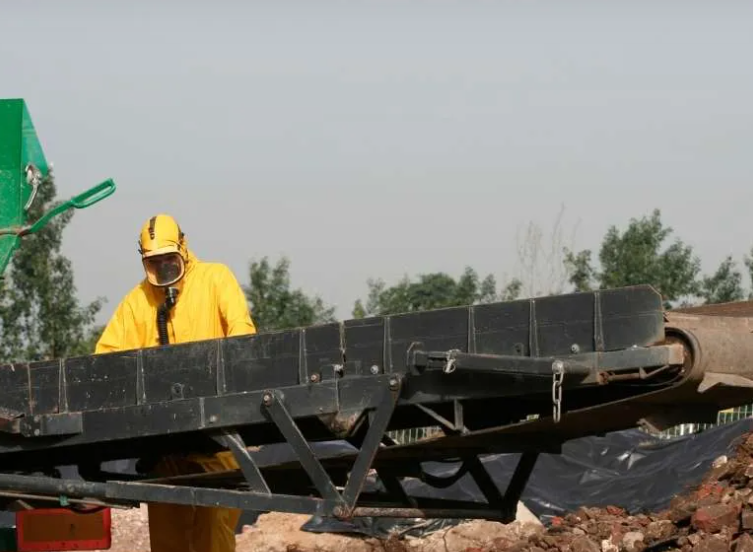
Natural geological deposits can also result in environmental asbestos contamination of soil, making professional remediation essential. Proper asbestos soil removal is a highly specialised process that must follow strict regulatory protocols to prevent fibres from becoming airborne and endangering workers or nearby residents.
Regulation, Banning, and the Global Policy Landscape
The regulatory history of asbestos reflects the slow and often contested process by which scientific evidence translates into public policy. Early warnings about asbestos-related disease appeared in medical literature as early as the 1890s, and by the 1930s, the association between asbestos exposure and lung disease was reasonably well established within the scientific community.
Despite this, comprehensive regulation did not emerge in most countries until the 1970s and 1980s, and outright bans came later still.
The United Kingdom banned blue and brown asbestos in 1985 and all forms of asbestos use in 1999. The European Union followed with a complete ban in 2005. Australia introduced its total ban in 2003.
The United States, notably, has never enacted a comprehensive asbestos ban, though regulations restrict many uses and the Environmental Protection Agency has taken steps to limit ongoing exposures. Globally, the Rotterdam Convention has attempted to facilitate international information-sharing about hazardous substances including asbestos, though its mechanisms fall short of a binding prohibition.
Safe Management and Removal: The Practical Implications of Asbestos Meaning
For building owners, contractors, environmental professionals, and members of the public, understanding asbestos meaning in a practical sense means grasping when asbestos poses a risk and when it does not.
Asbestos-containing materials that are in good condition and remain undisturbed generally do not release fibres and are not considered an immediate danger. The standard guidance in many countries recommends that such materials be identified, assessed, managed in place, and monitored regularly rather than removed unnecessarily — as removal itself can generate fibre release if not handled correctly.
When asbestos-containing materials are in poor condition, are at risk of being disturbed, or when building works require their removal, specialist contractors licensed for asbestos work must be engaged. Personal protective equipment, controlled enclosures, air monitoring, and careful waste disposal are all components of a regulated removal process. The costs of professional asbestos management are real and sometimes significant, but they are substantially outweighed by the public health consequences of inadequate control.
The Human and Economic Cost of Asbestos
The toll that asbestos has taken on human health globally is difficult to overstate. The World Health Organisation estimates that approximately 125 million people worldwide are currently exposed to asbestos in their workplaces, and that well over 100,000 people die each year from asbestos-related diseases.
In countries with long histories of heavy asbestos use, such as the United Kingdom, Australia, and Japan, mesothelioma and asbestosis continue to claim thousands of lives annually even decades after the peak of industrial asbestos consumption.
The economic costs are equally staggering. Asbestos litigation in the United States alone has resulted in tens of billions of dollars in compensation payments and driven numerous major corporations into bankruptcy.
The cost of safely managing and removing asbestos from the built environment represents one of the largest environmental remediation challenges in industrialised nations. These costs continue to accumulate and will do so for many years to come, reinforcing the importance of proactive identification, regulation, and responsible management.
Key Takeaways
Asbestos meaning, in its fullest sense, encompasses far more than a simple mineralogical definition. It represents a cautionary story about the complex relationship between industrial progress, scientific knowledge, regulatory action, and public health. Asbestos was genuinely useful, genuinely valued, and genuinely dangerous — often simultaneously.
The challenge it poses today is not merely technical but ethical and administrative: how to manage an extraordinarily hazardous legacy material that is embedded in the infrastructure of the modern world, how to protect workers and communities from continued exposure, and how to ensure that the mistakes of the past are not repeated in countries where asbestos use continues.
A clear understanding of what asbestos is, how it behaves, and what harm it causes remains the essential foundation for any approach to these enduring challenges.
