

Architecture begins with an idea: a clear intention shaped by proportion, line, and balance. Dressing can follow the same logic. When we understand how the eye reads verticals, horizontals, angles, and negative space, we stop treating clothing as something that merely covers the body and start using it to build a silhouette – calm, strong, and precise. Like a well-designed façade, a look can feel effortless while being carefully engineered. The philosophy behind https://thesagio.com/ echoes this approach: design as clarity, garments as tools, and beauty as a result of thoughtful construction rather than excess.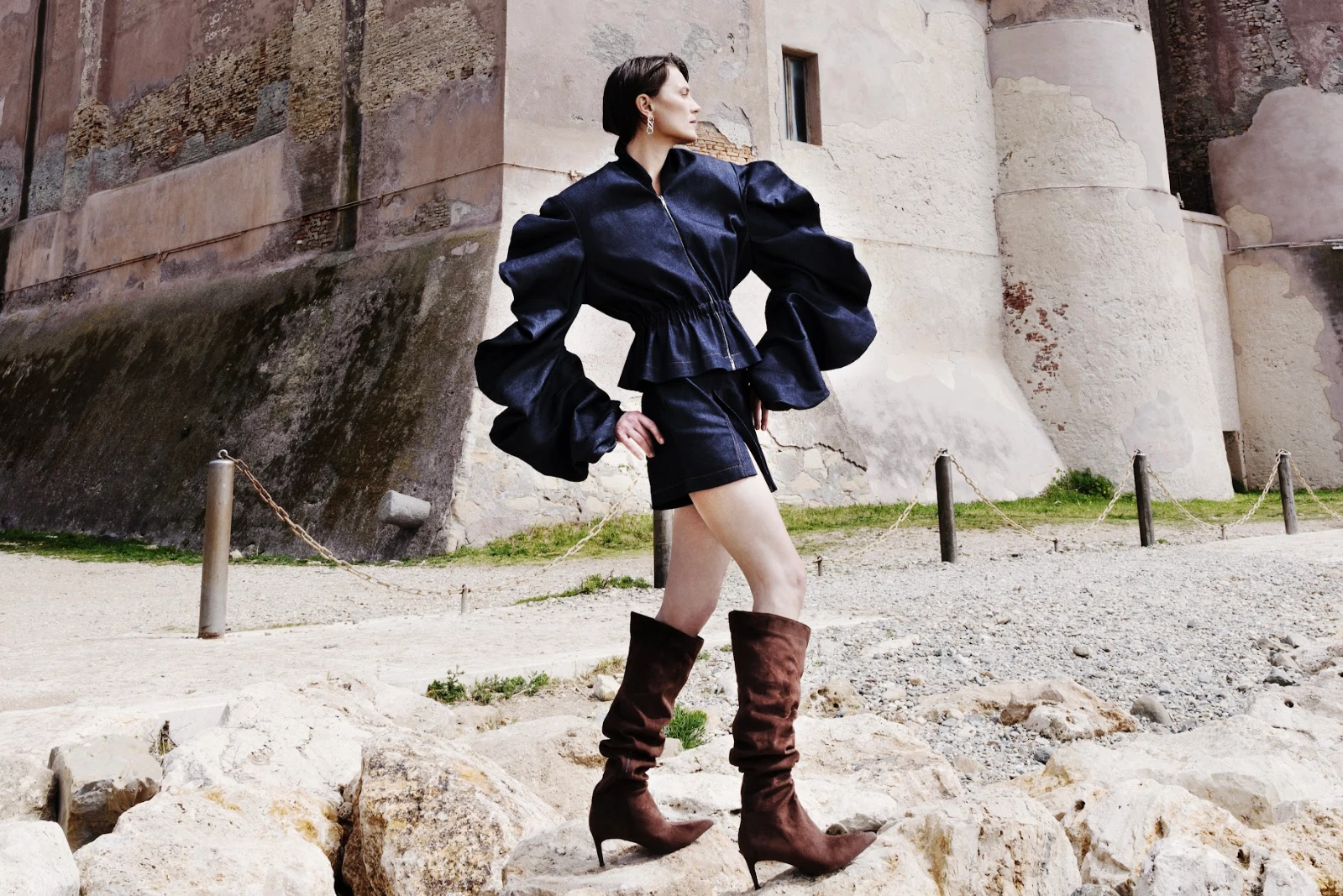
Proportion: The Silent Language of Fit
In architecture, proportion decides whether a building feels grounded or unstable. In clothing, proportion determines whether the body looks balanced or visually “split.” The simplest way to apply this is to observe where garments end and begin: the hemline of a coat, the break of a trouser, the rise of a waist. These boundaries create modules – like floors in a building. Elongating the leg line often means raising the visual waist or choosing longer outer layers. Softening a strong shoulder may require a wider lower silhouette to restore symmetry. The goal isn’t to “correct” the body, but to create harmony between form and frame.
Rule of Three: A Practical Balance
One of the most reliable architectural rhythms is an uneven division: 1/3 to 2/3. In styling, this might be a cropped jacket with long trousers, or a long coat over a shorter inner layer. The eye enjoys asymmetry when it is controlled.
Lines and Axes: Designing the Gaze
Lines tell the viewer where to look. Vertical seams, pleats, and long lapels act like columns – supporting height and direction. Horizontal lines stabilize and broaden, like beams. Diagonals create movement, like a staircase guiding you upward. Even the edge of a pocket, the angle of a collar, or the placement of buttons can become an axis that “holds” the outfit together. Architectural thinking asks: where is the main line, and what supports it? A clean central closure creates order; offset fastening introduces tension and modernity; a strong shoulder line can anchor the entire silhouette.
Negative Space: The Power of Restraint
Great buildings are defined as much by empty space as by walls. Likewise, an outfit needs breathing room: a deliberate gap at the ankle, a clean neckline, a controlled volume that allows air and movement. Restraint makes form legible.
Balance: Volume as a Constructive Element
Contemporary fashion increasingly treats volume as an architectural material. A wide trouser can function like a foundation, allowing the upper body to remain sharp and minimal. A structured coat can act as a shell, creating an outer silhouette independent from the body – protective, composed, and intentional. Balance is not about tight versus loose; it is about distribution. If the top is sculptural, the bottom can be quieter. If the shoulders are emphasized, soften the rest with longer lines and fluidity. This is how garments “stand” rather than simply hang.
Material as Surface
Architecture depends on surface integrity – stone, glass, steel. In clothing, fabric plays the same role: it holds a line or collapses into drape. Choosing material is choosing behavior. Crisp textiles draw geometry; softer ones create gentle transitions. Both can be architectural when used with intent.
From Blueprint to Wardrobe: A Modern Uniform
The most convincing wardrobes operate like a well-planned city: pieces connect, repeat, and adapt. A limited palette becomes a façade system; consistent fits become structural standards; details become signatures rather than noise. In this mindset, buying less is not restriction – it is refinement. In the second half of the look, one detail can speak louder than many: a precise seam, a controlled shoulder, a measured length. This is why SAGIO’s approach resonates with architectural logic – clean construction, purposeful silhouettes, and a calm confidence that comes from design discipline.
Conclusion: Build the Silhouette You Want to Live In
When we borrow principles from geometry and architecture, dressing becomes a practice of design. Proportion decides harmony, lines guide perception, and balance turns fabric into structure. The result is not a costume, but a silhouette with integrity – one that supports how you move, how you feel, and how you occupy space.