

Author: Surender Kusumba Trinamix Inc.
Abstract
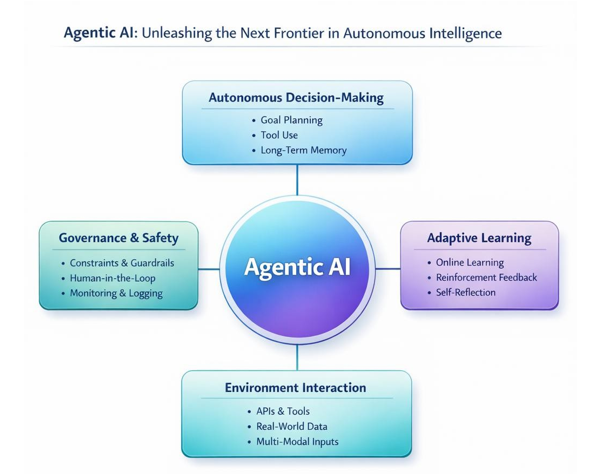
The other drastic approach to system development is the emergence of Agentic Artificial Intelligence (AI) that is destined to transform the perceptual and operational aspects of the world of machines. Unlike the classical AI models, which are prone to perform the specific task within a group of specific parameters, Agentic AI is characterized by self-directed decision-making processes, which allows it to react to the dynamics and behave independently and autonomously. This paper discusses the way the artificial intelligence of agentic AI has the potential to transform the industries through the enhanced process of automation, decision-making, and the possibility to solve more sophisticated issues.
The article introduces a novel paradigm of conceptualising Agentic AI, comprising of the key factors that make it stand out of the traditional AI. The main element of this framework is the concept of the so-called autonomy, meaning the ability of the AI to make decisions that do not involve any human factor and which would adhere to the ethical standards and social goals. Framing, in its turn, also consists of the element of adaptability, which will necessitate that an Agentic AI system will be capable of learning and developing in response to the new information and experience. The paper delves into the mechanisms that power such systems as reinforcement learning, and multi-agent collaboration enabling AI to execute actions to the maximum and also to interact other agents in real time.
The moral and social implications of such autonomous intelligence being set free are also briefly mentioned in the article, and its possibly difficult nature to check with, prevent bias, and be capable of controlling such AI. Reaching the conclusion because of the analysis of the merits and shortcomings of the Agentic AI, this paper preconditions the further research in the field of autonomous systems and provides helpful data about the ways in which social robots may be integrated into practical application.
Keywords- Agentic AI, Autonomous Systems, Artificial Intelligence, Autonomy, Reinforcement Learning, Ethical AI, Multi-Agent Collaboration
1. Introduction
The artificial intelligence (AI) technologies have been highly developed, and this has basically changed the way machines relate to the world. Beginning with the introduction of AI systems to automate simple tasks to the complex problems, AI has also penetrated a number of industries such as healthcare and finance, transportation and entertainment. However, in recent technological advancement of AI, a new boundary is being opened, which is termed as Agentic AI. Unlike the traditional AI models, which typically perform some preestablished tasks with a limited level of
autonomy, the Agentic AI is characterized by the ability to perform independent actions, to make decisions without the input of a human operator, and self-directed behaviour. The fact that a paradigm shift in the development of intelligent systems is opening up a future where AI will capable of doing things and solving problems on its own is what may result in a change of the manner in which we live and work [1].
To have the understanding of the significance of the Agentic AI, one has to know the history of AI [2]. The early AI systems were designed to be light systems, e.g. to solve mathematical equations, or to play chess. They had pre-established guidelines and codes of conduct were followed [3]. Such systems had however failed to learn, adapt and make decisions outside of the predetermined parameters. They were therefore limited and could not be used to address the complexity and dynamics of real world environments [4].
Machine learning (ML) came as a change of great magnitude. The AI systems could learn with data and enhance with the course of time because of the ML algorithms and did not need to be explicitly programmed to learn. This advancement helped AI to perform more complex tasks, e.g. image recognition, language translation, predictive modeling. However, even with the advances, the classical AI systems would still require the human intervention and could only be applied to a particular and task-centric discipline [5] [6].
The opposite of this is in the Agentic AI which tries to cross these boundaries by providing the machines with the capacity to operate independently and make decisions by themselves. The human-like procedures of decision making that are expected to be followed by the new generation of AI are likely to maintain the advantages of the computational speed, accuracy, and scalability. Making AI systems operated in an autonomous mode will allow them to be able to handle more complicated and unpredictable environments and can be implemented in a very wide range of applications, including autonomous vehicles, healthcare diagnostics and financial forecasting.
Agency artificial intelligence (AI) is a category of artificial intelligence that does not only contain task-executing and able to reach autonomous decisions, but it also adapts to new situations and acts based on their personal assessment of the situation. The term
agentic originates in reference to the term agents used in AI the task of which is the possibility to see the surrounding world, think about it, and choose to do something to satisfy some tasks. As opposed to the traditional AI systems, which rely extensively on human processes, the Agentic AI does not require being guided or monitored all the time.
The essence of the Agentic AI is the opportunity to work with huge quantities of data, arrive at the conclusions and take the steps towards these conclusions. Complex learning algorithms, such as reinforcement learning, can be used to enhance this decision-making ability and allow AI to learn due to its encounters with the surrounding as well as feedback, which can be delivered to the latter based on the outcomes of its act. Once again, it is due to the fact that with time, and the continual improvement of its strategies and decision making, Agentic AI can optimize its behaviour to achieve more efficient and improved results.
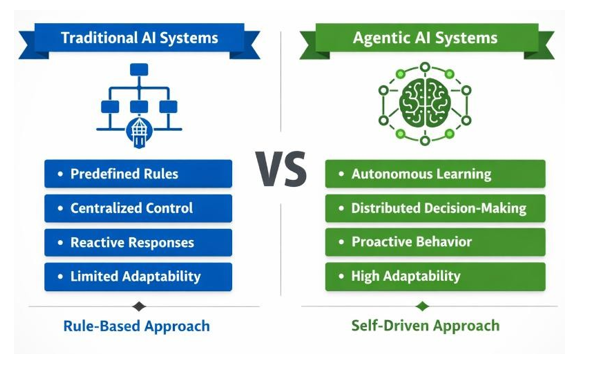
Figure 1: Agentic AI vs Traditional AI Systems
Another significant feature of this kind of AI is its flexibility. Unlike other traditional AI systems which can be seen as typically fixed and static unlike machine learning, Agentic AI systems are supposed to change and adjust to new situations in addition to learning. This capability leads them to be particularly effective in systems that are volatile and unpredictable to a system where real-time adaptability is one of the crucial aspects. As an example, when driving autonomously, an Agentic AI is expected to adapt to the circumstances on the road, traffic flows, weather, etc. continuously and make choices that may ensure that the car is safe and efficient.
The implementation of Agentic AI must contain an influential framework that will support autonomous decision-making, learning and adaptation. This framework implies some of the key aspects that define the work of the Agentic AI systems. These components include:
- Autonomy: The primary characteristic of the Agentic AI is that it does not involve any human intervention in its decision-making and actions. The autonomy is achieved through the application of advanced algorithms and models that allow AI to perceive its environment, reason on possible courses of action and select the most appropriate one to take considering the formulated predetermined goals.
- Adaptability: The conceptualization of the agentic AI systems is based on their learning and transformation. These systems gain knowledge and make conclusions about the past in the process of the continuous interaction with the environment and enhance decision-making process. This adaptability allows Agentic AI to succeed in colorful real life situations in which the situation always changes.
- Ethical Considerations: The further the AI systems become more independent, the more one should take into consideration the ethical consequences of their behavior. The ethical principles should be considered when developing agentic AI to make sure the decisions made by the AI would not harm the society and are in line with their values. This involves whether to design the Agentic AI systems through the inclusion of fairness, transparency, accountability, and privacy.
- Collaboration and Interaction: Although it is possible to implement the concept of the Agentic AI as autonomous, it frequently interacts with other AI agents or one of its human stakeholders to accomplish multi-dimensional objectives. The main characteristics of the Agentic AI systems are multi-agent
collaboration and communication, as they are able to cooperate to solve a problem, exchange information, and optimize the results.
- Continuous Learning and Improvement: The capability to learn gets better with time is one of the distinguishing characteristics of Agentic AI. Only with reinforcement learning and other high-tech technologies of machine learning, it is possible to allow the Agentic AI systems to update their knowledge base, optimize their strategies, and improve their performance.
The possible uses of Agentic AI are numerous and diverse, including self-driving cars and medical diagnostic service and investment. In the transport sector, e.g. autonomous cars with Agentic AI will change the mode of transportation and make roads safer, more efficient and with fewer congestions. Such vehicles could make real-time choices on speed, route and safety with an analysis on the traffic conditions, road hazards and other considerations [7] [8].
They might be used in healthcare to help diagnose medical conditions, predict patient outcomes, and plan treatments individually with the help of Agentic AI. Through the analysis of huge amounts of medical records, laboratory results, and imaging information, the Agentic AI systems might discover trends that a human doctor might overlook, and hence, make a more accurate diagnosis and improve patient outcomes [9] [10].
The Agentic AI is capable of optimizing trading, trading investment portfolios, and anticipating market trends, in the financial sector. The analysis of large volumes of financial information in real-time will enable the Agentic AI systems to make wise choices surpassing systematic human-based approaches and result in more lucrative investments.
Although the future value of Agentic AI is undeniable, many ethical and sociocultural issues are also associated with its widespread use. The more autonomous AI systems are, the more complicated the issues of accountability and responsibility emerge [11].
The possibility of bias in the AI decision-making is also another issue. Similar to any machine learning system, Agentic AI is prone to the biases of the data on which it is trained. Providing the data on which an Agentic AI system is trained with historical
inequalities or biased decisions made, the latter can reinforce or even strengthen those biases, producing inequitable results.
Also, the growing dependence on AI systems poses a risk to privacy and security. There is a possibility that AI systems which collect and analyze large volumes of personal data might become abused or fall into the hands of malicious users. One way of ensuring that the rights of people are not violated through the use of Agentic AI systems is by ensuring that the systems are either built with high privacy requirements and security.
The second stage of independent intelligence is the agentic AI. The potential revolutionary aspects of Agentic AI systems to industries are autonomy, adaptability, and continuous learning, which, in turn, would resolve complex problems that traditional AI has failed to resolve. As the autonomy of these systems increases though, there is a necessity to address the ethical, societal and technical problems which ensue as such. At its best, Agentic AI which is designed and put into practice in a responsible way will transform the world in a positive way and in a way that is beneficial and ethical to the society.
2. Challenges in adaption of Agentic AI in Autonomous Intelligence
Those challenges are the major problems to be encountered in the implementation of the idea of Agentic AI in autonomous intelligence and they comprise technical, ethical, and social problems. Such problems must be addressed so that the implementation of Agentic AI in practice could be safe and efficient.
1. Technical Complexity and Reliability
One of the primary problems of adapting Agentic AI is the technical complexity of creating systems capable of making autonomous decisions. To process large volumes of data at a time in real time, make decisions and adapt to new conditions, the agentic AI requires sophisticated algorithms. This makes the reliability and robustness more complex as any small error in the decision-making process or the algorithm functioning may lead to significant problems, especially in the case of such a sensitive sphere as healthcare or autopilot vehicles. Additionally, the systems or technologies that the
Agentic AI will use in its integration processes with the existing ones can be extremely complicated and demand enormous expertise and development resources.
2. Ethical and Moral Concerns
Ethical considerations are one of the hottest issues of the adoption of the Agentic AI. Such systems can be functioning without the participation of human beings and therefore it is hard to know who is responsible to their actions. It is difficult to blame an agentic AI system, whether the developers, users, or AI system in the case of its harm. Besides, ethical bias is also a significant issue since the AI system can learn to reproduce or even enhance the existing bias in the society as long as it is fed on biased information. There is also the issue of the development of open and fair decision making processes and also conforming to the human values.
3. Security and Privacy Risks
Cybersecurity threats are present to agentic AI systems, and those related to the internet in particular. The more the responsibilities are assigned to the AI systems, the more appealing they become victims of malicious actors who can fiddle or undermine their activities. Moreover, the sheer size of the data that is being processed by these systems is also a privacy threat because AI systems might accidentally gather and abuse sensitive personal information.
4. Regulatory and Governance Issues
The unregulated use of Agentic AI is a major challenge. The existing legislature and regulatory systems were not intended to deal with the subtlety of independent machine decision making. Developing sound, globally uniform policies that provide AI to work safely and ethically, as well as enhance innovation, is a pressing task of legislators.
5. Social and Economic Impacts
The extensive use of Agentic AI might also result in the job displacement, especially in those industries that are based on the routine decision making. Social and economic effects of such a change such as reskilling employees and dealing with social concerns over losing jobs will need to be addressed, to help encourage acceptance of the
technologies. Furthermore, trust towards autonomous systems is not high among the population, and to gain this trust, one will have to overcome fear of safety and decision- making mechanisms of AI.
To sum up, although Agentic AI has the potential to transform most industries, its implementation has to overcome a complicated environment of technical, ethical, regulatory, and social challenges. By solving these issues with the help of research, regulation and careful implementation, it will be central to making sure the integration is successful.
3. Framework for Agentic AI in Autonomous Intelligence
The development of Agentic AI constitutes a total transformation of the activity of artificial intelligence systems in other areas. Unlike the traditional AI that in most cases is controlled by humans or even certain parameters, Agentic AI can make its own independent decisions, learn and adapt to the changing conditions independently. This would enable Agentic AI to become an extremely valuable instrument in sophisticated and flexible fields such as autonomous cars, healthcare, finance, and industrial robotics. In order to ensure that the process of creating, implement, and using Agentic AI is effective, it has to have a clear framework that will bring together different technical, ethical, and operational factors. The below is a detailed design that ensures the quality of robustness, transparency, accountability and the capability of Agentic AI systems to evolve as time progresses.
1. Core Components of the Framework
The Agentic AI architecture does have a few fundamental components which dictate its functionality and decision-making and adaptability. These are autonomy, learning and adaptation, perception and decision making processes.
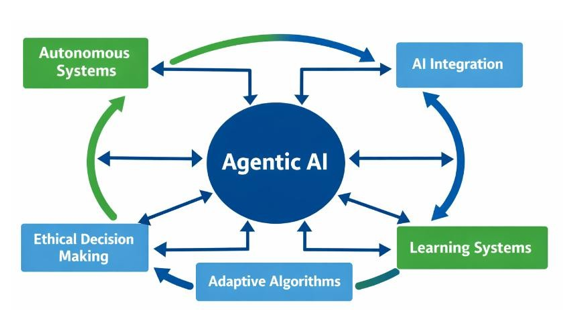
Figure 2: Conceptual Framework of Agentic AI
- Autonomy and Self-Directed Action
Autonomy is the central pillar of the Agentic AI because it enables systems to work, operate, make decisions, and act without human involvement. This is the skill needed to have a system that is regarded as an agentic one. To understand the world around it, the AI accepts and decodes exterior data by sensors, cameras, and other sources of data. It establishes its goals, which specify and prioritize goals according to preset standards, or by experience. The AI also performs autonomous actions to attain desired results even in complicated and unpredictable circumstances once they have made the decisions. An Agentic AI system of autonomy is based on its level of sophistication. To illustrate, autonomous vehicles provide the AI system to operate the navigation, react to the impediments and make the decisions in real-time regarding the speed and direction. Such autonomy will guarantee that the AI system can be effective and efficient in dynamic environments, and little to no human involvement is required. The more advanced the system, the more it can do by itself in various circumstances.
- Learning and Adaptation
Learning and adaptation is needed in order to successfully implement Agentic AI in dynamic and real life environments. This system must be able to learn by experiences
and must be capable of evolving its ways of conduct that it may be improved with the passage of time. This involves:
- Reinforcement learning (RL): It is common with agentic AI that reinforcement learning algorithms are used, whereby a system is informed about its action (rewarded or penalized) but alters its behavior to maximize long-run utility. This system would allow the AI to optimize its actions and ideal decision-making procedures.
- Transfer learning: This involves use of past obtained experience in different scenes or work and translating the same into new, but related, scenes. Transfer learning is crucial to the successful completion of the Agentic AI in responding successfully to new conditions.
- Evolutionary algorithms: These algorithms emulate the laws of biological evolution, and they evolve solutions through the application of genetic operators. In complex environments, evolutionary algorithms are used to assist Agentic AI to adapt simulating the survival of the fittest behaviors.
- Online learning: Online learning methods can enable Agentic AI to adapt and learn in real-time settings into incoming data. This makes sure that the system would be able to adapt to changes without necessarily having to train them all over again.
c. Perception
Perception refers to the way in which Agentic AI receives and processes information in the environment. This is achieved through:
- Sensors: The agentic AI is dependent on sensors (e.g. cameras, LIDAR, infrared, and so on) to gather raw data about the surrounding. Under the autonomous driving, these sensors can help the AI to see road signs, pedestrians, cars, and other important features.
- Sensor fusion: The AI would need to integrate the information of several sensors in order to produce more relevant and detailed perception of the environment. Considering the example of a car, AI in the car incorporates sensor fusion by integrating the visual information obtained by cameras together with distance information obtained by radar.
- Contextual understanding: Perception does not simply mean the process of recognizing objects or events but entails putting them into a wider context. The agentic AIs need to be able to differentiate between the relevant and irrelevant information, prioritize actions, and change depending on the changes in the context.
d. Decision-Making
In Agentic AI systems, decisions are made by choosing the most optimal course of action out of the options that are available to meet the goals of the system. The decision- making process relies on:
- Rule-based reasoning: The initial types of AI decision-making were mostly based on rules in which a set of rules was used to act based on particular inputs. Though still in use, rule-based systems are not as flexible as they are needed in complex and dynamic environments.
- Machine learning-based decision-making: The first and most recent type of AI is agentic AI that uses machine learning algorithms to determine the decision in the context of past experiences or real-time data analysis. These algorithms can deal with uncertainties and incomplete information, and make decisions that are maximizing long-term goals.
- Multi-agent systems: In a situation with many interacting agents (e.g., collaborative robots or self-organizing networks), the process of decision making encompasses coordination of the actions of different agents towards reaching common objectives. These systems have to eliminate conflicts, exchange information and maximize group performance.
- Ethical decision-making: With increasing autonomy in decisions made by the AI systems, it is imperative that the framework should contain ethical guidelines. These make sure that decision making processes are carried out in a manner that is agreeable to societal values, legislation and principles of fairness.
2. Ethical and Regulatory Considerations
To make sure that Agentic AI behaves in a manner that corresponds to human values and social conventions, the ethical principles need to be incorporated. The framework is supposed to contain:
- Transparency: Agentic AI should be transparent in making its decisions. Humans need to be in a position to know the reason an AI system took a given decision. It is essential in such areas as healthcare and law enforcement where choices may have far reaching repercussions
- Accountability: It is significant to have an accountability on the actions of Agentic AI. This would include determining who (or what) is accountable when AI systems make malice or accidental conclusions. The design, deployment and monitoring of Agentic AI should be accountable.
- Bias and Fairness: Agentic AI systems should be created in a manner that avoids the occurrence of discriminatory results, so that they are fair in their decision making. This can be done with a variety of and representative training data, explicit bias testing, and effective ethical review oversight.
- Regulatory adherence: With the development of AI technologies, they should adhere to the regulations that guarantee safety, security, and ethical conduct. It includes the compliance with the local and international legislation on data privacy, security, and the application of AI in the most sensitive spheres (e.g., healthcare, finance).
3. Human-AI Collaboration
Even though the functioning of Agentic AI systems is based on self-suficiency, the cooperation between people and AI is also a significant part of the scheme. Where the human factor is needed, human supervision permits the incorporation of human intuition and judgment in critical decision-making cases where AI might not possess all of the contextual information. Key aspects include:
- Human-in-the-loop systems: These are systems which engage human intervention in critical decision making. As an example, an autonomous car may be controlled by a driver in a crisis.
- Human-AI trust and interaction: Trust is a crucial concept that should be built between people and AI systems in order to cooperate with Agentic AI systems. The availability of open communication channels and clear reasoning by artificial intelligence systems also provides an opportunity to establish effective collaboration and trust, which guarantees the establishment of trustful relationships.
- Balanced autonomous and manual control: The building should be balanced between the control of manual and autonomy. Even though AI should be allowed to operate on its own to guarantee efficiency, the human being still needs to possess the ability to make crucial decisions.
4. Security and Safety Mechanisms
The most significant and especially in the case of autonomous work are the safety and security of the AI systems related to agents. The framework must ensure that the systems are:
- Secure against computer-crimes: Malicious intent can attack autonomous systems and can hack them. Their security systems need to be worked on and come up with effective security strategies, such as encryption, secure communication and round-the-clock monitoring.
- Failsafes and redundancies: Graceful failure Agentic AI systems should have safety measures in place to avoid malfunctions or failures, even though they are not unexpected. This too goes along with the fact that it brings in the redundancy of key parts, the presence of failsafe feature and the option to shut down in case of emergency.
- Adversarial resistance: The agentic AI systems should be resistant to adversarial attacks, whereby hostile inputs are designed in such a manner that they will be able to deceive the system to make incorrect decisions.
5. Continuous Monitoring and Improvement
Finally, the continuous nature of monitoring and improvement is also an important component of the framework. Taking into account the fact that the work of Agentic AI is independent, it is crucial to ensure that the performance thereof should be checked
on a regular basis and improved with references to the accessibility of new data, user feedback, and new technologies. This includes:
- Real-time monitoring: Maintaining constant surveillance of the work of the Agentic AI systems to identify deviation resulted in anomalies, error, or unintentional behavior.
- Feedback loops: Installing systems in which the AI system will be able to learn based on its errors and will adjust to new problems in the long term.
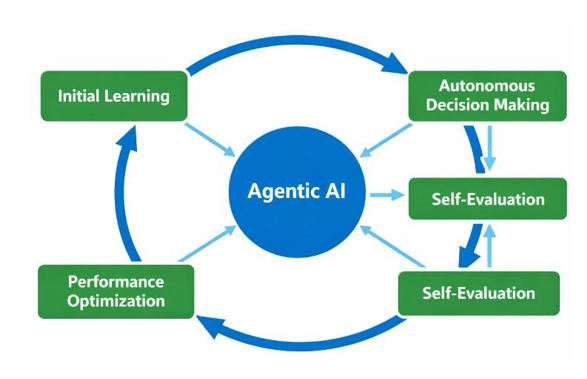
Figure 3: Lifecycle of an Agentic AI System
The Autonomous Intelligence frameworks on Agentic AI is an intricate plan that takes into account technical, ethical, operational, and regulatory aspects. It is also concerned with autonomy, education, and decision-making and brushes on the relevance of ethical transparency, fairness, and accountability. The implementation of these systems should also be performed in a safe and productive manner through the assistance of providing security and coordination between humans and AI, as well as continuous monitoring. By following this general framework, the developers and other concerned parties can
continue to hold onto the idea that Agentic AI systems are not only productive and flexible but also agreeable to human values and needs of the society.
4. Benefits of the Framework for Agentic AI in Autonomous Systems
The Agentic AI framework of autonomous systems has a great number of advantages that further develop the functionality and stability of AI systems in different industries. These advantages are influenced by the framework focusing on autonomy, ethical decision making, adaptability and security whereby, the Agentic AI can be effective, ethical and in alignment with the values of the human beings.
- Increased Autonomy and Efficiency- The framework allows Agentic AI systems to be self-directed, as well as to make decisions since it allows them to act and decide without being closely supervised by humans. This leads to increased efficiency particularly in operations which require real-time decisions such as autonomous vehicles or factory automation. Work can be performed efficiently and more accurately by possessing AI systems that could vary based on the evolving conditions and circumstances, resulting in the maximization of output in case they are used in complicated settings.
- Adaptability and Constant Learning- The emphasis of the framework on continuous learning and dynamism offers the capability of getting better over the course of time, which can be utilized by the Agentic AI. They can learn on novel information and modify the way they work to be adjusted to previously unanticipated situations by means of transfer learning and evolutionary algorithms, relying on the concept of reinforcement learning. This evolutionary ability helps Agentic AI to be efficient and adaptive even in unpredictable dynamic environments, that is why it will prove the best fit in areas like healthcare where conditions change rapidly.
- Ethical and Transparent Decision-Making- The framework can also include ethical considerations, e.g. fairness, accountability, transparency, etc., to ensure that the decisions undertaken by an Agentic AI are in line with the societal values. This reduces the possibility of biases and increases fairness that is more crucial in such applications as criminal justice or recruitment. Open AI decisions are also another factor that promotes human trust in AI which is critical in human acceptance.\
- Better Security and Safety- security and safety protocols, such as robust cybersecurity protocols, failsafes, and susceptibility to adversarial assaults are also brought out in the framework. It enhances safety and dependability of Agentic AI systems and can safely act in challenging systems like self-driving vehicles, medical diagnosis and defense.
Conclusively, the Agentic AI framework does not only provide novel and improved intelligent, adaptable and efficient autonomous systems but also makes them ethical, secure and trustworthy thus marking the beginning of their wider implementation in industries.
5. Future scope of agentic AI in autonomous systems
The future of agentic AI within autonomous systems is of high potential particularly in the light of its possible applications in many fields such as transportation, healthcare and energy. With the ability to make intelligent, autonomous decisions, agentic AI has the potential to revolutionize systems to become more efficient, adaptive and reliable to operate in dynamic environments.
The most remarkable feature of agentic AI is that it will optimise resources in real-time. In self-driving cars, agentic AI may enable cars to make decisions with real-time data, enhancing safety, alleviating traffic jams, and improving the transportation system in general. Likewise, in the medical field, agentic AI may also give rise to innovations in autonomous medical devices that would enable offering more personalized and efficient care delivery and could bring a revolutionary change to the industry, streamlining treatment plans and patient outcomes.
It is also possible that the future uses of agentic AI in energy management systems would be important to optimize the energy distribution in smart grids to allow more efficient utilization of renewable sources of energy. As renewable energy becomes more and more dependent on and decentralized energy resources are relied upon, agentic AI can be used to achieve a better balance of supply and demand, which will equate the stability of the grid and reduce the amount of waste of energy.
In addition, agentic AI when implemented in autonomous systems would result in more sophisticated multi-agent systems. Such systems, which can be achieved to be operated in heterogeneous environment, will particularly be used to manage the complexities of the multi-modal transportation network or the smart city environment.
6. Conclusion
In conclusion, Agentic AI is a radical innovation in autonomous intelligence, which provides systems with the ability to make self-motivated decisions, develop in respondent environments, and generate optimal output on a case-by-case basis. The innovation paves the way to various technological advances in the multiple industries, such as autonomous cars and healthcare, energy use, and smart cities. The use of the Agentic AI can greatly enhance the effectiveness and sustainability of these industries since the systems can work autonomously and effectively.
The basis of the development of intelligent systems that can work in the real-life and complex environment is the Agentic AI framework, where autonomous operations, adaptability, and ethical decision-making are considered. With such emphasis on the lifelong learning, openness, and justice, this framework will ensure that the implementation of agentic AI will address not only the technical problem, but the social and ethical dilemma of the autonomy of AI as well. In addition, it is highly beneficial, as it enhances the efficiency of the activities, the control of the resources, and the ability to react to the unpredictable conditions that are crucial in such spheres as transportation, health care, and energy.
However, the implementation of the Agentic AI on autonomous systems or does not present any challenges. There should be solutions to security-related, accountability, and regulatory compliance challenges to ensure that such technologies are not deployed in an unsafe and unethical manner. As AI progresses, these issues will form part of the success of the full potential of Agentic AI.
Anyway, the future of the Agentic AI in autonomous systems is enormous. It is an innovator in the sphere and revolutionizes the way things are done and that is interesting. The next generation of autonomous intelligence will be characterized by the widespread use of the Agentic AI that will then result in innovation and
improvement of the quality of life of many spheres as the research and development projects are being pursued.
References
- Centers for Disease Control and Prevention (CDC), “Public Health Data Modernization Initiative,” 2022. [Online]. Available: https://www.cdc.gov/surveillance/data-modernization/index.html
- Databricks, “Lakehouse for Healthcare and Life Sciences,” 2021. https://www.databricks.com/solutions/industries/healthcare-and-life-sciences
- Michael Armbrust, “Lakehouse: A New Generation of Open Platforms that Unify Data Warehousing and Advanced Analytics,” Databricks, 2021. https://www.databricks.com/sites/default/files/2020/12/cidr_lakehouse.pdf
- HL7 FHIR Standard, “FHIR for Healthcare Interoperability,” 2021. https://www.hl7.org/fhir
- W3C, “Semantic Web Standards for Data Interoperability,” 2021. https://www.w3.org/standards/semanticweb
- NIST, “Big Data Interoperability Framework (NBDIF) Version 3,” 2020. https://www.nist.gov/itl/big-data-nist/big-data-nist-documents/nbdif-version-30-final
- Google Cloud, “AI & Predictive Analytics in Healthcare Operations,” 2022. https://cloud.google.com/solutions/healthcare
- Healthcare Data Warehouse Case Study (Multi-Site Hospital) — Databricks Customer Stories, 2021.https://databricks.com/customers
- HFMA – Healthcare Financial Management Association, “Trends in Healthcare Finance & Revenue Cycle Transformation,” 2022.https://www.hfma.org/topics/financial-sustainability.html
- Centers for Disease Control and Prevention (CDC), “Public Health Data Modernization Initiative,” 2022.https://www.cdc.gov/surveillance/data- modernization/index.html
- Microsoft Azure, “Cloud Solutions for Healthcare: Data Interoperability and Analytics,” 2022.https://azure.microsoft.com/en-us/solutions/industries/healthcare/