

Modern industrial automation has never been more demanding. As manufacturing processes grow increasingly complex, the pressure on control systems to deliver consistent, high-speed performance without failure has reached unprecedented levels. System integrators and plant engineers face a dual challenge: deploying solutions that can handle today’s operational loads while remaining adaptable enough for tomorrow’s requirements.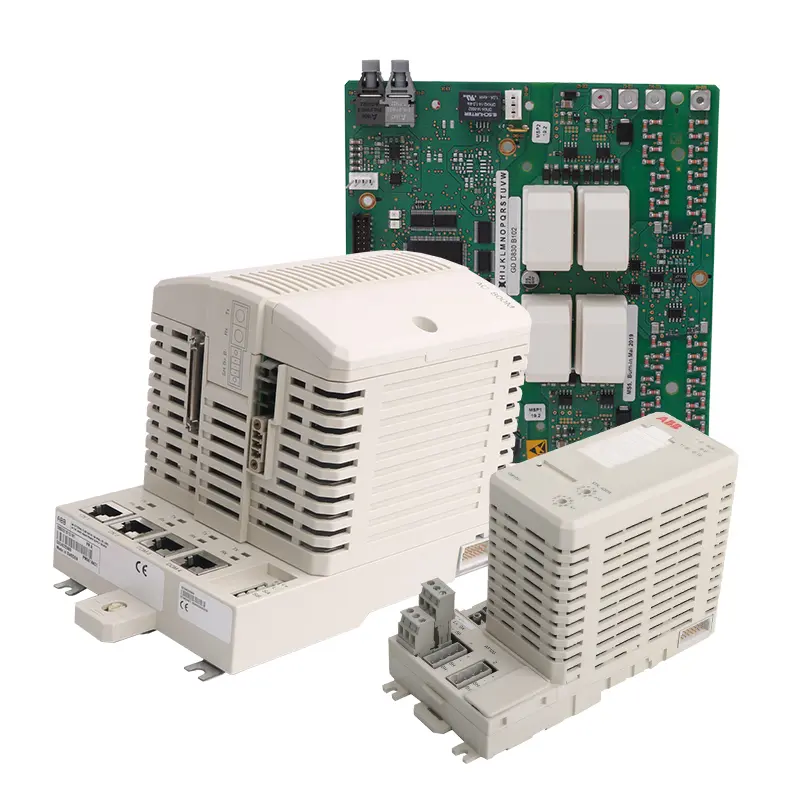
The ABB Master Series stands out as a premier solution within ABB’s broad portfolio of automation components, purpose-built to meet these exacting demands. Designed for environments where downtime is not an option, this high-performance control platform combines advanced processing capabilities with robust hardware architecture, making it a trusted foundation for reliable automation across industries ranging from oil and gas to advanced manufacturing.
This article is written specifically for system integrators seeking a clear, practical guide to evaluating and deploying the ABB Master Series. We’ll explore its core architecture, key technological advantages, a structured evaluation framework, proven reliability data, and actionable implementation best practices — everything needed to make an informed decision and maximize the platform’s potential in real-world industrial environments.
Understanding the ABB Master Series: A Premier High-Performance Control Platform
The ABB Master Series represents a flagship line within ABB’s extensive automation components portfolio, engineered specifically to address the control demands of complex, large-scale industrial operations. Rooted in decades of automation engineering expertise, the platform evolved from ABB’s early distributed control systems into a sophisticated, unified control architecture capable of managing thousands of I/O points with exceptional precision and speed.
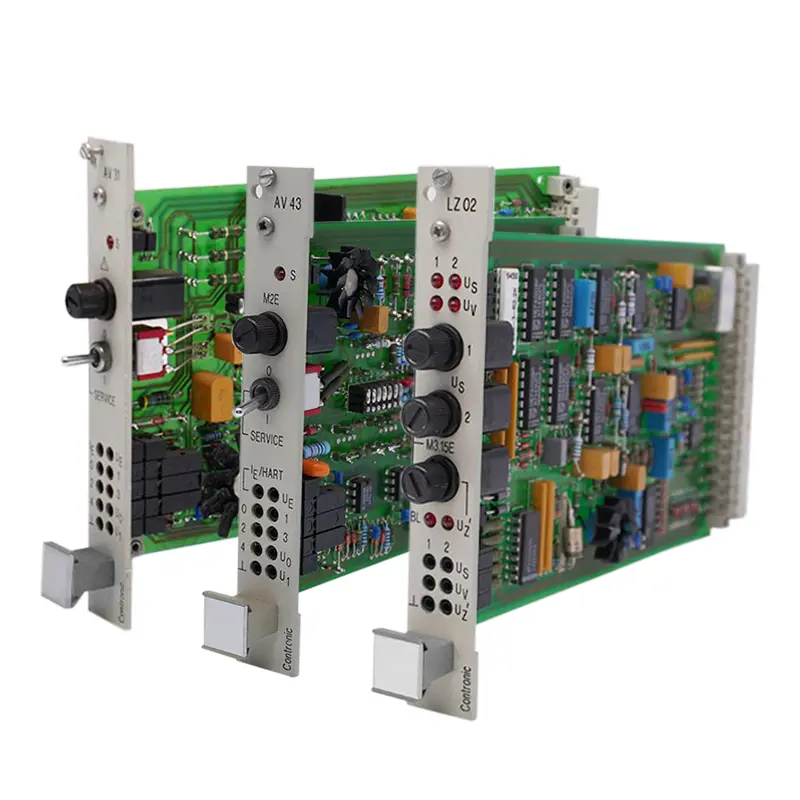
At its core, the Master Series is built on a modular distributed architecture that separates processing, communication, and I/O functions into discrete, interoperable layers. This structure allows engineers to configure systems that precisely match operational requirements rather than over-engineering around rigid, monolithic designs. The platform supports a wide range of process industries — including oil and gas, power generation, pulp and paper, and advanced discrete manufacturing — positioning it as a genuinely versatile control foundation rather than a niche solution.
What sets the Master Series apart from comparable control platforms is its deliberate design philosophy: prioritize deterministic performance and long-term operational continuity above all else. This commitment has driven ABB to set industry benchmarks in areas such as real-time control loop execution, system availability, and cross-generation hardware compatibility. For system integrators, this translates into a control platform that not only performs at the highest level today but maintains relevance and supportability well into a facility’s operational future.
Core Features and Technological Advantages of the ABB Master Series
The ABB Master Series delivers high-performance control through a carefully engineered combination of scalability, processing power, and open integration capabilities. At the processing level, the platform employs high-speed controllers capable of executing thousands of control loops within deterministic cycle times, ensuring that time-critical operations in refining, power distribution, or precision manufacturing never suffer from computational bottlenecks. This raw processing capacity is paired with a scalable I/O architecture that can expand from small pilot installations to facility-wide deployments without requiring fundamental redesign — a practical advantage for integrators managing phased rollouts or capacity expansions.
Modularity is another defining characteristic. Engineers can independently upgrade communication modules, I/O cards, or processing units without taking the entire system offline, dramatically reducing maintenance windows and lifecycle costs. The platform’s native support for standard industrial protocols — including PROFIBUS, Modbus, and OPC UA — simplifies integration with third-party field devices, SCADA systems, and enterprise-level data infrastructure, eliminating the custom middleware layers that often introduce latency and failure points in competing architectures. In automotive manufacturing environments, for instance, suppliers like Apter Power rely on precisely this kind of open, interoperable control infrastructure to coordinate automated assembly lines producing high-tolerance auto parts at scale.
Architectural Design for Robust Control Systems
Reliability in the Master Series is not incidental — it is structurally enforced. The platform incorporates dual-redundant controller configurations where a standby processor continuously mirrors the active unit, enabling bumpless switchover in under 50 milliseconds upon detecting a fault. Power supply redundancy follows the same principle, with independent feeds ensuring uninterrupted operation even during grid disturbances. Communication backplanes use fault-tolerant ring topologies that automatically reroute data traffic around damaged segments, preventing a single cable or node failure from cascading into system-wide disruption. Diagnostics are embedded at every hardware layer, providing real-time health monitoring that feeds directly into predictive maintenance workflows — giving integrators actionable visibility rather than reactive alarms.
Evaluating the ABB Master Series for Integration: A Guide for System Integrators
Selecting a high-performance control platform is never a straightforward decision. For system integrators, the evaluation must balance immediate technical requirements against long-term operational strategy, budget constraints, and the realities of integrating new hardware into established infrastructure. The ABB Master Series warrants a structured assessment approach rather than a feature-by-feature comparison with competing platforms.
The first evaluation dimension is infrastructure compatibility. Integrators must map the Master Series communication capabilities against existing field devices, network topologies, and supervisory systems already deployed at the facility. Its native support for PROFIBUS, Modbus, and OPC UA significantly reduces integration friction, but a thorough compatibility audit remains essential before any commitment. The second dimension is total cost of ownership. Beyond initial procurement, integrators should account for engineering hours, training requirements, spare parts availability, and the long-term value of ABB’s extended hardware support commitments — factors that frequently determine whether a control platform delivers genuine ROI over a 15-to-20-year operational lifecycle.
Performance benchmarking forms the third evaluation pillar. Integrators should establish measurable performance targets — control loop execution times, system availability thresholds, and I/O response latencies — and validate these against documented Master Series specifications and field-reported data from comparable installations.
Step-by-Step Evaluation and Selection Process
A disciplined evaluation process follows four concrete steps. First, define project requirements precisely: document the number of control loops, required scan rates, environmental operating conditions, and any industry-specific certification requirements before engaging with any hardware specifications. Second, conduct a technical compatibility analysis by auditing existing control architecture, identifying communication protocol dependencies, and confirming that the Master Series I/O modules align with current field instrumentation. Third, perform a cost-benefit and ROI calculation that incorporates engineering, commissioning, training, and lifecycle maintenance costs alongside quantified productivity gains from reduced downtime and faster fault recovery. Fourth, initiate pilot testing in a simulated environment that mirrors actual process conditions — validating redundancy switchover behavior, communication throughput under load, and diagnostic reporting accuracy before full-scale deployment commits resources and schedule.
Proven Reliability of the ABB Master Series in Diverse Industrial Environments
Reliability claims are easy to make — field performance is where control platforms prove their worth. The ABB Master Series has accumulated a substantial operational record across some of the most demanding industrial environments on the planet, from offshore oil platforms subject to constant vibration and salt-laden air to paper mills where humidity and chemical exposure challenge even ruggedized electronics. Installations in these environments consistently report system availability figures exceeding 99.9%, a benchmark that translates directly into minimized unplanned downtime and protected production revenue.
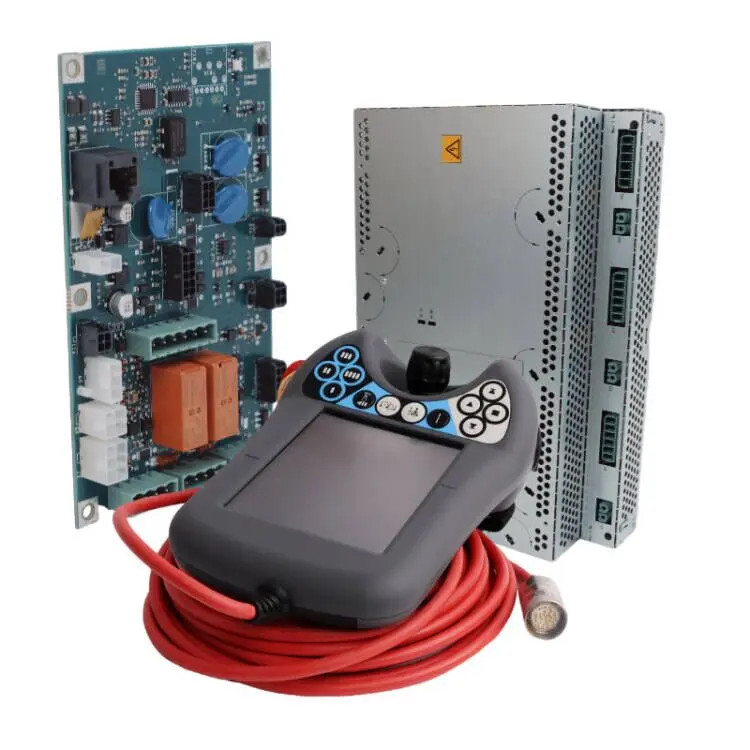
The platform’s hardware is engineered to operate continuously within temperature ranges spanning -20°C to 70°C and humidity levels up to 95% non-condensing, with robust EMC shielding that maintains signal integrity in high-electrical-noise environments typical of heavy manufacturing and power generation facilities. MTBF data from field deployments supports the platform’s long-term durability, with controller modules routinely achieving operational lifespans well beyond standard industrial expectations. The Master Series also carries relevant industry certifications — including IEC 61508 functional safety compliance for SIL-rated applications — providing integrators with the documented assurance required for safety-critical process environments. These certifications are not peripheral credentials; they are prerequisites for deployment in regulated industries where control system failure carries consequences beyond production loss.
Implementation and Best Practices for System Integrators
Successful deployment of the ABB Master Series depends less on the hardware itself and more on the discipline applied during each implementation phase. A structured approach — spanning planning through ongoing maintenance — consistently separates high-performing installations from those that underdeliver despite capable equipment.
Planning and design form the critical foundation. Before any hardware is ordered, integrators should produce detailed network topology diagrams, define redundancy requirements for each control zone, and document environmental conditions at each cabinet location. This upfront investment prevents costly redesigns during installation. During the installation phase, follow ABB’s recommended cable segregation practices to protect signal integrity — keeping power and communication cables on separate trays and maintaining proper grounding at every panel to neutralize EMC interference from adjacent equipment.
Configuration for optimal performance centers on two priorities: tuning control loop scan rates to match actual process dynamics rather than defaulting to maximum speed, and enabling the platform’s built-in diagnostic reporting to feed directly into the facility’s maintenance management system. Unnecessary scan rate overhead consumes processing capacity without operational benefit, while connected diagnostics transform reactive fault response into predictive intervention.
For long-term reliable automation, establish a structured maintenance cadence that includes quarterly firmware reviews, annual redundancy switchover tests, and scheduled spare parts audits aligned with ABB’s published hardware lifecycle roadmap. Maintaining a documented spare parts inventory for critical modules — particularly controller cards and communication interfaces — eliminates the procurement delays that turn minor faults into extended outages. Training operations and maintenance personnel on the platform’s diagnostic interface ensures that the system’s built-in intelligence is actively used rather than overlooked.
Why the ABB Master Series Delivers Lasting Industrial Control Value
The ABB Master Series consistently demonstrates why it earns its position as the superior choice for high-performance industrial control. For system integrators, the platform delivers on three dimensions that matter most: a clear, structured evaluation framework that removes guesswork from the selection process; proven field reliability backed by documented availability figures, MTBF data, and recognized safety certifications; and seamless integration capabilities that reduce deployment friction across diverse infrastructure environments.
What distinguishes the Master Series beyond its technical specifications is the operational confidence it provides over a system’s full lifecycle. Its modular architecture accommodates growth, its redundancy design protects production continuity, and its open protocol support ensures it remains compatible with evolving facility requirements rather than becoming a stranded asset. These qualities compound in value over the 15-to-20-year operational horizons that define real industrial ROI.
As industrial automation continues advancing toward greater connectivity, data-driven decision-making, and tighter performance tolerances, control platforms that combine deterministic performance with long-term adaptability will define competitive advantage. The ABB Master Series is engineered precisely for that trajectory. System integrators evaluating their next control platform deployment are encouraged to engage ABB’s technical specialists or authorized partners for a project-specific consultation — translating the platform’s capabilities directly into measurable outcomes for their operations.
