

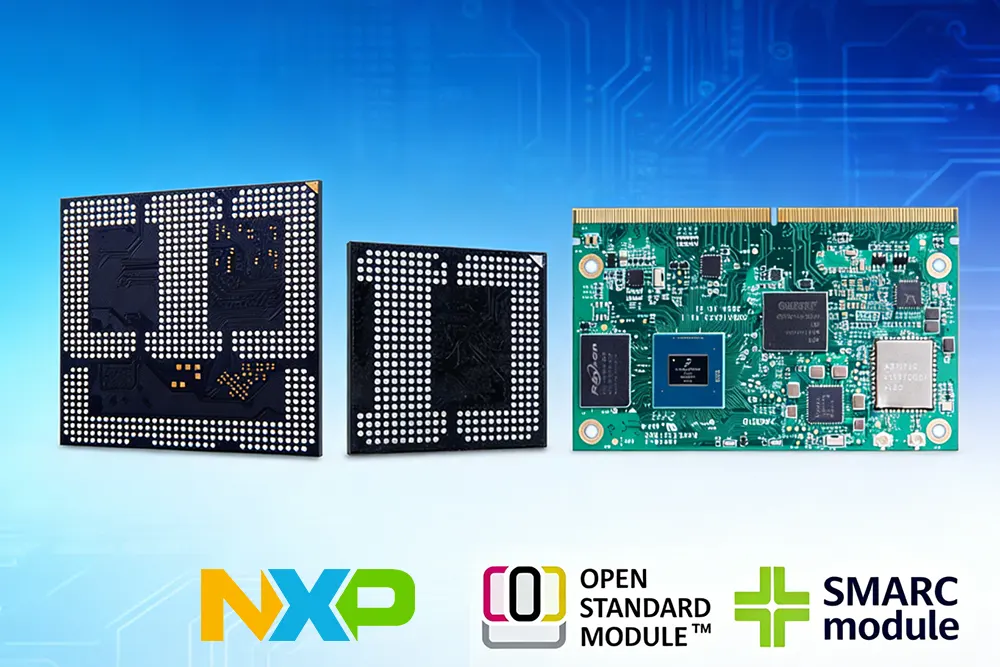
Cutting through the noise of new hardware announcements requires a simple filter: does this solve a real problem for my project? For teams building industrial, medical, or commercial edge devices, Geniatech’s new SOM-iMX95-OSM and SOM-iMX95-SMARC modules present a compelling, low-risk proposition. Let’s break down when they make strategic sense.
The Core Value Proposition: De-risking Development
Geniatech isn’t just selling a chip-on-a-board. They are selling a pre-validated, long-lifecycle compute core that replaces the complexity and risk of designing your own. The value isn’t just in performance, but in predictability.
You Should Strongly Consider This Solution If:
Longevity is Non-Negotiable. Your product has a lifespan measured in decades, not years. The explicit alignment with NXP’s 15-year product longevity program directly addresses the single biggest existential threat to industrial products: component obsolescence. This is a game-changer for medical, automation, and infrastructure.
You Face the “Heterogeneous Computing” Trilemma. Your device needs to run a rich OS (Linux), handle real-time control tasks, and perform local AI inference (e.g., vision analytics). The i.MX95’s integrated A-cores, M-cores, and NPU offer a balanced, pre-optimized single-chip architecture. Using this SOM saves you the immense effort of architecting, validating, and debugging a multi-chip solution.
Your Team Needs to Move Fast, Not Deep. Adopting a mature SOM means outsourcing the most challenging hardware work—complex multilayer PCB design, high-speed signal integrity, core power delivery, and thermal management—to experts. Your team can focus on your unique application and carrier board. The included BSP, development kits, and free design review services further compress your time-to-prototype.
Proceed with Caution If:
Raw, Uncompromising Performance is the Goal. If you’re processing dozens of 4K streams or training massive models at the edge, you’ll need modules with high-end GPUs or dedicated AI accelerators. The i.MX95 is built for “edge intelligence,” not “edge data center” workloads.
Your Cost Model is Ultra-Aggressive. For consumer-grade, multi-million-unit volumes where every cent counts, a custom-designed core board may eventually be cheaper. The SOM’s value shines in mid-volume or high-reliability scenarios where NRE and risk outweigh unit cost.
You Require Extreme Safety Certification. While it supports ASIL B/SIL 2, products needing higher levels (e.g., ASIL D) will require a much deeper, potentially custom, evaluation cycle.
OSM vs. SMARC: A Decision Framework
Choose SMARC for prototyping, flexibility, and future upgrades. Ideal when your I/O needs are complex or you want a clear hardware upgrade path without a full board respin.
Choose OSM for finalized, volume-optimized designs. This is the path for products where size, power, unit cost, and ruggedness (solder-down reliability) are paramount.
The Bottom Line: The Geniatech i.MX95 series is a tool for de-risking projects and accelerating time-to-market. It’s most valuable for teams building intelligent edge devices who want to spend their engineering cycles on differentiation, not on battling the underlying hardware complexities and supply chain uncertainties.