

Every mechanic knows the frustration of stripping a bolt or busting their knuckles because a wrench lacked the clearance to turn. You wedge your hand into a tight engine bay, attach your tool, and realize you can only move the handle a few degrees before hitting a radiator hose. This common scenario is exactly why tool design matters so much. The internal mechanism of your hand tools dictates your efficiency, speed, and safety on the job. Among the most critical innovations in modern mechanics is the 72-tooth ratcheting wrench. This specific tool design bridges the gap between bulky standard wrenches and high-clearance socket sets. By understanding the mechanics behind gear teeth, you can vastly improve your workflow and protect your hardware from damage.
What Does 72-Tooth Mean on a Ratcheting Wrench?
When you look at a ratcheting tool, the tooth count refers to the physical gears hidden inside the closed end of the wrench. A gear interacts with a small metal pawl to create the famous ratcheting motion. As you turn the tool clockwise, the pawl catches the gears and drives the fastener.
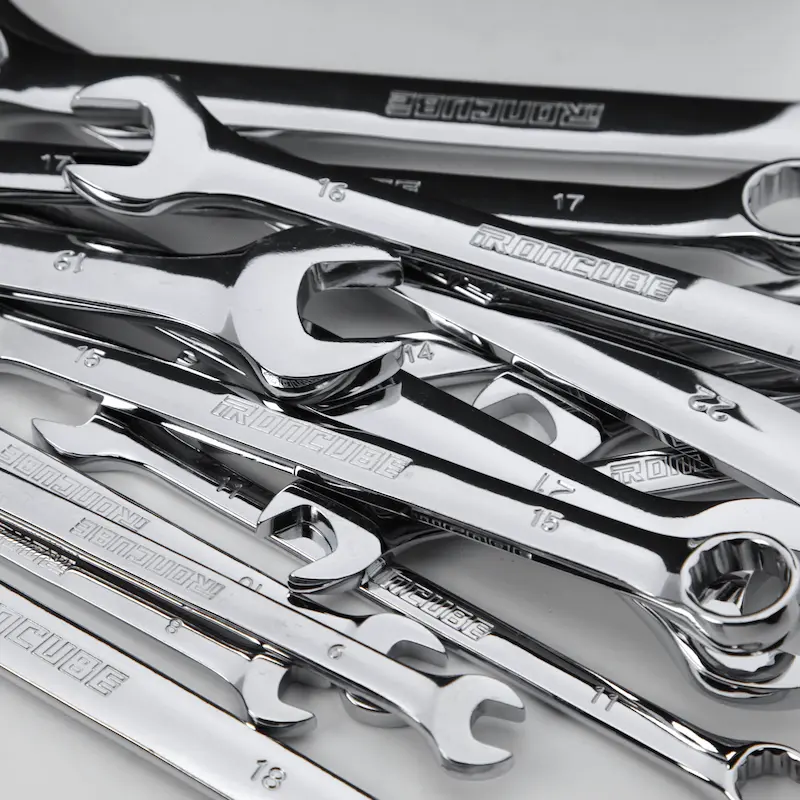
When you turn it counterclockwise, the pawl slides over the gears, allowing you to reposition your hand without removing the tool from the bolt. The historical evolution of this mechanism transformed manual labor, as documented in the engineering archives on Wikipedia’s wrench history page. A higher number of teeth changes the fundamental physics of how that repositioning works.
How Tooth Count Determines Swing Arc
The mathematical relationship between gear teeth and swing arc is straightforward but incredibly impactful. You divide a full 360-degree circle by the number of teeth inside the gear. For a standard 36-tooth wrench, you must swing the handle exactly 10 degrees before the pawl catches the next gear and applies torque again. Conversely, a 72-tooth ratcheting wrench only requires a 5-degree swing to engage the next tooth. This means you only need half the physical space to ratchet the bolt. In deeply recessed areas, that five-degree difference separates a finished repair from an hours-long struggle. If you want to see exactly how these internal mechanisms look in action, you can watch demonstrations on the IronCube Tools YouTube channel.
72-Tooth vs 36-Tooth vs 120-Tooth Comparison
To truly appreciate the engineering, you must compare the most common gear configurations side by side. Lower tooth counts offer greater durability because the individual teeth are larger and can handle more brute force. Higher tooth counts offer better clearance but sacrifice some structural strength because the gears must be machined smaller to fit inside the wrench head. The data below clearly illustrates how tooth count directly alters the minimum swing arc required to turn a fastener.
| Tooth Count | Swing Arc Required | Best Application | Durability Rating |
|---|---|---|---|
| 36-Tooth | 10 degrees | Heavy machinery, high-torque suspension work | Very High |
| 72-Tooth | 5 degrees | General automotive, plumbing, engine bays | High |
| 120-Tooth | 3 degrees | Extreme precision, highly confined spaces | Moderate |
As the table shows, the 72-tooth option strikes a perfect balance. It provides the tight clearance of a fine tooth ratcheting wrench while maintaining the structural integrity required for heavy mechanical work.
Why 72-Tooth Is the Professional Sweet Spot
Professional mechanics demand tools that work flawlessly day after day. They cannot afford to baby their equipment or stop working because a delicate gear stripped under pressure. This reality is why the 72-tooth configuration has become the unofficial industry standard for premium hand tools. It delivers an optimal blend of accessibility and toughness that simply outperforms the extremes on either end of the spectrum.
5-Degree Swing Arc for Confined Engine Bay Work
Modern vehicles are incredibly compact. Engineers pack components tightly to improve aerodynamics and fuel efficiency. Consequently, mechanics face obstacles like firewall protrusions, strut towers, and tightly bundled wiring harnesses. A 5 degree swing arc wrench allows you to quickly tighten or loosen a bolt even when your swing is blocked by an adjacent part. You simply flick your wrist a tiny amount, feel the satisfying click of the pawl engaging, and continue applying torque. This rapid ratcheting action drastically reduces fatigue during long shifts. If you are assembling a comprehensive toolkit for these exact scenarios, you should review our guide to the best ratcheting wrench set in 2026.
Balancing Precision with Durability
Gear physics dictate an unavoidable trade-off between tooth size and tooth strength. According to basic mechanical engineering principles regarding gear shear strength, a larger tooth possesses a greater surface area to distribute kinetic loads. A 120-tooth wrench features incredibly tiny gears. While that 3-degree swing arc seems appealing, those microscopic teeth can shear off if you apply massive leverage or use a cheater bar. The 72-tooth ratcheting wrench avoids this pitfall. The gears are large enough to withstand aggressive, professional-grade torque without failing. You get the fine movement you need without sacrificing the rugged reliability you expect from a premium tool.
Why Most Pro Mechanics Prefer 72-Tooth Over Higher Counts
Experience teaches mechanics that the absolute highest number is not always the best number. Many professionals actively avoid 120-tooth or 144-tooth ratchets for heavy bolt removal. They view a 72 tooth ratchet as the ultimate workhorse. The slightly larger gear teeth resist debris contamination better than ultra-fine gears. Dirt, grease, and metal shavings can easily jam a 120-tooth mechanism, rendering the tool useless until you clean it. A 72-tooth mechanism shrugs off workshop grime and keeps turning. Furthermore, the tactile feedback of a 72-tooth click feels more substantial, giving the user better physical awareness of when the gear is fully engaged under load. To understand more about how basic wrench designs handle torque differently, you can read our article on non-ratcheting wrenches explained SAE vs metric myths and conversion secrets.
Real-World Applications Where 72-Tooth Wrenches Shine
Understanding the theory behind gear ratios is helpful, but seeing how these tools perform in actual repairs proves their value. Certain industries and specific tasks consistently demand the tight clearance that a 72-tooth mechanism provides. Whether you are a seasoned professional or an avid home mechanic, these scenarios will highlight exactly why you need this tool in your box.
Automotive Engine Compartment Repairs
Automotive work represents the ultimate battleground for hand tool clearance. Consider the task of replacing a serpentine belt tensioner or tightening a hard-to-reach power steering pump bolt. In many modern vehicles, the radiator fan shroud sits mere millimeters away from the fastener. A standard 12-point combination wrench requires you to remove the tool and reposition it after every tiny turn. This tedious process adds unnecessary minutes to every job. By switching to a 72-tooth tool, you maintain constant contact with the bolt head. You ratchet the fastener loose in seconds rather than minutes. For a deeper look at choosing between different head styles for these tasks, check out our metric ratcheting wrench set reversible vs fixed head comparison. You also need to ensure you have the exact right sizes to avoid stripping these tight bolts, which is why keeping our wrench size chart metric SAE conversion bookmarked is a smart move.
Plumbing and HVAC Installations
Plumbers and HVAC technicians work in notoriously cramped spaces. They routinely reach behind water heaters, squeeze into crawl spaces, and stretch above drop ceilings. When securing pipe flanges or tightening HVAC cabinet screws, a technician often has zero room to swing a standard wrench. The fine tooth ratcheting wrench design allows them to work efficiently in these awful conditions. Instead of straining their wrists to achieve a 15-degree swing, they can gently rock the tool back and forth in a 5-degree window. This capability prevents hand cramps and speeds up HVAC ductwork assembly significantly. Just like automotive work, plumbing requires accurate sizing, so professionals frequently reference a wrench size chart metric SAE conversion to ensure they grab the correct tool on the first try.
Industrial Machinery Maintenance
Factory maintenance teams face a different set of challenges. Industrial machinery often features massive guards, safety cages, and tightly packed conveyor components. When a machine goes down, the maintenance team must fix it immediately to minimize production downtime. Fumbling with bulky socket sets or ineffective standard wrenches costs the factory money. A durable 72-tooth option allows maintenance personnel to snake into tight machinery cavities and quickly loosen jammed or over-torqued bolts. The high ratcheting wrench tooth count ensures that even if a bolt is partially obstructed by a frame rail, the technician can still break it free without disassembling the surrounding guards. This specific application is where the balance of durability and fine movement pays off the most.
IRONCUBE 72-Tooth Ratcheting Wrench Sets — Built for Precision
At IronCube Works, we engineer our hand tools to meet the exact demands of professional technicians. We understand that a ratcheting wrench is only as good as the steel from which it is forged and the precision of its internal gear machining. Our 72-tooth models feature a robust, heat-treated chromium-vanadium steel construction. This specific alloy provides incredible tensile strength, ensuring the wrench head will not split under heavy load. The internal pawl and gear mechanism is cut with exacting precision to eliminate backplay, giving you a crisp, immediate engagement with every single degree of movement.
We also design our tools with the user’s comfort in mind. The slim profile of the wrench head maximizes clearance in tight spots, while the ergonomic beam design provides a secure, non-slip grip. You can explore our complete selection of professionally rated options by visiting the IronCube Works homepage. If you want to see the full lineup of sizes and styles we offer, browse our dedicated wrenches category. For customers who prefer the convenience of online marketplaces, our entire catalog is also available through our Amazon storefront.
Building a Complete Precision Tool Ecosystem
A great wrench set forms the foundation of a mechanic’s toolbox, but precision work requires complementary tools. When you finish turning bolts with your ratcheting wrenches, you inevitably encounter screws that require an equally precise driver. Ratcheting screwdriver sets mirror the efficiency of a ratcheting wrench by allowing you to drive screws rapidly without repositioning your hand. If you are upgrading your wrench collection, you should absolutely consider adding a versatile 65pc ratchet screwdriver and socket bit set to your arsenal. This specific kit handles virtually any screw head configuration you will find in modern machinery.
Alternatively, for technicians who prefer a slightly more compact carry solution, the 56 pcs ratcheting screwdriver bits and sockets set provides exceptional versatility in a smaller footprint. We take screwdriver quality just as seriously as our wrenches. You can read about the different blade types and their specific uses in our guide to screwdriver types and uses. To see how our screwdrivers stack up against the competition, take a look at our comprehensive roundup of the best screwdriver set options currently on the market. We also highly recommend checking out the advantages of specialized magnetic tips in our article detailing the best magnetic screwdriver set tips. If you want to see our highest-rated driver combinations for the upcoming year, read our guide to the best screwdriver sets of 2026. You can view our entire inventory of precision drivers directly on our screwdrivers page.
How to Maintain the Ratcheting Mechanism for Long Life
Even the best 72 tooth wrench requires basic maintenance to perform at its peak. The internal pawl and gear mechanism is highly precise, but it is also vulnerable to contamination. Workshop environments are inherently dirty. Metal shavings, abrasive dust, and thick grease eventually find their way into the tool head. If left unchecked, this debris will act like sandpaper, grinding away at the gear teeth and causing the mechanism to stick or skip.
You should clean your ratcheting wrenches regularly using a dedicated parts cleaning solvent. A quick dip and a stiff brush will remove the heavy grease and metal particles trapped inside the head. After cleaning the mechanism, you must apply a light lubricant. A single drop of high-quality machine oil applied directly to the gear track keeps the pawl sliding smoothly. Avoid using heavy grease inside the ratchet head, as thick lubricants attract more dirt and can gum up the fine gears in cold weather. Finally, always inspect the gear teeth for signs of chipping or rounding. If you notice damaged teeth, the tool should be replaced immediately to prevent slippage under torque. If you ever have questions about maintaining your tools or need assistance with a warranty claim, please reach out to us through our contact page.
FAQ — 72-Tooth Ratcheting Wrench
What is the exact swing arc of a 72-tooth ratcheting wrench? A 72-tooth ratcheting wrench requires exactly a 5-degree swing arc to engage the next gear. You calculate this by dividing the standard 360 degrees in a circle by the 72 internal teeth.
Is a 72-tooth ratcheting wrench better than a 120-tooth model for heavy automotive work? Yes, a 72-tooth ratcheting wrench is generally better for heavy automotive work because the larger gear teeth are much stronger. A 120-tooth model has smaller teeth that can strip under high torque, whereas 72 teeth offer the perfect balance of fine movement and durability.
Can I use a 72-tooth ratcheting wrench with a cheater bar for extra leverage? You should never use a cheater bar on any ratcheting wrench, including a 72-tooth ratcheting wrench. The internal gear mechanism is designed for manual hand torque only, and adding a length extension will likely destroy the pawl or snap the gear teeth.
Does the ratcheting wrench tooth count matter if I am just doing basic home repairs? Even for basic home repairs, a higher ratcheting wrench tooth count like 72 makes tasks significantly easier. Furniture assembly and appliance repairs often involve tight corners where a standard wrench will constantly slip off the fastener.
Where can I find a reliable sizing guide for my new 72-tooth ratcheting wrench set? You can easily avoid sizing mistakes by keeping our printable metric to SAE wrench size conversion chart handy in your garage. Matching the exact size to your 72-tooth ratcheting wrench prevents rounding off bolt heads.
Summary
Choosing the right hand tool separates a frustrating experience from a satisfying repair. The 72-tooth ratcheting wrench delivers an optimal 5-degree swing arc that conquers tight spaces without sacrificing the gear strength required for heavy torque. By upgrading to this professional standard, you gain speed, precision, and long-lasting reliability. Invest in quality engineering, and your toolbox will serve you flawlessly for decades.