

You wake up, run your fingers through your hair, and pause. There are more strands on your pillow than yesterday, and the morning brush leaves the comb a little too full. Sound familiar? When life gets heavy due to a relentless job, a difficult relationship, or a quiet grief, your hair is often the first to carry the weight.
Stress-related hair loss is more common than most people realize, especially in fast-paced cities like Toronto. The frustrating part is that it can be difficult to manage. You might not even connect the two until months later. Whether you’ve already looked into hair scalp treatment in Toronto or you’re just beginning to notice the signs, this guide breaks down exactly what’s happening, why it happens, and most importantly, what you can do about it.
Why Stress Actually Makes Your Hair Fall Out
Your body has one job when it’s under pressure: survive. When you are under a lot of stress, cortisol, which is the main hormone released during times of stress, will flood into your body. The body will be in a state of heightened alertness, and hair growth won’t be your body’s priority.
Your hair goes through three phases: such as growth (anagen), transition (catagen), and rest (telogen). Elevated cortisol disrupts this cycle and pushes a large number of follicles into the resting phase prematurely. A few months later, those follicles shed – often all at once.
There are three stress-related hair loss conditions worth knowing:
- Telogen Effluvium is the most common. Diffuse, widespread thinning that appears 2–4 months after a major stressor. It’s temporary, but it can be alarming.
- In Alopecia Areata, the stress activates an immune response in which the immune system targets its follicles, causing round, coin-like bald patches.
- Trichotillomania, a compulsive behavior that involves pulling out one’s own hair due to stress, needing medical and psychiatric intervention.
The Toronto Factor: Why Urban Stress Hits Harder
Living in the big city of Toronto certainly brings with it its share of stressors. Commuting time, a challenging workplace culture, financial concerns, and the fast-paced lifestyle of the city can all contribute. It’s been found that Torontonians are generally under greater stress than other Canadians, and hair loss specialists have seen an increase in cases related to stress.
Environmental elements also come into play. The air, hard water, and specific climatic conditions in Ontario can add up to the influence of cortisol on the scalp, resulting in increased hair follicle vulnerability.
What Stress-Related Hair Loss Actually Looks Like
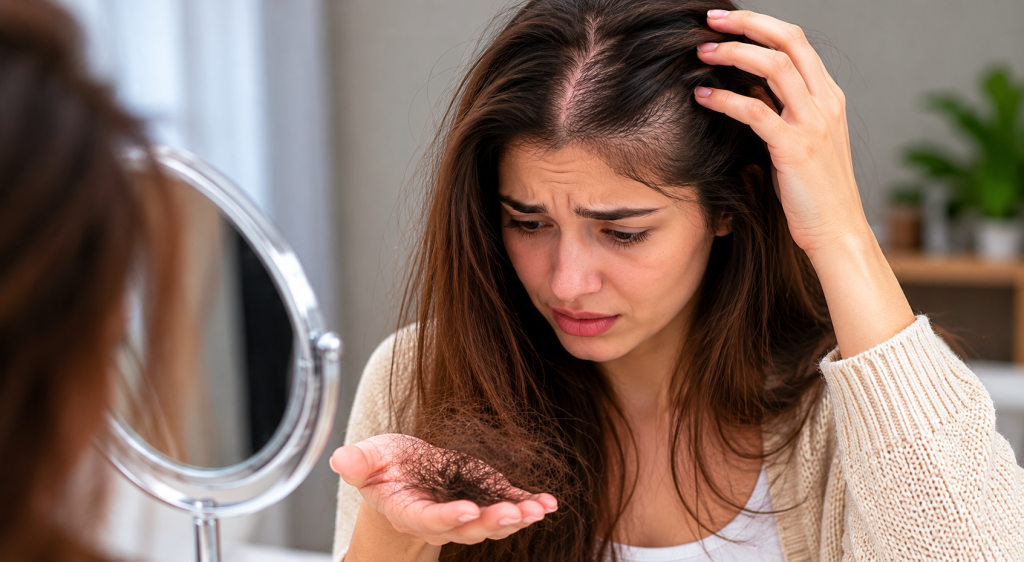
Not everyone experiences the same symptoms, which is partly why it goes unrecognized for so long. Some people notice widening parts and overall thinning. Others find more hair in the shower drain or on their pillowcase. Some experience sensitivity or mild discomfort on the scalp before shedding begins.
If you’re losing more than 100 strands a day consistently, or noticing visible patches or significant thinning at the temples and crown, it’s worth getting a proper scalp analysis done rather than guessing.
The Right Response: Natural, Non-Surgical Hair Loss Treatment
Stress-related hair loss is largely reversible, but only if the underlying cause is addressed and the scalp is given the right environment to recover.
At Antech Hair & Skin Clinic in Toronto, the approach is built around exactly this principle. Rather than jumping straight to medication or surgical procedures, Antech focuses on natural hair loss treatment methods that work with your body, not against it.
Their 5-step natural therapy includes scalp detoxification, bio-stimulation of dormant follicles, and customized herbal and nutrient-based protocols; all without invasive procedures. Every client receives a detailed scalp analysis in Toronto before any treatment begins, so the plan is built around what your scalp specifically needs, not a generic template.
For anyone in the Greater Toronto Area looking for a hair loss clinic in Toronto that leads with a natural-first philosophy, Antech is worth a consultation.
How to Support Recovery at Home
While professional treatment makes a significant difference, there are things you can do in parallel to support your scalp health:
- Manage the source of stress: Therapy, exercise, better sleep, or lifestyle adjustments. If cortisol levels don’t come down, neither will the shedding.
- Address nutritional deficiencies: Iron, zinc, B12, and Vitamin D are all closely linked to hair loss. A blood panel is a sensible first step.
- Be soft with your hair during recovery: Do not use tight hairstyles, too much heat on your hair, or any chemicals. Your follicles are very delicate at this time.
- Scalp massage daily: 5 minutes to improve circulation to follicles.
When to See a Hair Specialist in Toronto
If your hair has been shedding for more than three months, or if you’re noticing visible thinning that isn’t improving on its own, waiting rarely makes things better.
A qualified hair specialist in Toronto can determine whether what you’re experiencing is telogen effluvium, early-stage androgenetic alopecia triggered by stress, or something else entirely. The earlier the intervention, the better the outcome.
Antech Hair & Skin Clinic offers consultations across Toronto and the GTA, including Mississauga, Vaughan, North York, and Scarborough. Booking a consultation is a straightforward next step and it costs far less than months of trial-and-error with products that may not even address your actual problem.
Frequently Asked Questions
1. Does stress make hair fall out?
Yes, and the science is well-established. When you’re under significant stress, cortisol levels rise sharply. This interferes with the hair growth cycle and forces follicles into the shedding (telogen) phase simultaneously. The result is noticeable hair loss, typically diffuse thinning that shows up 2 to 4 months after the stressful event, which is why many people don’t immediately connect the two.
2. How to grow hair back after stress?
Hair regrowth after stress-related loss usually starts once the source of stress is managed and the scalp receives proper care. This means addressing nutritional deficiencies, reducing cortisol through lifestyle changes, and, for faster results, working with a clinic that provides effective hair loss treatment Toronto patients can rely on, including natural bio-stimulation therapies. Antech Hair & Skin Clinic’s non-surgical treatment protocols are specifically designed to reactivate dormant follicles and support healthy regrowth without medication dependency.
3. What is the best remedy for hair loss?
There’s no single answer, because hair loss has multiple causes. For stress-related loss, the most effective approach combines stress management, nutritional support, and a professionally guided scalp treatment plan. At Antech Hair, the focus is on natural hair loss services, so there are no surgical procedures and no one-size-fits-all solutions. A proper scalp analysis gives you a clear picture of what your hair actually needs before any treatment begins.
4. How long after a stressful event does hair fall out?
Typically between 2 and 4 months. This delay is what makes it confusing by the time the shedding starts, the acute stressor has often already passed. Hair follicles go through a biological process before they shed, and telogen effluvium follows a relatively predictable timeline. If you’re currently experiencing hair loss and had a major stressor a few months ago, that’s likely not a coincidence.
Antech Hair & Skin Clinic has been helping Toronto residents address hair loss and scalp conditions for decades. Their natural, non-surgical approach is tailored to each individual based on a thorough scalp analysis and hair history. Located at 1240 Bay Street, Suite 200, Toronto. Book a consultation at antechhair.com or call +1 647-697-8746.