
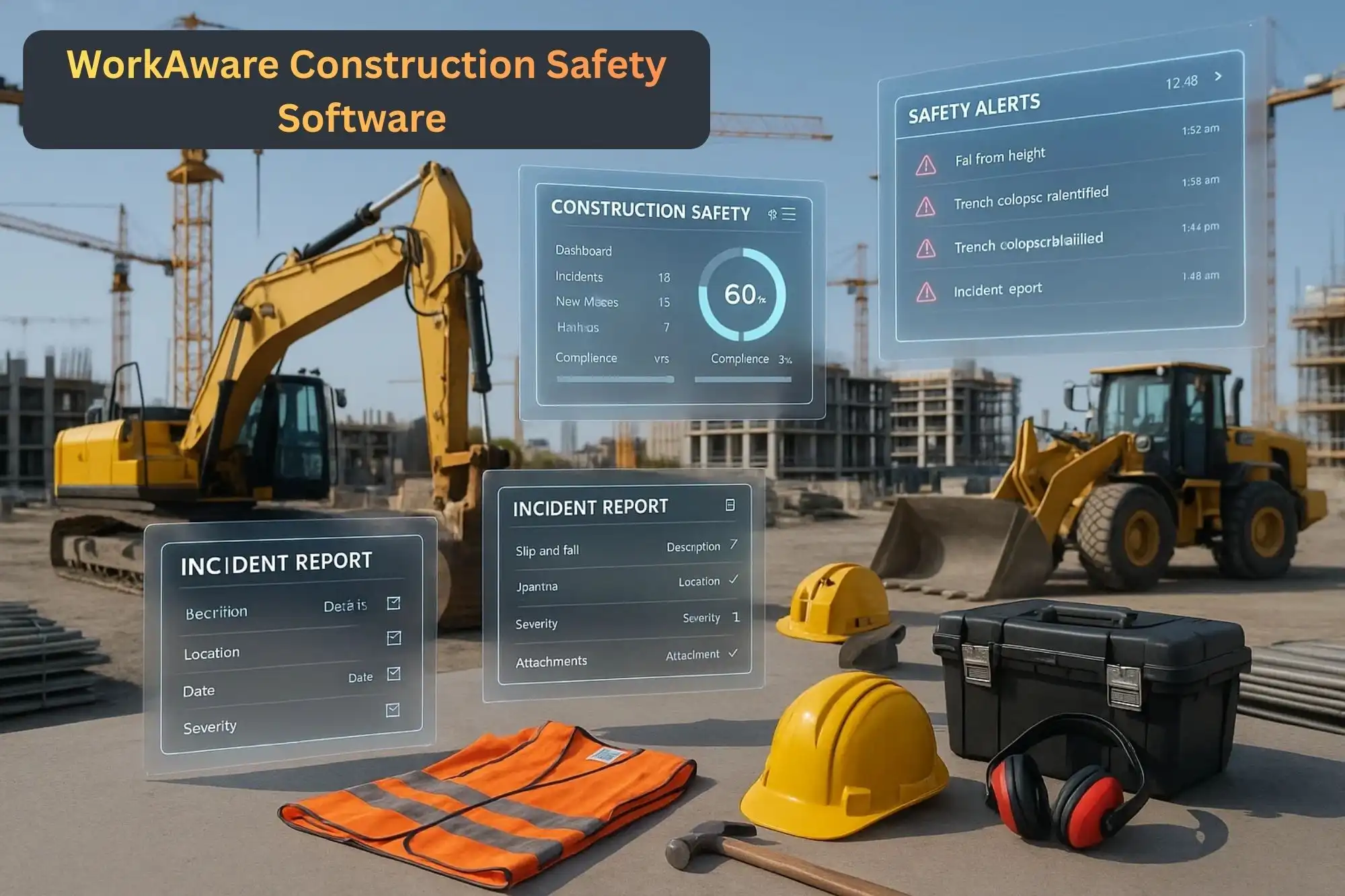
Construction sites are dynamic, fast-paced environments where safety is a top priority. Accidents, near misses, and compliance violations can disrupt projects, increase costs, and threaten worker safety. This is where construction safety software becomes essential. WorkAware provides a robust platform that helps organizations manage workplace safety, track incidents, and ensure compliance efficiently. By streamlining workflows and centralizing safety data, WorkAware empowers construction teams to reduce risks, prevent accidents, and maintain a strong safety culture across all sites.
What Is Construction Safety Software?
Construction safety software is a digital solution designed to manage safety processes on construction sites. It helps organizations document incidents, track hazards, assign responsibilities, and ensure regulatory compliance.
WorkAware’s platform integrates features such as incident reporting, asset management, workflow automation, and training matrix management, providing teams with real-time insights into site safety.
The software allows managers to quickly identify risks, take corrective actions, and maintain transparent records for audits and compliance reporting. By automating routine tasks, construction safety software reduces administrative burden and improves overall operational efficiency.
Key Features of WorkAware Construction Safety Software
WorkAware’s construction safety software is packed with features designed to make workplace safety simple, efficient, and effective. From real-time incident reporting to asset tracking and workflow automation, every feature is built to support construction teams in managing risks.
The platform also includes training management and compliance tracking, giving managers full visibility and control over site safety operations. WorkAware offers a comprehensive set of features tailored to construction safety:
- Incident Reporting: Capture and track safety incidents in real-time.
- Asset Management: Monitor equipment and ensure proper maintenance to reduce hazards.
- Workflow Automation: Streamline safety processes and approvals to save time.
- Training Management: Maintain and track worker safety training and certifications.
- Compliance Tracking: Ensure adherence to OSHA and other regulatory standards.
- Document Management: Centralize safety policies, checklists, and reports.
- Geospatial & Journey Management: Track site activities and location for safety oversight.
These features enable teams to proactively prevent accidents, maintain compliance, and optimize site operations.
Benefits of Using Construction Safety Software
Using WorkAware construction safety software brings measurable improvements to safety, compliance, and overall operational efficiency. It reduces workplace incidents by identifying hazards early and helps teams maintain regulatory compliance effortlessly.
Additionally, the software enables data-driven decision-making, improves accountability, and saves time by automating routine safety processes across multiple sites. Implementing WorkAware’s construction safety software brings numerous advantages:
- Enhanced Safety Culture: Encourage proactive reporting and risk management among workers.
- Reduced Incidents: Identify hazards early and prevent accidents before they occur.
- Regulatory Compliance: Simplify documentation for OSHA and local safety regulations.
- Data-Driven Decisions: Analyze trends to improve safety planning and resource allocation.
- Operational Efficiency: Automate repetitive tasks and reduce administrative workload.
- Cost Savings: Minimize accidents, fines, and project delays.
By integrating these benefits, construction teams can ensure safer worksites, reduce downtime, and protect both employees and assets.
Why WorkAware Stands Out
WorkAware differentiates itself with an intuitive interface, robust reporting capabilities, and customizable workflows. Unlike generic solutions, WorkAware is designed specifically for industries like construction, where site safety and compliance are complex and critical.
The platform supports mobile access, allowing managers and workers to report incidents, track hazards, and access safety documents directly from the field.
With real-time insights, WorkAware helps organizations respond faster to safety concerns, maintain accountability, and foster a culture of continuous improvement.
How Construction Companies Can Leverage WorkAware
Construction companies can harness WorkAware to monitor multiple worksites, track employee training, and ensure equipment compliance seamlessly. The platform allows managers to generate detailed reports, identify risk patterns, and take proactive safety measures.
By integrating WorkAware into daily operations, companies can enhance worker safety, reduce project delays, and maintain higher standards of operational efficiency. Construction companies can use WorkAware to:
- Monitor multiple worksites simultaneously
- Ensure all staff complete required safety training
- Track equipment and machinery safety compliance
- Generate detailed reports for audits and inspections
- Identify risk trends and implement preventive measures
These capabilities help managers make informed decisions, improve worker safety, and maintain project timelines without compromise.
Conclusion
In today’s construction industry, safety and compliance cannot be left to chance. WorkAware construction safety software provides a comprehensive platform that streamlines incident reporting, enhances operational efficiency, and fosters a strong safety culture.
By integrating tools for training management, workflow automation, and real-time reporting, WorkAware ensures that construction teams stay compliant, reduce risks, and protect workers on every site.
Investing in robust construction safety software like WorkAware is not just a regulatory requirement, it’s a proactive step toward safer, more efficient, and successful projects.