
WordPress powers more than 40% of the internet, and for many small businesses, it remains the easiest way to launch a website, capture leads, and manage online growth. But as websites evolve, many business owners are starting to notice a growing problem with the tools they rely on every day.
One of the biggest frustrations? Form plugins.
From contact forms and quote requests to registrations and lead generation funnels, forms are the backbone of most business websites. Yet many WordPress users are stuck choosing between overly complex enterprise-level plugins or lightweight tools that lack the features they actually need.
That gap is exactly why a new generation of WordPress tools is beginning to emerge.
The Growing Problem With Traditional Form Builders
For years, WordPress users have depended on form plugins that slowly became bloated over time. What started as simple lead capture tools eventually turned into massive systems packed with:
- Unused add-ons
- Complicated interfaces
- Feature overload
- Expensive recurring pricing
- Slow performance
- Compatibility issues with builders like Elementor
Many small business owners and agencies only need a streamlined system that works reliably inside WordPress without requiring hours of setup.
Instead, they often spend more time managing the plugin than actually using the forms.
This becomes even more frustrating for:
- SEO agencies
- Local businesses
- Ecommerce brands
- Service companies
- Freelancers
- Churches and nonprofits
- Content creators
Most of these users want three things:
- Simple setup
- Fast performance
- Modern automation features
Unfortunately, many current tools fail to deliver all three.
Why Simplicity Is Becoming the New Competitive Advantage
In the past, software companies competed by adding as many features as possible.
Today, the opposite is happening.
Businesses increasingly prefer platforms that remove complexity instead of adding it.
This shift is especially visible in the WordPress ecosystem, where users are becoming more selective about the plugins they install. Site owners now pay closer attention to:
- Website speed
- Plugin conflicts
- Admin dashboard clutter
- Security risks
- Ease of use
- Long-term scalability
As a result, newer plugin developers are beginning to focus on cleaner experiences that prioritize usability over feature overload.
One of the biggest trends shaping this movement is AI-powered automation.
The Rise of AI Inside WordPress
Artificial intelligence is rapidly changing how websites are built and managed.
In the WordPress world, AI is beginning to simplify tasks that traditionally required technical knowledge, including:
- Content generation
- SEO optimization
- Image creation
- Customer support
- Form creation
- Workflow automation
Instead of manually building complex systems, users increasingly expect software to help generate solutions automatically.
This is where modern plugin development is heading.
Rather than forcing users through dozens of settings pages, the next generation of WordPress tools will likely rely on conversational interfaces and AI-assisted setup.
For form builders specifically, this could dramatically reduce setup time.
Imagine describing the type of form you need in plain English and instantly receiving a fully editable form structure.
That concept is no longer theoretical.
A New WordPress Plugin Project Entering the Market
One emerging project aiming to solve this problem is Exit 8.
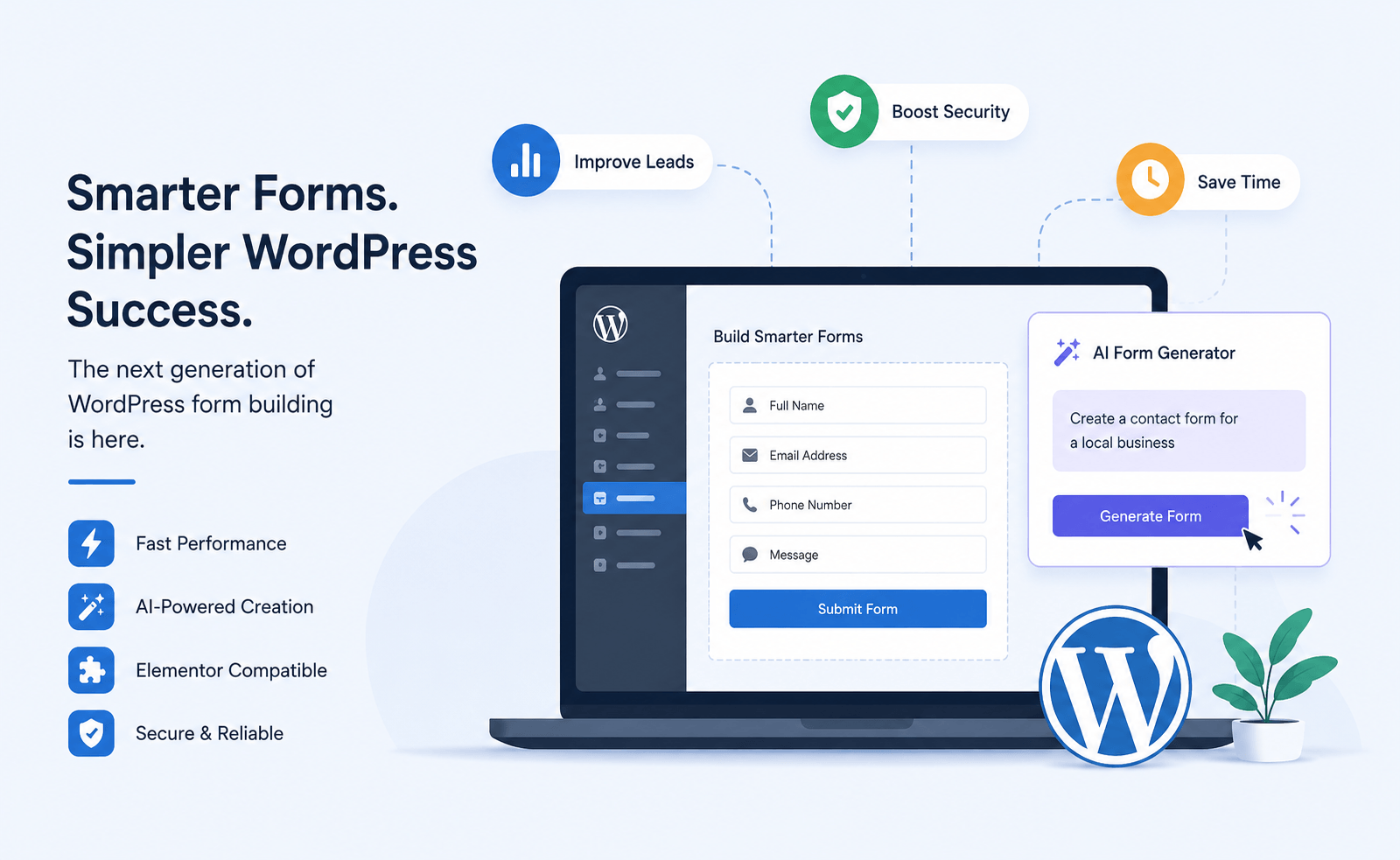
Exit 8 is a developing WordPress plugin focused on simplifying form creation while integrating modern AI-powered workflows directly into WordPress.
Unlike traditional form builders that often prioritize feature quantity, Exit 8 is being designed around a simpler philosophy:
- Keep the interface clean
- Work smoothly with Elementor
- Reduce unnecessary complexity
- Prioritize speed and usability
- Use AI to simplify setup
The project is currently being developed with a strong focus on practical functionality for businesses and agencies.
Its early development roadmap includes:
- Simple drag-free form building
- Basic field management
- WordPress shortcode embedding
- Elementor compatibility
- Submission tracking
- Email notifications
- AI-generated form creation
The goal is not to compete by adding hundreds of features immediately.
Instead, the focus is on solving the core frustrations many WordPress users already experience.
Why This Matters for Small Businesses
Small businesses often struggle with software fatigue.
Every additional plugin introduces:
- New learning curves
- Potential performance issues
- Additional subscription costs
- More maintenance requirements
- More compatibility risks
Over time, websites become harder to manage.
This creates a major opportunity for software products that simplify operations rather than complicate them.
If tools like Exit 8 succeed, they could represent a broader shift in how WordPress plugins are built in the future.
Instead of overwhelming users with endless settings, successful plugins may focus more on:
- Guided experiences
- AI-assisted workflows
- Lightweight architecture
- Faster onboarding
- Cleaner interfaces
For business owners, that means less time configuring software and more time growing their business.
The Future of WordPress Plugin Development
The WordPress ecosystem continues to evolve rapidly.
As competition increases, plugin developers can no longer rely solely on adding more features to stand out.
User experience now matters just as much as functionality.
The next wave of successful WordPress tools will likely be defined by:
- Simplicity
- Performance
- AI integration
- Builder compatibility
- Automation
- Reduced technical friction
Projects entering the market today have an opportunity to rethink how WordPress tools should actually work for modern users.
Exit 8 is one example of that changing mindset.
Whether it becomes a major player or simply helps influence broader trends, its development reflects something important happening across the industry:
WordPress users are demanding smarter, simpler tools.
And plugin developers are finally starting to listen.
Final Thoughts
For years, WordPress site owners accepted complicated plugin ecosystems as unavoidable.
That expectation is changing.
Businesses now want tools that are:
- Easier to manage
- Faster to deploy
- More intuitive to use
- Better integrated with modern workflows
As AI continues reshaping the software landscape, WordPress plugins are entering a new phase of development.
The companies that succeed will likely be the ones that simplify website management instead of making it more complicated.
Projects like Exit 8 represent a growing movement toward practical, user-focused WordPress development.
And for many business owners, that shift cannot come soon enough.
