

In the world of digital design, image quality plays a major role in creating a strong visual impact. Whether you are designing a company logo, preparing artwork for print, creating marketing materials, or developing branding assets, the quality and scalability of your graphics can determine the overall success of a project. One of the most effective ways to achieve professional-quality visuals is to vectorize image files before using them in important design work.
Many designers and business owners begin with raster images such as JPEG, PNG, or BMP files. While these formats are useful for photographs and web graphics, they have limitations when it comes to resizing and maintaining quality. This is where vector graphics become essential. Understanding why and when to vectorize image files can help you create cleaner, more flexible, and more professional designs.
Understanding the Difference Between Raster and Vector Graphics
Before exploring the advantages of vector graphics, it is important to understand how raster and vector images differ.
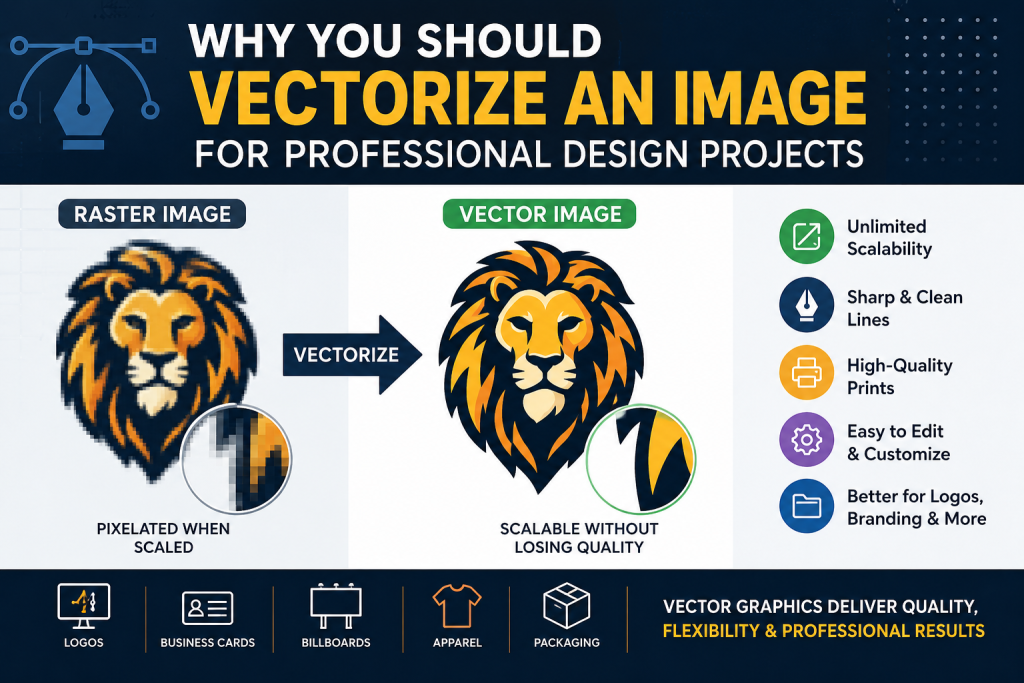
Raster images are made up of thousands or even millions of tiny pixels. Each pixel contains color information that contributes to the overall image. Photographs are a common example of raster graphics. While they can display rich detail, they lose quality when enlarged because the pixels become visible.
Vector graphics, on the other hand, are created using mathematical paths, curves, and shapes. Instead of relying on pixels, vectors use equations to define the artwork. This allows the image to be resized infinitely without any loss of sharpness or clarity.
When you vectorize image files, you convert pixel-based graphics into scalable vector artwork that remains crisp regardless of size.
Why Professional Designers Prefer Vector Graphics
Professional designers regularly work on projects that require flexibility. A logo, for example, may appear on a business card, a website, a billboard, and product packaging. If the original design is only available as a raster image, resizing can create quality issues.
Vector graphics eliminate this problem because they can adapt to any size without becoming blurry or distorted.
Some of the key advantages include:
- Unlimited scalability
- Sharp and clean edges
- Easier editing and customization
- Smaller file sizes for simple artwork
- Better compatibility with professional printing systems
These benefits make vector graphics a preferred choice for branding and commercial design projects.
Improved Print Quality for Professional Materials
One of the biggest reasons to vectorize image files is to achieve superior print quality.
Printed materials require high-resolution graphics to ensure sharp results. When a raster image is enlarged for large-format printing, pixelation often becomes visible. This can make brochures, banners, signs, and promotional materials appear unprofessional.
Vector graphics maintain their quality regardless of size. Whether the artwork is printed on a small label or a massive trade show display, the lines remain smooth and precise.
For businesses that invest heavily in branding and advertising, using vector graphics helps ensure a polished and professional appearance across all printed materials.
Better Logo Design and Brand Consistency
Logos are among the most important visual assets for any business. A logo must appear consistently across various platforms and materials.
When designers vectorize image files that contain logos, they create artwork that can be used virtually anywhere. The same file can be scaled down for a social media profile picture or enlarged for a building sign without losing quality.
Brand consistency is critical because it helps customers recognize and trust a company. Using vector graphics ensures that colors, shapes, and proportions remain accurate in every application.
This consistency strengthens the overall identity of a brand and creates a more professional image in the marketplace.
Easier Editing and Design Flexibility
Another significant advantage of vector graphics is their editability.
Raster images can be difficult to modify because they consist of fixed pixels. Making precise adjustments often requires extensive image editing and can sometimes reduce quality.
Once you vectorize image content, individual elements can be adjusted independently. Designers can:
- Change colors instantly
- Resize specific objects
- Modify shapes and curves
- Rearrange design elements
- Create alternative design versions
This flexibility saves time and allows designers to respond quickly to client requests and project revisions.
Perfect for Large-Scale Marketing Campaigns
Marketing campaigns often involve multiple design formats. A single campaign may require:
- Website graphics
- Social media images
- Posters
- Flyers
- Billboards
- Product packaging
Using vector artwork simplifies this process significantly.
Since vector files can be resized without quality loss, designers can create one master file and adapt it for every marketing channel. This reduces production time and ensures visual consistency throughout the campaign.
Businesses that regularly launch advertising campaigns benefit greatly from maintaining a library of vector assets.
Enhanced Precision and Professional Appearance
Professional design projects require attention to detail. Sharp edges, smooth curves, and accurate proportions contribute to a high-quality final product.
Raster graphics may appear acceptable at smaller sizes, but imperfections often become visible when enlarged. Jagged edges and blurry details can negatively affect the overall presentation.
When you vectorize image artwork, every line and curve becomes mathematically defined. This level of precision results in cleaner graphics that look more refined and professional.
Whether creating icons, logos, illustrations, or technical diagrams, vector graphics deliver a level of accuracy that raster images cannot easily match.
Cost Savings in the Long Run
Some businesses hesitate to invest in vector conversion because they view it as an unnecessary expense. However, vector graphics often save money over time.
Without vector files, businesses may need to recreate artwork whenever larger formats are required. This can result in repeated design costs and project delays.
A properly vectorized image serves as a long-term asset that can be reused across multiple projects and platforms. The ability to scale and edit the artwork whenever needed reduces future production expenses.
For organizations that frequently update marketing materials or branding assets, vector graphics provide significant long-term value.
Improved Compatibility with Design Software
Most professional design applications are built to work efficiently with vector graphics.
Programs such as Adobe Illustrator, CorelDRAW, Affinity Designer, and other design tools rely heavily on vector formats for creating and editing artwork. Vector files integrate seamlessly into these workflows, allowing designers to make changes quickly and efficiently.
By choosing to vectorize image assets, businesses ensure that their graphics remain compatible with industry-standard software and future design requirements.
This compatibility helps streamline collaboration between designers, printers, marketing teams, and production partners.
Supporting Modern Digital Applications
The use of vector graphics extends far beyond traditional print design. Modern digital platforms increasingly rely on scalable graphics to deliver optimal user experiences.
Vector artwork is commonly used in:
- Mobile applications
- User interface design
- Website graphics
- Interactive presentations
- Digital advertisements
- Infographics
Because vector graphics remain sharp on different screen sizes and resolutions, they are ideal for today’s multi-device environment.
As digital experiences continue to evolve, having vector versions of important design assets becomes increasingly valuable.
Common Situations Where You Should Vectorize an Image
Although not every image requires vector conversion, certain situations make it highly beneficial.
Consider vectorizing artwork when:
- Creating a company logo
- Designing business branding materials
- Preparing artwork for commercial printing
- Producing large-format signage
- Developing custom illustrations
- Creating icons or graphic symbols
- Designing product packaging
- Building marketing campaigns
In these scenarios, vector graphics provide greater flexibility, quality, and longevity than raster images.
Building Stronger Design Assets for the Future
Professional design is not only about creating attractive visuals today. It is also about ensuring that those visuals remain useful and adaptable in the future.
As businesses grow, their design needs often expand. A simple logo may eventually appear on hundreds of products, advertisements, websites, and promotional materials. Having scalable vector files ensures that these assets can evolve alongside the business.
When designers vectorize image files early in the creative process, they create a foundation that supports future growth, branding consistency, and design efficiency.
By investing in vector graphics, businesses gain long-term flexibility, maintain professional visual standards, and avoid many of the limitations associated with traditional raster images. Whether you are launching a new brand, managing marketing campaigns, or creating professional artwork, vector graphics remain one of the most valuable tools for achieving exceptional design results.