
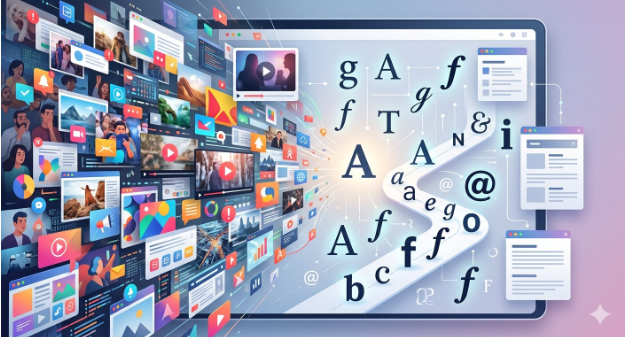
The internet has become a place where visuals dominate nearly every interaction. From social feeds to business websites, digital communication is shaped by images, icons, layout, and subtle design choices that influence how people interpret information. Typography sits quietly within this ecosystem, guiding attention and shaping perception even when users do not consciously notice it. In a hyper visual web, the way text appears has become just as important as the message itself.
As digital spaces evolve, people are finding new ways to personalize their communication. Creative text styles, expressive captions, and stylized usernames have become part of everyday online behavior. Many users experiment with tools like a fancy font generator to create text that feels more aligned with their personality or brand identity. This shift is not about choosing a specific font. It is about understanding how digital environments encourage visual expression through text.
The Growing Importance of Visual Communication
The modern web is built around speed. People scroll quickly, skim content, and make instant decisions about what is worth their attention. In this environment, typography becomes a tool that helps slow the eye, guide the reader, and create structure in a sea of visual noise.
Businesses rely on typography to communicate professionalism, clarity, and trust. Social platforms use it to shape user behavior and highlight key interactions. Creators use it to build recognizable styles. Even casual users rely on visual text cues to express tone, emotion, or emphasis.
Typography has become a silent partner in digital communication. It influences how people interpret information, how long they stay on a page, and how they emotionally respond to content.
How Text Styling Shapes Online Behavior?
People often assume that visuals like images and videos carry the most weight online. Yet text remains the foundation of digital communication. What has changed is how text is presented. Formatting, spacing, structure, and styling all affect how messages are received.
In the middle of this shift, users have adopted creative techniques to make their text stand out. This is where trends like bold text copy paste appear. These techniques allow people to add emphasis, personality, or clarity without relying on traditional design tools. They help users express tone in environments where plain text can feel flat or ambiguous.
This behavior reflects a broader cultural trend. People want their digital presence to feel unique. They want their messages to carry emotion and identity. Typography becomes a tool for that expression, even when users are not consciously thinking about design.
Why Does Typography Feel Different on the Web?
Typography in digital environments behaves differently from print. It adapts to screens, devices, and platform rules. It responds to user interactions. It shifts based on algorithms and interface design. These differences make digital typography more dynamic and more influential.
Three factors explain why typography matters so much in a hyper visual web:
Adaptability
- Text must adjust to different screen sizes, resolutions, and layouts. This flexibility affects readability and user experience.
Interactivity
- Digital text can be animated, highlighted, or styled in ways that are impossible in print. This adds layers of meaning.
Contextual behavior
- The same text can feel formal in an email, expressive in a chat app, or strategic in a business presentation.
These factors make typography a living part of digital communication rather than a static design element.
Typography as a Business Advantage
For businesses, typography is more than a visual detail. It affects engagement, trust, and conversion. A well structured article feels easier to read. A clear headline increases click through rates. A visually balanced layout keeps users on the page longer.
Typography also influences brand perception. Even without discussing specific font choices, the way text is spaced, sized, or arranged can make a business feel modern, reliable, or innovative. In a competitive digital landscape, these subtle cues matter.
Companies that understand the role of typography often see improvements in:
- User engagement
- Content readability
- Brand consistency
- Customer trust
These benefits make typography a strategic asset rather than a decorative one.
The Psychology Behind Digital Text
People respond emotionally to visual cues. A structured paragraph feels more professional. A stylized username feels more expressive. A bold caption feels more confident. These reactions happen quickly and often unconsciously.
Typography helps fill the emotional gap in digital communication. Without facial expressions or vocal tone, text must carry more weight. Visual styling helps convey nuance, intention, and personality.
This is why creative text styles have become so popular. They allow users to express themselves in ways that plain text cannot. They help messages feel more human in environments that can otherwise feel mechanical.
The Future of Typography in a Visual First Internet
As digital platforms continue to evolve, typography will play an even larger role in shaping communication. Several trends are already emerging:
- AI assisted text styling that improves readability or expression
- Adaptive text systems that adjust based on user behavior
- Cross platform formatting tools that maintain consistency
- Interactive text elements that respond to gestures or context
These innovations will make typography more integrated into digital culture. Users will have more control over how their text appears, and platforms will use typography to guide behavior, improve accessibility, and enhance user experience.
A Quiet Force With a Big Impact
Typography rarely gets attention in discussions about digital transformation. Yet it shapes how people read, react, and express themselves online. It influences identity, communication, and engagement in ways that feel natural but are deeply intentional.
In a hyper visual web, typography becomes a silent force that guides how people connect, communicate, and create meaning. It is not about choosing a specific font. It is about understanding how text behaves in digital environments and how visual expression shapes modern communication.
As the internet continues to evolve, typography will remain a powerful tool that helps people navigate information, express identity, and build connections in an increasingly visual world.