
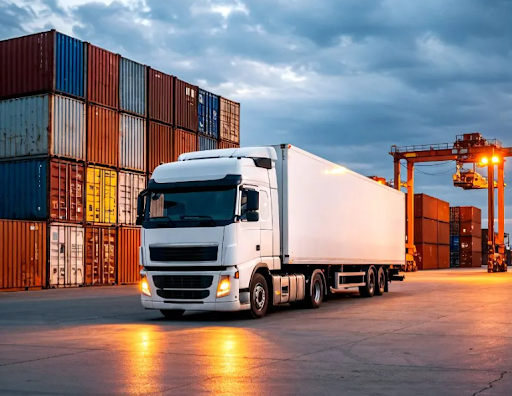
Nobody really thinks about lorries until the shelves go empty. That is the strange position road haulage occupies — absolutely central to daily life, almost entirely invisible until something breaks. Truck transport does not get praised in the news and rarely attracts the attention that newer industries enjoy. Yet pull it out of the picture, even briefly, and the consequences show up fast.
The Last Mile Problem
Rail moves bulk. Ships cross oceans. Planes cover distance quickly. But not one of them can drop a pallet outside a bakery in a market town or deliver engine parts to a garage off a B-road. Every shipment, no matter how it begins its journey, eventually hands off to a lorry. That handoff is not a footnote — it is where the whole process either succeeds or falls apart. The final leg is where timings slip and where customer trust is won or lost. Road haulage does not just connect the dots — it is the dot that matters to the person waiting at the other end.
Scheduling Is Power
There is a gap between “we will deliver this week” and “we will deliver Tuesday between nine and eleven.” That gap is enormous for businesses running tight operations. A production facility cannot absorb a vague arrival window. A restaurant cannot prep around a mystery delivery slot. Truck transport is what makes precision possible. A lorry can hold, reroute, or accelerate based on what the client actually needs that day. Other freight modes run on fixed schedules that exist for the carrier’s convenience, not the customer’s. That flexibility is not a small perk — it is why road haulage remains the first choice for time-critical freight.
Smaller Businesses, Bigger Reach
Small producers do not have dedicated logistics teams. A regional jam maker, a small furniture builder, a family-run meat supplier — none of them can negotiate shipping containers or rail freight agreements. Road haulage is often the only affordable, practical route that lets these businesses trade beyond their immediate area. A lorry turns up, collects the goods, and gets them somewhere useful. When road freight becomes harder to access, it is never the large retailers who feel it first — it is the small operators who quietly disappear from the shelves they used to supply.
What the Data Hides
Road freight gets criticism on environmental grounds, and some of it sticks. But the efficiency story within the industry rarely gets told. Shared loading — where goods from several clients travel together on one vehicle — has changed the economics and emissions profile of road haulage considerably. A lorry used to complete a delivery and return empty. Increasingly, that return journey carries someone else’s freight. Truck transport is not the same industry it was a decade ago, though its critics tend to speak as though nothing has shifted.
Driver Shortages Reveal the Truth
Britain discovered what supply chain professionals already knew when the lorry driver shortage hit. Petrol stations ran out of fuel. Supermarket shelves had gaps that did not get refilled. Businesses that had never given haulage a second thought suddenly found themselves directly exposed. Road haulage is not supporting infrastructure — it is the infrastructure. The driver behind the wheel of a heavy goods vehicle is holding together a supply chain that millions of people depend on without realising it. When that skilled workforce contracts, nothing is waiting in the wings to absorb the gap quietly. The shortage made that unmistakably clear.
Conclusion
Truck transport stands at the core of trade in a way that is easy to ignore and very hard to replace. It handles the deliveries other modes cannot reach, provides businesses the scheduling accuracy they truly need, and keeps small manufacturers linked to markets that might otherwise be cut off totally. The issues the sector has concerning emissions and recruiting are significant and need to be taken seriously. But so is the track record. Road haulage has absorbed disturbance, adapted to new needs, and continued going through situations that exposed flaws everywhere else. That resilience is not accidental. It is the result of an industry that understands, probably more than others, that reliability is everything.
