
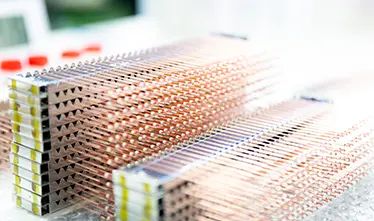
Walk through any modern factory, hospital, home, or data center, and you are surrounded by a technology so ubiquitous it has become almost invisible. Embedded in circuit boards, threaded through battery packs, clipped to pipes, and sealed inside glass housings smaller than a grain of rice, temperature sensors quietly do some of the most consequential work in all of electronics.
They don’t process data. They don’t store information. They don’t transmit signals. They do one thing: they measure heat—and they do it with a precision and reliability that modern technology absolutely depends on. When a temperature sensor fails or drifts out of calibration, the consequences can range from a slightly warm refrigerator to a recalled electric vehicle battery pack.
As electrification, automation, and the Internet of Things continue to reshape global industry, the humble temperature sensor has moved from afterthought to strategic priority. Here’s what you need to know.
What Temperature Sensors Actually Do
A temperature sensor is a transducer: a device that converts thermal energy into a measurable electrical signal. That signal—usually a change in resistance, voltage, or current—is read by a microcontroller or circuit that uses it to regulate, protect, or optimize the system it’s part of.
The most widely used types of temperature sensors in consumer and industrial electronics today include:
- NTC Thermistors—Negative Temperature Coefficient resistors whose resistance drops as temperature rises. Extremely sensitive, compact, and cost-effective; the dominant choice for appliances, automotive, and medical devices
- RTDs (Resistance Temperature Detectors)—Typically platinum-based, offering high accuracy and excellent stability over wide temperature ranges
- Thermocouples—Two dissimilar metals joined at a junction, generating a small voltage proportional to temperature. Rugged and suitable for extreme temperatures in industrial settings
- Infrared / Non-contact Sensors—Measure surface temperature remotely without physical contact, used widely in medical and industrial imaging
- IC Temperature Sensors—Integrated directly onto silicon chips for compact, low-cost monitoring in consumer electronics and IoT devices
Of these, NTC thermistors account for the largest share of the global temperature sensor market by volume. Their steep resistance-temperature curve gives them exceptional sensitivity—capable of detecting changes of a fraction of a degree—making them ideal for any application where precise thermal control matters.
Where Temperature Sensors Are Used—and Why It Matters
Home Appliances and HVAC
Modern home appliances are among the largest consumers of NTC thermistors worldwide. A single air conditioning unit may use four or more temperature sensors to monitor refrigerant circuits, ambient air, and coil temperatures. Washing machines, dishwashers, water heaters, and rice cookers all rely on temperature sensing for safe, efficient operation.
The rise of smart thermostats and connected HVAC systems has raised the bar for sensor accuracy. An offset of even two degrees can cause a smart climate system to systematically overheat or overcool a space, wasting energy across thousands of operating cycles. Manufacturers like Honeywell, Emerson, and Daikin invest significantly in sourcing high-stability sensors for their premium product lines.
Automotive and Electric Vehicles
No segment has driven more growth in temperature sensor demand over the past decade than automotive—and the transition to electric vehicles is accelerating that trend dramatically.
A conventional internal combustion vehicle uses temperature sensors to monitor engine coolant, intake air, exhaust gases, oil, and cabin climate. An electric vehicle uses all of those and adds battery thermal management: continuous, distributed monitoring across dozens or hundreds of individual lithium-ion cells. Thermal runaway—where an overheating cell triggers a chain reaction through an entire pack—is one of the most serious safety risks in EV design, and high-quality, fast-response temperature sensors are the primary line of defense against it.
Tier-1 automotive suppliers, including Bosch, Sensata, and TE Connectivity, supply large volumes of automotive-grade temperature sensors, while specialist thermistor manufacturers provide the underlying sensing elements that many of these assemblies are built around.
Medical Devices and Healthcare
Medical applications demand perhaps the strictest combination of accuracy, long-term stability, and reliability of any temperature sensing end market. Patient monitors, neonatal incubators, IV warmers, laboratory analyzers, and pharmaceutical cold-chain systems all depend on sensors that maintain their calibration over years of continuous operation.
The consequence of drift in a medical sensor is not merely inconvenience—it can mean a missed fever, an improperly stored vaccine, or a mis-calibrated diagnostic test. Leading medical device OEMs such as Philips, Masimo, and Becton Dickinson maintain rigorous supplier qualification processes for the temperature-sensing components used in their products.
Industrial Equipment and Data Centers
Overheating is the leading cause of premature failure in electronic systems. In industrial machinery, power transformers, and data center server infrastructure, temperature sensors enable predictive maintenance programs that detect developing thermal problems before they cause unplanned downtime.
Hyperscale data center operators—including Microsoft, Google, and Amazon Web Services—embed thousands of temperature sensors throughout their facilities to optimize cooling efficiency and server workload distribution. In this context, sensor accuracy directly translates to energy costs and carbon footprint.
What Separates a Good Temperature Sensor from a Great One
For procurement engineers and product designers, choosing a temperature sensor is rarely as simple as picking the cheapest part that meets the nominal spec. Several performance parameters determine how a sensor will actually behave over the full life of a product:
Accuracy and Tolerance
Resistance tolerance at the reference temperature (typically 25°C) determines how much unit-to-unit variation exists in a batch of sensors. Tighter tolerances reduce the need for individual calibration on the production line, which matters enormously at high volumes.
Long-Term Stability
Drift is the enemy of precision temperature sensing. Over time, some sensors gradually shift from their original resistance-temperature characteristics—a process accelerated by moisture, oxidation, and thermal cycling. Glass-encapsulated thermistors, where the sensitive ceramic element is hermetically sealed in glass, offer significantly better long-term stability than epoxy-coated alternatives. Some manufacturers further enhance stability through gold-contact terminal technology.
Response Time
In applications like EV battery management or motor protection, how quickly a sensor detects a temperature change can be as important as how accurately it measures. Response time is a function of sensor mass, thermal conductivity, and packaging design.
Operating Range and Environmental Robustness
Industrial and automotive applications may require sensors rated from below −50°C to above +200°C or higher, with resistance to the oils, coolants, and vibration encountered in real operating environments. The sensor’s housing and termination design are as important as the sensing element itself.
Key Players in the Temperature Sensor Market
The temperature sensor market is served by a mix of large diversified electronics manufacturers and specialist sensor companies, each with different strengths across applications and geographies.
TDK Corporation and Murata Manufacturing are among the largest producers of NTC thermistors globally, supplying high-volume consumer electronics and automotive markets from manufacturing bases in Japan and Southeast Asia.
TE Connectivity and Sensata Technologies offer broad portfolios of temperature sensing solutions for industrial and automotive applications, including complete sensor assemblies with connectors and housings designed for harsh environments.
Honeywell Sensing provides a wide range of temperature sensor products for HVAC, industrial automation, and aerospace applications, while Amphenol Advanced Sensors (formerly GE Sensing) serves the medical and industrial segments with precision RTDs and thermistors.
Among specialist thermistor manufacturers, Shibaura Electronics has built a notable reputation as one of the world’s largest producers of glass-sealed thermistors. Operating the largest thermistor element factory globally at its Fukushima facility, Shibaura supplies sensing elements and complete sensor assemblies to major appliance, automotive, and industrial manufacturers across Asia, Europe, and North America. The company’s focus on zero-defect manufacturing and long-term stability has made it a preferred supplier for applications where sensor drift over a product’s lifespan is a critical concern.
Other notable specialist suppliers include Thinking Electronic Industrial (Taiwan), Semitec Corporation (Japan), and Vishay Intertechnology (US), which offers a broad range of NTC thermistors for industrial and consumer applications.
“As EV adoption accelerates and energy efficiency regulations tighten, the temperature sensor has gone from commodity component to strategic supply chain consideration for manufacturers worldwide.”
The Trends Shaping the Next Decade of Temperature Sensing
Electric Vehicle Scale-Up
Each new EV model released contains dramatically more temperature sensors than the combustion vehicle it replaces. Battery thermal management alone may require 20–50 individual sensing points in a large battery pack. As global EV production scales from millions to tens of millions of units annually, demand for automotive-grade thermistors is expected to grow at multiples of overall market growth.
Energy Efficiency Regulation
Tightening energy efficiency standards in the EU, US, Japan, and China are raising the bar for appliance and HVAC performance. Meeting the latest efficiency requirements increasingly depends on precise thermal control, which requires better sensors. Manufacturers that previously used low-cost commodity thermistors are upgrading to tighter-tolerance, more stable components to hit new regulatory targets.
Industrial IoT and Predictive Maintenance
The proliferation of connected sensors in industrial environments is creating new demand for temperature monitoring across applications that previously had none. Vibration, current, and temperature data combined give maintenance teams early warning of developing equipment failures—and temperature is often the first indicator of a problem.
Miniaturization and Wearables
Consumer wearables and medical monitoring devices are pushing temperature sensor miniaturization to new limits. Continuous skin temperature monitoring in smartwatches and health patches requires sensors that are not only tiny and accurate but also biocompatible and capable of operating at very low power for extended periods.
Small Component, Big Stakes
Temperature sensors will never make headlines. They will not be featured in product launch events or cited in marketing campaigns. But for the engineers and supply chain managers who specify them, they represent one of the most consequential component decisions in product development—a choice that directly affects safety, efficiency, reliability, and longevity.
As the electrification of transportation, the digitization of industry, and the rise of connected devices continue to intensify the thermal management demands placed on electronic systems, the quality and performance of temperature sensing technology will only grow in strategic importance.
For manufacturers evaluating their sensor supply chains, the message is clear: this is not a commodity category. The sensor that costs a few cents more per unit and lasts reliably for fifteen years is almost always the better business decision.