

Modern investing apps have made the stock market feel simple. You hear about a company, search the ticker, check the chart, and decide whether it belongs on your watchlist. For many retail investors, Robinhood and eToro are part of that daily routine because they make market access feel fast, visual, and approachable. Yet there is one frustrating problem that almost every active investor eventually discovers: the stock you researched somewhere else does not always appear inside your brokerage account.
This is not just a minor inconvenience. Missing stocks can break an entire research workflow, especially when you use one tool to find ideas and another tool to execute trades. A company can be publicly listed, discussed widely online, included in market data websites, and still be unavailable through your broker. That gap between “the stock exists” and “I can trade it in my account” is one of the most overlooked challenges for Robinhood and eToro investors.
Your Broker Is Not the Whole Stock Market
The first rule of practical stock research is simple: your broker’s stock universe is not the same thing as the global stock market. Robinhood, for example, says it offers access to over 11,200 securities, including most U.S. stocks and ETFs, certain closed-end funds, many ADRs, certain warrants, certain preferreds, and certain OTC equities. At the same time, Robinhood explicitly says it does not support several categories, including foreign-domiciled stocks, stocks that trade on foreign exchanges, mutual funds, bonds and fixed-income trading, limited partnerships, royalty trusts, tracking stocks, New York registry shares, units, and certain non-tradeable corporate action instruments such as contingent value rights.
eToro has a different shape of coverage. Its stock offering is more global in presentation, and its own stock page says it offers stocks from 20 exchanges around the world. However, eToro also warns that not every stock from each exchange is available on the platform, which is the key detail investors often miss. (eToro) In other words, eToro may feel broader because it covers multiple international exchanges, while Robinhood may feel more U.S.-focused, but both platforms still operate with selective tradable universes.
This matters because investors often begin research outside their brokerage. They might use Google Finance, Yahoo Finance, TradingView, Finviz, a newsletter, a Reddit thread, a YouTube video, or an institutional-style stock screener. Those sources may display thousands of listed companies without caring whether Robinhood or eToro supports the exact instrument. The result is a familiar retail-investor trap: you find what looks like a strong opportunity, copy the ticker into your broker, and get no result.
Why Stocks Go Missing on Robinhood
For Robinhood investors, the missing-stock problem often comes down to instrument eligibility. A stock may trade outside the United States, trade as an ordinary foreign share, sit in a structure Robinhood does not support, or belong to a category that is not part of Robinhood’s available asset list. Robinhood does support ADRs for many global companies, which can make some international companies accessible to U.S.-style investors, but ADR support is not the same as full access to every ordinary share listed on every foreign exchange.
There is also a difference between a stock being publicly traded and a stock being supported by Robinhood’s product catalog. Robinhood’s own support material lists non-U.S. stocks it does not support, unsupported OTC stocks, and stocks undergoing corporate actions as reasons investors may not be able to buy or sell certain securities. That means the issue is not always that the ticker is wrong or that the company is private. Sometimes the company is public, the ticker is valid, and the stock is actively traded somewhere, but it is still outside what Robinhood allows you to trade.
This creates a particular challenge for investors interested in small caps, foreign companies, obscure ADRs, special situations, spin-offs, preferred shares, or companies listed primarily outside the U.S. A generic screener may show the opportunity because the stock passes your filters, but Robinhood may not support the exact listing. If your research process does not account for that early, you can waste time analyzing stocks that were never actionable in your account.
Why Stocks Go Missing on eToro
For eToro investors, the missing-stock problem is slightly different but just as important. eToro’s global branding can make investors assume that exchange coverage means complete exchange coverage. In reality, eToro offers stocks from 20 exchanges, while also stating that not every stock from each exchange is available on the platform. That distinction is essential because a company can be listed on an exchange eToro covers and still not appear as a tradable stock inside eToro.
This can happen when eToro supports the major, liquid, popular names from an exchange but not every smaller company, newly listed stock, secondary listing, share class, or less liquid security. It can also happen because of account location, product restrictions, regional regulation, liquidity conditions, or temporary trading limitations. eToro’s help content also notes that an asset may be temporarily unavailable for reasons such as lack of liquidity, inflated spreads, a loading issue, or extreme market volatility.
The practical problem for eToro users is that the platform’s social and global feel can encourage broad market discovery, while the actual tradable list remains broker-specific. You may read about a stock listed in London, Frankfurt, Hong Kong, Amsterdam, Paris, or the U.S., but still need to know whether eToro supports that exact instrument for your account. As with Robinhood, the question is not only “does this company trade publicly?” but “does my broker support the version of this stock I want to buy?”
The Ticker Symbol Problem
One of the most confusing parts of missing stocks is that ticker symbols are not universal. The same company can have an ordinary share listed in one country, an ADR in the United States, a secondary listing on another exchange, and multiple share classes with different voting rights. A ticker you find on a financial website may refer to one exchange, while your broker may support another version of the company or no version at all.
This is especially relevant for Robinhood investors because Robinhood generally does not support stocks that trade on foreign exchanges, while it does support ADRs for a large number of globally listed companies. It is also relevant for eToro investors because eToro may support many international exchanges but not every stock from each one. In practice, this means searching only by ticker can be misleading. Searching by company name, checking the exchange, and confirming the exact share class can save investors from confusing “not found” with “not public.”
The ticker problem becomes worse when investors follow ideas from social media. A post may mention a local ticker without saying which exchange it trades on. Another investor may discuss an ADR but use the company’s ordinary-share ticker. A stock may also have a suffix on one data platform and a different symbol format on another. When this happens, the brokerage search bar becomes a poor research tool because it tells you only whether one version of the ticker appears, not whether the company has an alternative tradable listing.
Missing Stocks Create Bad Research Habits
The highest cost of missing stocks is not just wasted time. It is the way missing stocks can quietly distort your decision-making. When investors repeatedly find ideas that they cannot trade, they may start choosing from whatever their broker shows them first, rather than from a well-defined strategy. That can push them toward crowded mega-cap names, popular trending stocks, or whatever appears in app-based discovery feeds, even when their original research goal was more specific.
This matters for both active traders and longer-term investors. A swing trader scanning for momentum may waste the most valuable part of the trading session checking whether each result is tradable. A value investor may spend hours reviewing financial statements, only to discover that the stock is not supported. A dividend investor may build a watchlist around yield, payout ratio, and dividend history, then realize several names are unavailable on their platform.
The problem is even more frustrating because most generic stock screeners are not wrong. They are simply not broker-aware. They may be excellent at filtering the theoretical market by valuation, growth, dividend yield, technical strength, volume, profitability, or analyst metrics. What they do not know is your execution reality: whether you use Robinhood or eToro, where your account is registered, what asset types your broker supports, and whether the exact stock is available to trade.
The Smarter Workflow: Start With Tradability
A better stock research workflow begins with broker availability, not as the final check but as the first filter. Instead of asking, “What stocks match my strategy?” investors should ask, “What stocks match my strategy and are actually tradable through my broker?” That small change can remove a large amount of noise from the research process.
For Robinhood investors, this means beginning with the practical limits of the Robinhood universe. The investor should know whether they are looking for U.S.-listed stocks, ETFs, supported ADRs, or certain OTC equities, and they should be careful with foreign ordinary shares, preferred shares, limited partnerships, or other categories Robinhood says it does not support. For eToro investors, it means recognizing that global exchange coverage is not the same as complete global stock coverage, because eToro itself says not every stock from each covered exchange is available.
This approach also protects investors from building watchlists that look impressive but cannot be executed. A watchlist should not be a museum of interesting companies that your broker does not support. It should be a working list of stocks you can actually research, monitor, compare, and potentially trade when your criteria are met.
Where Investorean Fits In
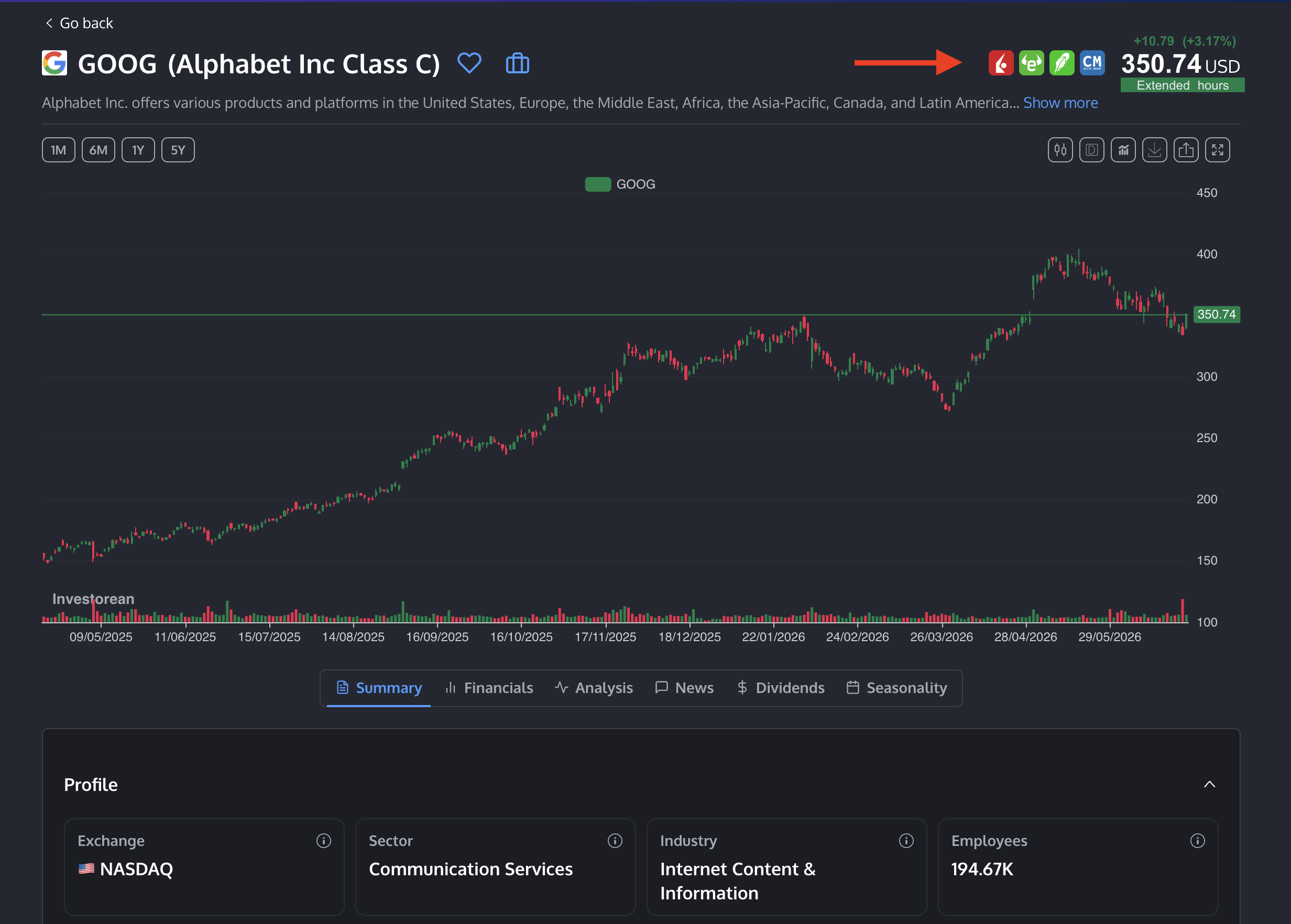
Investorean solves this workflow problem by making stock research broker-aware from the beginning. Instead of starting with the entire theoretical market and checking tradability later, Investorean is built around broker availability, allowing investors to filter results by broker so they see stocks their broker supports. This is filtering the market you can actually trade, not just the market that exists in theory.
For Robinhood and eToro users, this is a major shift. A Robinhood investor can focus on stocks that fit the Robinhood-supported universe, while an eToro investor can screen within eToro-supported stocks rather than manually checking every ticker after the fact. Investorean’s broker-aware workflow is especially useful for investors who already have a strategy but keep losing time at the execution stage. The goal is not to replace analysis; it is to remove irrelevant results before analysis begins.
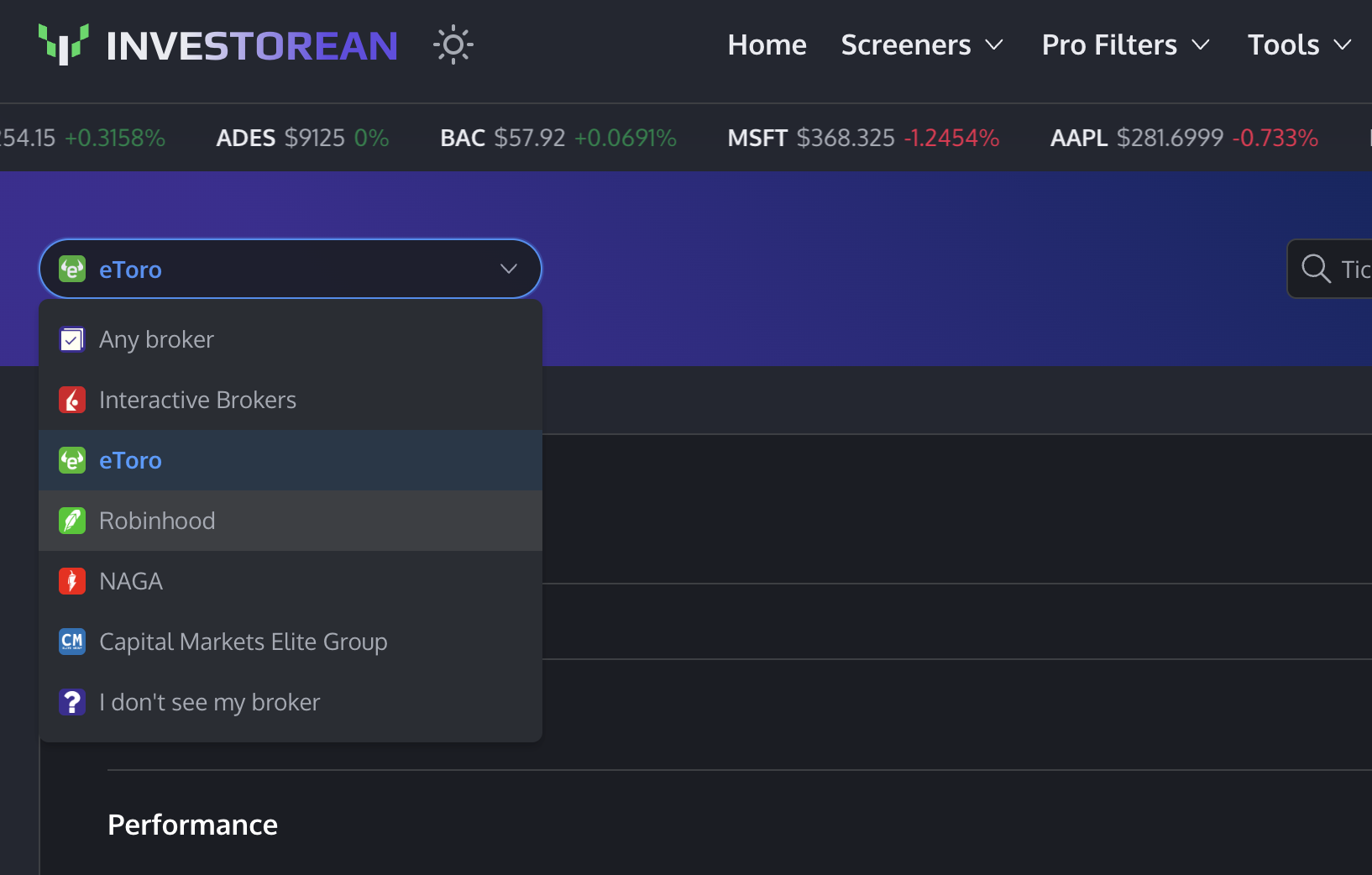
Investorean also helps because it works as a browser-based research layer rather than a closed brokerage search box. That makes it useful for cross-browser stock market research: investors can research from a web environment, compare candidates, and keep their workflow separate from the emotional pressure of a trading app. More importantly, it is cross-broker in the practical sense that matters most. Investorean currently supports broker filtering for Interactive Brokers, eToro, Robinhood, NAGA, and Capital Markets Elite Group.
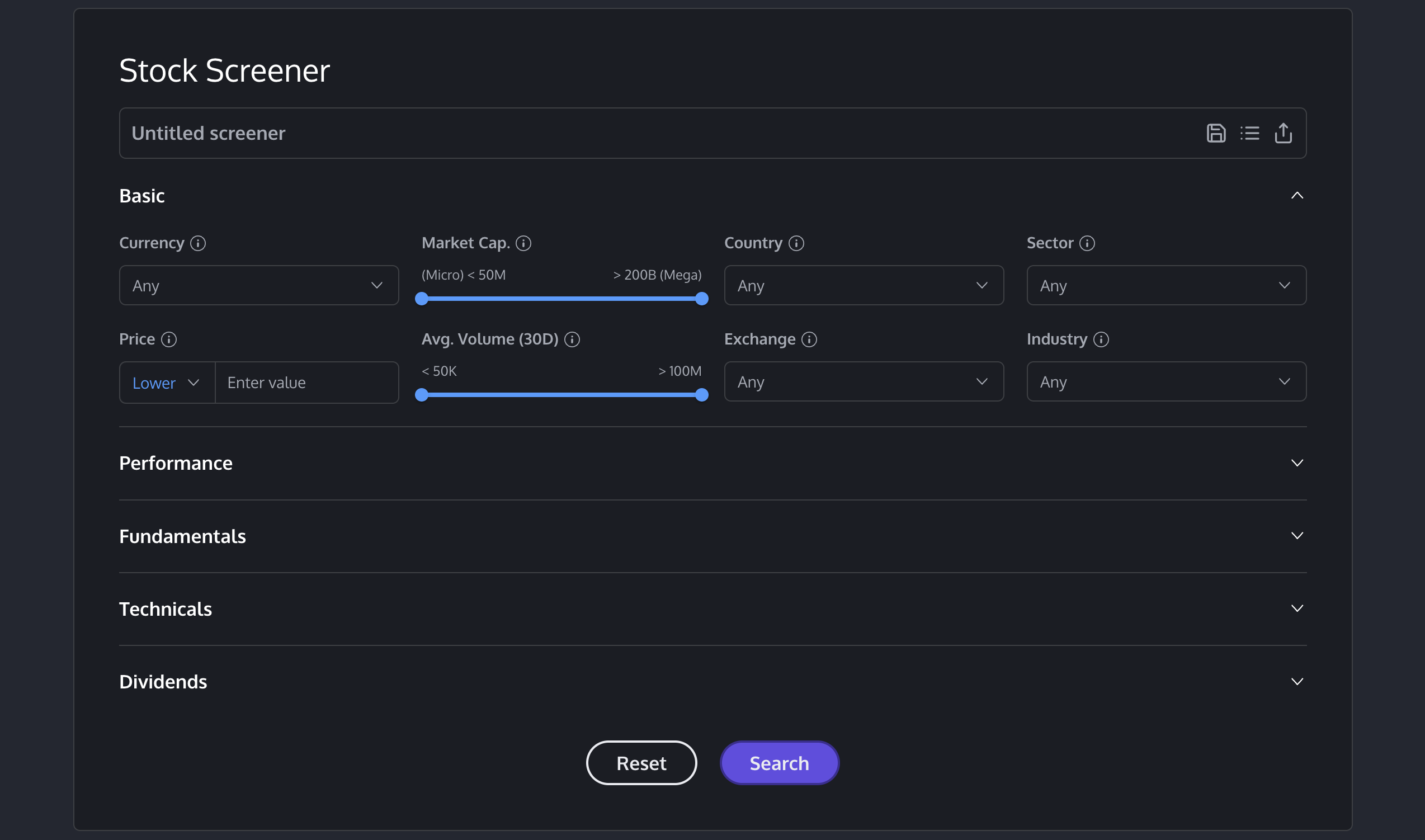
For eToro investors, Investorean stock screener can reduce the common frustration of discovering a strong setup on a generic screener and then finding no matching asset in eToro. Popular screeners may show results without accounting for what is actually available on eToro, while Investorean lets users select eToro first and screen inside that tradable universe. For Robinhood investors, Investorean makes the same principle useful by aligning research with the stocks a Robinhood user can actually act on.
A Practical Research Flow for Robinhood and eToro Investors
A serious stock research process should have three layers: tradability, quality, and timing. Tradability comes first because there is no reason to spend time on stocks that cannot be bought through your broker. Quality comes second because a tradable stock still needs to match your investment logic, whether that logic is based on earnings growth, valuation, margins, dividends, balance-sheet strength, sector exposure, or technical momentum. Timing comes third because even a high-quality stock can be a poor trade if the entry point, liquidity, or risk-reward setup is unattractive.
This is where a broker-aware platform can make research more disciplined. Instead of opening a generic screener, finding 50 names, and manually testing each one in Robinhood or eToro, investors can begin with a broker-filtered universe and then apply their strategy. A Robinhood user looking for U.S. growth stocks can avoid being distracted by unsupported foreign ordinary shares. An eToro user looking for global dividend stocks can focus on the stocks eToro actually lists rather than assuming every exchange-listed dividend payer is available.
The improvement is not only speed. It is confidence. When your research universe matches your broker universe, every candidate has a clearer path from idea to watchlist to potential execution. That does not make the investment safer, and it does not remove the need for risk management, but it does make the workflow more honest. You are no longer researching a fantasy market; you are researching the market available to you.
Stop Screening Stocks You Cannot Trade
Robinhood and eToro have made investing more accessible, but accessibility does not mean unlimited market coverage. Robinhood has a defined list of supported and unsupported assets, including clear limits around foreign-domiciled stocks and stocks that trade on foreign exchanges. eToro offers a broad international stock selection, but it also states that not every stock from each exchange is available on its platform. These are not small technical details. They are structural constraints that should shape how investors research.
The mistake is waiting until the end of the process to ask whether a stock is tradable. By then, you may have already spent time reading filings, checking ratios, reviewing charts, comparing competitors, or building conviction around an idea that your broker does not support. The better approach is to make broker availability the first step and then research deeply inside that actionable universe.
For Robinhood and eToro investors, Investorean offers a cleaner way to do that. It helps turn stock research from a scattered, tab-heavy process into a broker-aware workflow where the stocks you discover are aligned with the platform you actually use. In a market overflowing with information, relevance is an edge. The best stock screener is not the one that shows you the most stocks; it is the one that helps you find the right stocks you can actually trade.
Disclaimer: This article is for educational purposes only and does not constitute financial, investment, or trading advice. Investors should conduct their own research and consider their risk tolerance before buying or selling any financial instrument.