

Imagine a law enforcement officer responding to a scene where a seized firearm must be inspected for barrel obstructions, modifications, or evidence of recent use—without disassembling the weapon and potentially compromising forensic integrity. Or consider a security team tasked with sweeping a suspect vehicle, needing to peer inside door panels, engine compartments, and hidden cavities where contraband might be concealed. These scenarios share a common challenge: gaining visual access to confined, dark, and often inaccessible spaces where critical details hide in plain sight.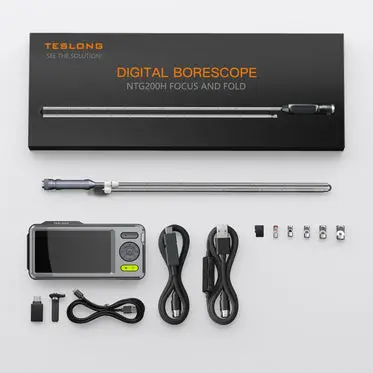
This is where rifle borescopes prove indispensable. Originally designed for inspecting the internal surfaces of firearm barrels, these specialized optical instruments have become essential tools across the broader security landscape. Their ability to deliver real-time, high-resolution imagery from within tight spaces makes them uniquely suited to the demands of modern security work. This article explores why rifle borescopes are vital for security professionals, examining their role in operations, the technology behind different types, practical usage techniques, and guidance for selecting the right tool for the job.
The Critical Role of Inspection in Security Operations
For law enforcement officers and security professionals, thorough inspections form the backbone of effective operations. Whether examining a service weapon for barrel wear that could affect accuracy during a critical engagement, collecting forensic evidence from a firearm’s bore to link it to a crime, or sweeping vehicles and properties for hidden contraband, the stakes are extraordinarily high. A corroded barrel undetected during routine maintenance could lead to a catastrophic failure in the field. A missed modification inside a seized weapon could mean overlooked evidence in a criminal prosecution. Contraband concealed within a wall cavity or vehicle panel that goes unnoticed during a sweep represents a direct security failure.
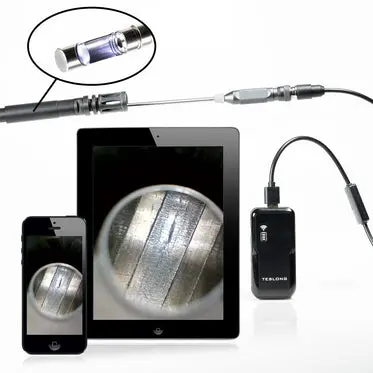
The common thread across these scenarios is that critical details often reside in spaces the human eye simply cannot reach unaided. Traditional inspection methods—disassembly, mirror-and-flashlight approaches, or reliance on touch—are time-consuming, potentially destructive, and prone to human error. Security professionals need tools that match the precision and urgency their work demands. This is precisely why advanced optical inspection instruments like borescopes have transitioned from niche gunsmithing accessories to frontline security equipment. They bridge the gap between what needs to be seen and what the unaided eye can access, transforming how professionals approach every inspection task.
Understanding Rifle Borescopes: Types and Features
A rifle borescope is a specialized optical inspection instrument designed to provide clear visual access to the internal surfaces of confined spaces—most notably firearm barrels, but increasingly any narrow cavity requiring detailed examination. These devices typically consist of a slender probe equipped with a miniature camera, integrated lighting, and either a direct eyepiece or a digital display for real-time viewing. For security professionals, understanding the different types available is essential for matching the right tool to the operational requirement.
Articulating Borescopes: Flexibility for Complex Inspections
Articulating borescopes feature a probe tip that can be steered in multiple directions, allowing operators to navigate curved passages, bends, and irregular cavities with precision. This maneuverability proves invaluable when inspecting areas that don’t follow a straight path—such as exhaust systems, plumbing within walls, or complex mechanical assemblies inside vehicles. For security teams conducting sweeps of properties or vehicles, the articulating tip means fewer blind spots and more comprehensive coverage of hidden compartments that might otherwise evade detection.
One-Way vs. Two-Way Borescopes: Directional Control
One-way articulating borescopes allow the tip to bend along a single plane, offering straightforward navigation through relatively simple passages. Two-way borescopes provide articulation in two planes, granting operators significantly greater control when maneuvering through complex geometries. For firearm barrel inspections where the path is linear, a one-way or even rigid borescope may suffice. However, security professionals conducting vehicle searches or structural inspections benefit from two-way articulation, as hidden compartments rarely follow predictable layouts.
Key Features of Modern Inspection Tools
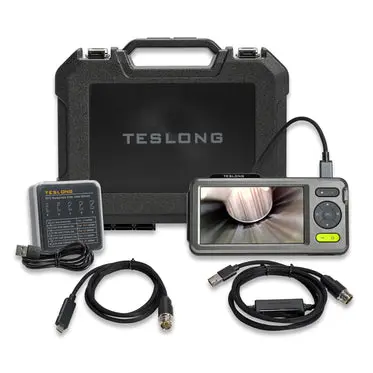
Today’s borescopes incorporate several features that directly impact their effectiveness in security applications. High-resolution cameras—often capturing at 720p or above—reveal minute details such as tool marks, corrosion, or trace residue that lower-quality optics would miss. Adjustable LED lighting at the probe tip illuminates dark interiors without external light sources. Rugged, waterproof construction ensures reliable performance in harsh field conditions, from rain-soaked crime scenes to dusty vehicle undercarriages. Wireless connectivity and compact form factors allow operators to stream or record footage instantly, supporting both real-time decision-making and post-operation documentation. Manufacturers like Teslong have developed models specifically engineered for these demanding professional applications, combining high-resolution imaging with field-rugged durability.
How Rifle Borescopes Address Security Professionals’ Needs
Security professionals face two fundamental challenges in their daily operations: accessing spaces that defy conventional inspection methods and maintaining the speed and accuracy that high-stakes situations demand. Rifle borescopes directly answer both challenges, transforming what were once laborious or impossible tasks into streamlined, reliable procedures.
Enabling Detailed Inspections in Hard-to-Reach Areas
The defining advantage of a borescope in security work is its ability to project an operator’s vision into spaces where no other method provides adequate coverage. When examining a firearm barrel, the borescope reveals lands, grooves, pitting, and residue deposits along the entire bore length—details invisible from either end without magnification and illumination working in concert. Beyond firearms, security teams use these instruments to inspect vehicle door panels, dashboard cavities, fuel tanks, and structural voids within buildings where contraband, weapons, or surveillance devices might be hidden. The probe’s slim diameter allows entry through existing openings—drain holes, ventilation gaps, or small access ports—eliminating the need to cut, drill, or disassemble structures that may hold evidentiary value. This non-destructive access preserves scene integrity while ensuring no cavity goes unchecked during a thorough sweep.
Providing Reliable and Efficient Inspection Tools
Time pressure defines most security operations. A vehicle checkpoint cannot hold traffic indefinitely, and a forensic firearms examiner may face court-imposed deadlines for evidence processing. Borescopes dramatically compress inspection timelines by delivering immediate visual confirmation of conditions that would otherwise require disassembly and reassembly. What once took an hour of careful mechanical work now takes minutes of guided visual scanning. The digital recording capability eliminates the need for repeated inspections—footage captured during the initial pass serves as permanent documentation for reports, court proceedings, or intelligence sharing. Reliability in the field is equally critical; modern borescopes built to military-grade durability standards continue functioning after drops, exposure to moisture, and temperature extremes. This combination of speed, accuracy, and ruggedness means security teams can conduct more inspections per shift with greater confidence in their findings, directly enhancing operational effectiveness and reducing the risk of oversight.
Step-by-Step Guide to Using Rifle Borescopes for Effective Inspections
Knowing how to properly deploy a borescope is just as important as owning one. Security professionals who follow a systematic approach consistently achieve more accurate results while protecting both themselves and the integrity of the evidence or assets they’re examining.
Preparation and Safety Measures
Every inspection begins before the probe enters any cavity. First, confirm the firearm is completely unloaded and cleared—verify visually and physically that the chamber is empty, the magazine removed, and the action locked open. For non-firearm inspections, assess the environment for hazards such as sharp edges that could damage the probe, chemical residues, or electrical risks within wall cavities. Calibrate the borescope’s white balance and focus settings under ambient lighting conditions to ensure accurate color reproduction once inside dark spaces. Don appropriate personal protective equipment, including nitrile gloves to prevent contaminating surfaces with oils or DNA, and eye protection if working near debris. Finally, check battery levels and available storage capacity—running out of either mid-inspection compromises the entire operation.
Insertion and Navigation Techniques
Insert the probe slowly and deliberately, maintaining gentle forward pressure while monitoring the live feed continuously. For firearm barrels, feed the borescope from the breech end whenever possible to follow the natural direction of bullet travel and avoid muzzle crown damage. When navigating curved passages in vehicles or structures, use the articulation controls in small, incremental adjustments rather than sweeping movements—this prevents the tip from catching on internal surfaces and reduces the risk of probe damage. Rotate the entire unit rather than relying solely on tip articulation when you need a panoramic view of a cavity’s interior. Maintain a mental map of your probe’s position relative to the entry point, and if resistance is encountered, pull back slightly and redirect rather than forcing advancement.
Capturing and Analyzing Evidence
Once the target area is in view, switch to the highest available resolution and adjust LED intensity to eliminate glare or shadows that obscure surface details. Capture both still images and video—stills provide the sharpest detail for court exhibits, while video preserves spatial context and the sequence of discovery. Use systematic scanning patterns: in a firearm barrel, advance the probe in measured increments, pausing every centimeter to document each section of the bore surface. For vehicle compartments, sweep methodically from one boundary to the opposite, ensuring complete coverage. Immediately after extraction, review footage on a larger screen to identify anomalies that may not have been apparent on the small live display. Tag files with metadata including date, location, case number, and the specific cavity inspected. This disciplined documentation chain transforms raw visual data into admissible evidence and actionable intelligence that supports prosecution, threat assessment, or maintenance decisions.
Choosing the Right Borescope for Security Applications
Selecting the appropriate borescope requires matching the tool’s capabilities to the specific demands of security fieldwork. Not every inspection scenario calls for the same instrument, and understanding the critical selection criteria helps professionals invest wisely in equipment that will perform when it matters most.
Durability and Build Quality
Security work is inherently unpredictable, and inspection tools must survive the same conditions their operators endure. A borescope destined for law enforcement use should feature a tungsten-braided or steel-armored probe sheath that resists kinking, abrasion, and puncture when navigating jagged metal edges inside vehicles or structural cavities. The handset or control unit needs impact-resistant housing rated to withstand drops onto concrete from working height. IP67 or higher waterproof ratings ensure the instrument continues functioning during outdoor operations in rain, mud, or when probing fluid-filled compartments. Professionals should prioritize models with proven track records in demanding environments over consumer-grade alternatives that may fail under operational stress.
Camera Resolution and Lighting
The entire value of a borescope rests on image clarity. For forensic firearms examination, where identifying individual tool marks or micro-fractures determines case outcomes, cameras delivering 1080p resolution or higher with accurate color reproduction are essential. Adjustable LED brightness allows operators to manage reflections off polished bore surfaces while still penetrating deep shadows in larger cavities. Some advanced models offer dual-spectrum lighting or UV capability, which can reveal residues invisible under standard white light—a significant advantage when searching for trace evidence or identifying tampered surfaces.
Portability and Ease of Use
Security professionals operate across multiple locations within a single shift, making compact, lightweight designs a practical necessity. A borescope that fits in a duty bag alongside other essential gear sees regular use; one that requires a dedicated carrying case often gets left behind. Intuitive controls that can be operated with gloved hands, quick-start functionality without lengthy boot sequences, and wireless display options that free operators from cable management all contribute to field efficiency. Battery life sufficient for a full operational shift without recharging eliminates a common frustration that undermines inspection thoroughness during extended deployments.
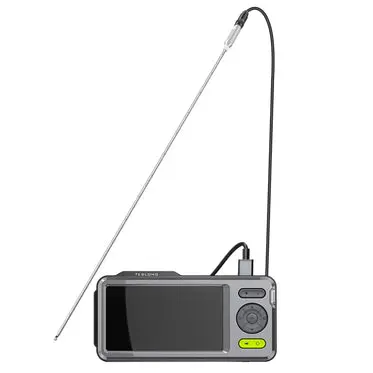
Elevating Security Operations Through Advanced Borescope Technology
Rifle borescopes have evolved from specialized gunsmithing accessories into indispensable instruments for modern security professionals. Their ability to provide clear, real-time visual access to confined and otherwise inaccessible spaces directly addresses the core challenges that law enforcement officers and security teams face daily. From inspecting firearm barrels for wear, modifications, or forensic evidence to sweeping vehicles and structures for concealed contraband or surveillance devices, these tools eliminate blind spots that traditional methods simply cannot reach.
The combination of high-resolution imaging, adjustable illumination, articulating probes, and rugged field-ready construction means security professionals can conduct faster, more thorough inspections without compromising scene integrity or evidence quality. Every inspection completed with a borescope reduces risk—risk of mechanical failure in service weapons, risk of missed evidence in criminal cases, and risk of undetected threats during security sweeps. For organizations that have not yet integrated borescopes into their standard equipment loadout, the investment represents a measurable improvement in operational capability. Equally important is ensuring that personnel receive proper training in deployment techniques and evidence documentation protocols, so the tool’s full potential translates into real-world results. The security landscape grows more complex each year, and the professionals who protect it deserve instruments that match that complexity with precision and reliability.
