
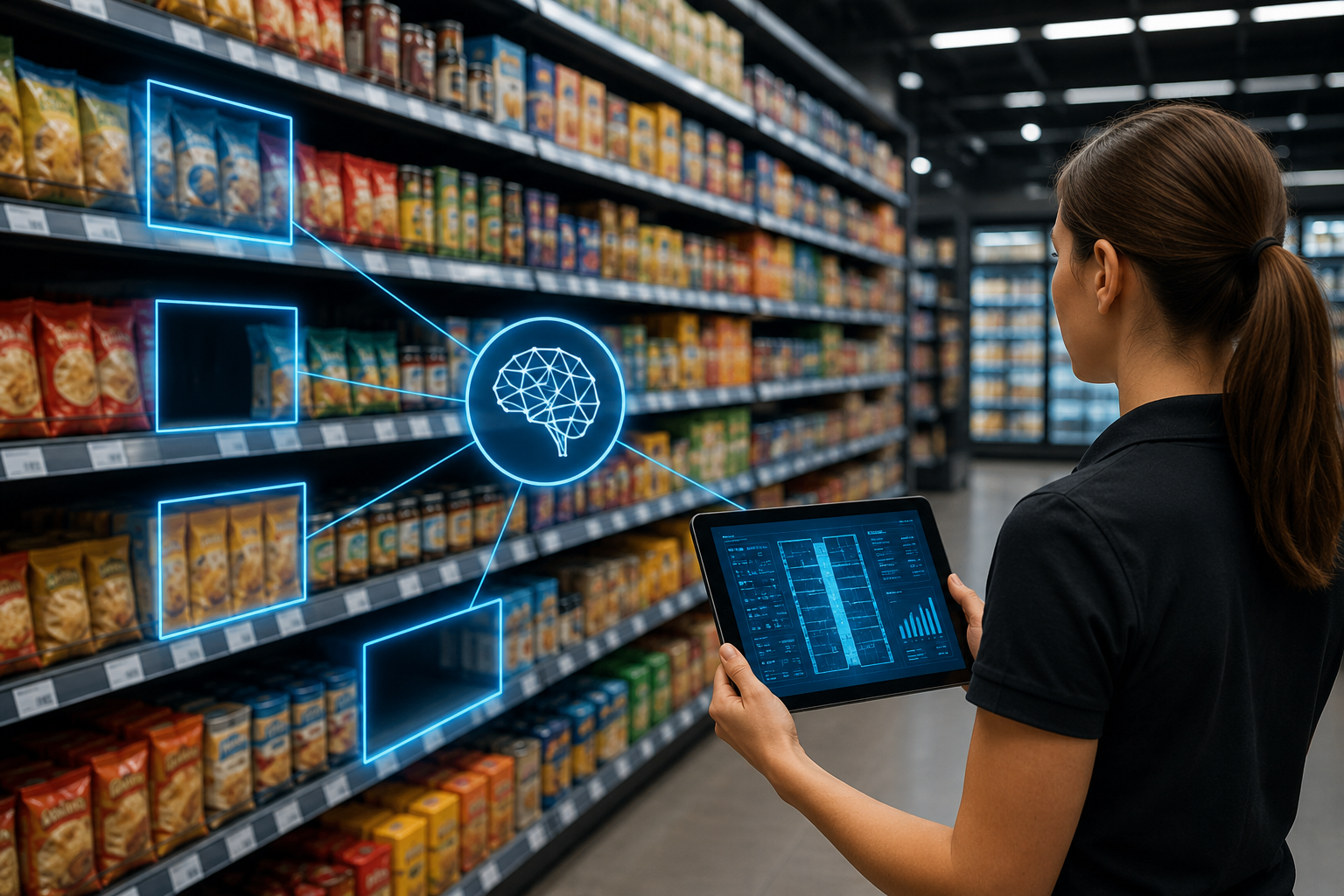
In physical retail, what you cannot see will cost you. For decades, the true state of the store shelf has been an operational black box. Retailers have traditionally relied on manual audits associates walking up and down aisles with clipboards or handheld scanners—to catch missing items, misplaced products, or disorganized layouts.
However, manual audits are fundamentally slow, subjective, and highly prone to human error. A typical physical audit is only about 80% accurate, and by the time a report flags an empty shelf, days of sales may already be lost. To bridge this critical visibility gap and eliminate human error, modern storefronts are ditching the clipboards. Forward-thinking brands are aggressively adopting AI image recognition for retailer operations, utilizing computer vision and machine learning to transform their physical aisles into live, streamable data points that match real-time customer demand.
The True Financial Impact of Shelf “Blind Spots”
When a product goes out of stock or is hidden behind a different brand, the consequences ripple far beyond a single missed transaction. “On-shelf availability” is the lifeblood of physical retail, yet the industry has long accepted a status quo of persistent blind spots.
- Lost Revenue and Broken Brand Loyalty: If a customer does not see their preferred item, they will rarely wait or ask an associate. Instead, they will buy a competitor’s product, choose a different size, or walk out entirely to purchase it online. Over time, this erodes store loyalty and pushes consumers toward digital alternatives.
- Wasted and Inefficient Labor Allocation: Employees spend hours manually checking stock, scanning barcodes, and guessing what needs to be replenished from the backroom. This shifts their focus away from high-value tasks like assisting shoppers, managing checkouts, and finalizing sales on the floor.
- Failed Promotional Campaigns: Brands spend millions of dollars negotiating premium promotional displays and endcaps with retailers. Yet, audits show that a staggering percentage of these promotional displays are either set up incorrectly, feature the wrong pricing labels, or never make it out of the backroom stock area.
How Automated Visual Auditing Transforms the Aisle
Instead of relying on human eyes to spot discrepancies, smart retail ecosystems leverage a network of visual inputs. High-resolution fixed cameras mounted on opposite shelves, autonomous roaming robots, or mobile devices used by floor staff during standard shifts capture continuous images of the store layout.
Once these images are captured, the underlying computer vision models process the visual data. The software evaluates the exact dimensions, logos, and placements of every item on the display. It translates a simple digital photograph into a rich map of data, identifying specific Stock Keeping Units (SKUs), missing items, and incorrect price tags.
Finally, the system automatically compares the real-time shelf configuration against the master planogram, the corporate layout blueprint that dictates exactly where each item should sit. If a discrepancy is found, the system flags it instantly, turning a visual observation into an actionable operational task for the floor team.
4 Reasons Retailers Are Investing in Shelf Visibility Software
1. Instant SKU-Level and “Void” Detection
Recognizing a brand logo or a general product category is no longer sufficient in a crowded market. Advanced platforms offer exact SKU-level identification. This means the system does not just note that the chip aisle looks full; it specifically flags that the Barbeque 8oz bag is missing, even if a different flavor has been pushed forward to hide the gap. This precise “void detection” allows staff to pull the exact inventory needed from the stockroom immediately.
2. Real-Time Planogram Compliance
Most printed planograms are ignored or executed incorrectly due to chaotic store hours and high employee turnover. AI bridges this gap by identifying placement errors, incorrect product sequencing, and unauthorized competitor encroachment within seconds. It gives managers an objective, real-time “source of truth,” ensuring that premium shelf space is being utilized exactly as negotiated with suppliers.
3. Dynamic Price Tag Verification
Price discrepancies between the shelf tag and the point-of-sale register are a major source of customer frustration and regulatory fines. AI engines scan the tiny text and barcodes on shelf tags simultaneously with the products. If a tag is missing, outdated, or placed under the wrong item, the system alerts the team to print a corrected label instantly, maintaining pricing integrity across the floor.
4. Predictive Supply Chain Insights
When shelf visibility data is collected continuously, it stops being a reactive fix and becomes a predictive tool. By analyzing how fast specific shelves empty at different times of the day, AI engines help retailers optimize their ordering cycles and backend supply chains. This ensures that high-demand products are ordered and staged in the backroom before a major rush begins.
Also Read: The 7 Best Retail Audit Software Platforms in 2026 (Evaluated & Compared)
The Operational Shift: From Reactive to Proactive
Implementing automated visual tracking turns a reactive daily scramble into a highly organized, proactive strategy. Retailers can transition from occasional, inaccurate weekly spot-checks to continuous, automated shelf analytics that recover missing sales and boost overall on-shelf availability to over
