
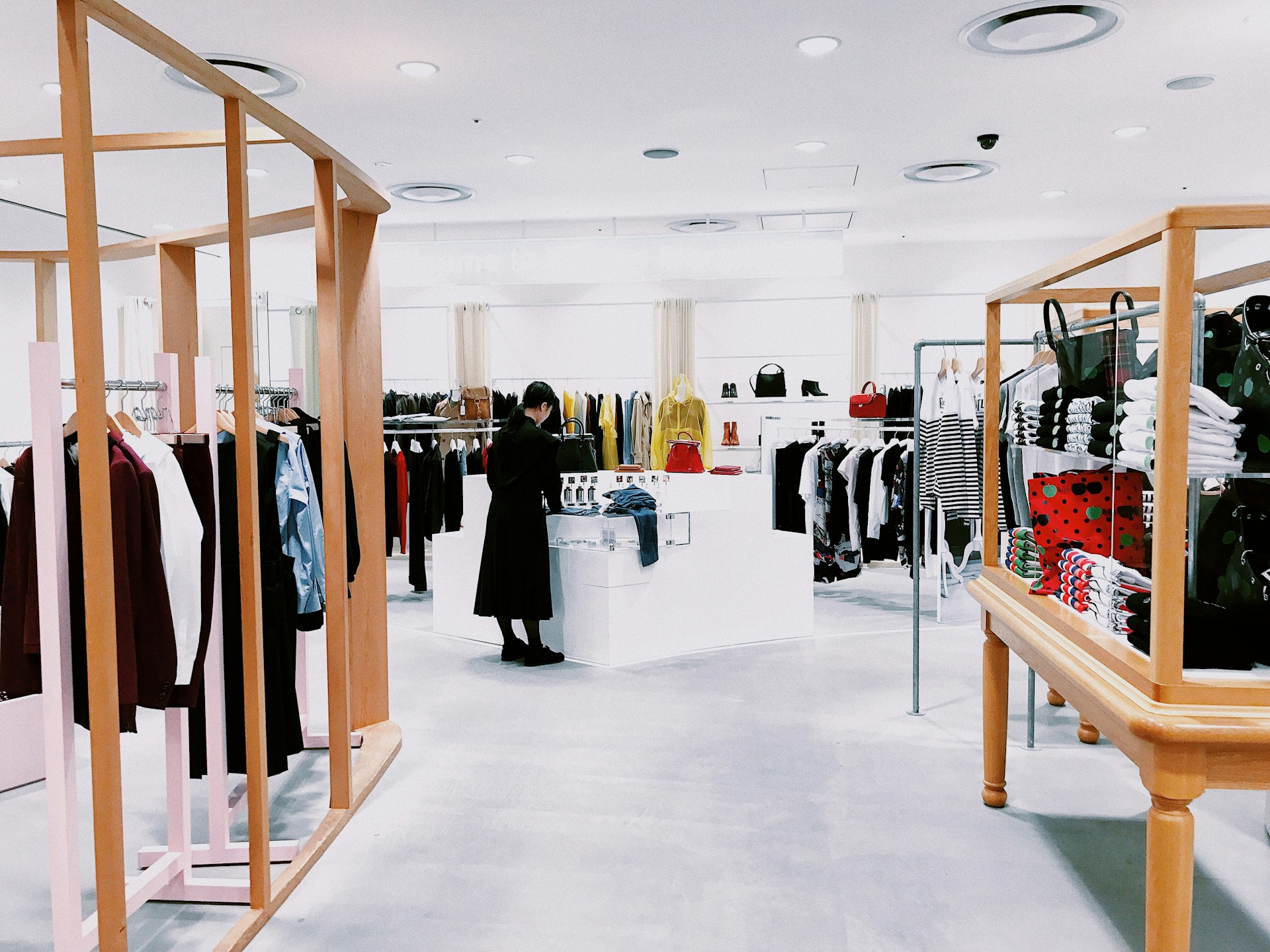
In an era where virtually any product can be purchased online with one-click convenience, the physical retail store must offer something that digital commerce fundamentally cannot: a sensory, social, and experiential encounter with products and a brand that creates emotional resonance, builds loyalty, and justifies the effort of a physical visit. Retail store design that achieves this is not a luxury — it is an existential necessity for physical retail businesses competing against the scale, convenience, and price efficiency of e-commerce.
The good news is that physical retail has genuine advantages that e-commerce can never replicate: the ability to touch, smell, and try products; the immediate gratification of same-day possession; the social pleasure of shopping as a shared activity; and the opportunity for face-to-face interaction with knowledgeable staff. Great retail store design amplifies all of these advantages, creating an environment where customers are more likely to engage, stay longer, discover more products, return more frequently, and spend more per visit.
Store Layout Strategy: Designing the Path to Purchase
The layout of a retail store is the single most consequential design decision affecting sales performance. How customers enter the space, how they move through it, which products they encounter and in what sequence, where they pause, and how the journey culminates at the point of purchase are all shaped by the physical layout of the store. Understanding the principles of retail store layout allows business owners to design a commercial space that maximises customer exposure to the full product range while creating a natural, unforced shopping experience.
The most common and effective retail layout strategies include the grid layout (aisles arranged in parallel rows, most common in supermarkets and hardware stores for maximum product display density), the free-flow or boutique layout (irregular, organic pathways that encourage exploration and discovery, most common in fashion and lifestyle retail), and the loop or racetrack layout (a single main aisle that guides customers through the entire store before returning to the entrance, maximising product exposure). Regardless of the layout type, the “decompression zone” — the first three to five metres inside the store entrance — should be kept relatively clear and visually simple, as customers need a moment to transition from the outside world and orient themselves before they begin to engage with products.
Visual Merchandising: Turning Products Into Compelling Stories
Visual merchandising is the art of presenting products in a retail environment in a way that is visually compelling, logically organised, and persuasively commercial. It encompasses window displays, in-store product arrangements, signage, pricing display, lighting of product areas, and the overall visual narrative that the store tells about its brand and its merchandise. Excellent visual merchandising transforms a store from a room full of products into a curated, aspirational experience that makes customers want to engage, touch, try, and ultimately buy.
The most effective visual merchandising creates clear visual focal points — hero product displays, seasonal features, new arrival highlights — that draw the customer’s eye and anchor their journey through the store. Products are grouped in a way that reflects how customers actually think about them (by occasion, colour, lifestyle category, or complementary function) rather than by the store’s internal logistics or supplier relationships. Price points are communicated clearly and without visual clutter. And the overall arrangement is refreshed regularly enough to reward repeat customers with something new to discover on every visit.
Sensory Design: Creating a Multi-Dimensional Brand Experience
The most memorable retail environments engage all five senses, not just sight. Sensory retail design — the intentional design of the sound, scent, texture, and temperature of a retail space — has become a sophisticated discipline supported by consumer neuroscience research demonstrating that multi-sensory environments create stronger emotional responses, longer dwell times, higher purchase intentions, and more positive brand memories than visually-only designed spaces.
Sound design in retail ranges from the selection of background music (tempo, genre, and volume all measurably affect shopping behaviour — slower music increases dwell time; music congruent with brand identity increases brand-product association) to the acoustic management of ambient noise levels. Scent is one of the most powerful sensory tools in retail: a characteristic brand scent creates an immediate, subconscious emotional association with the brand that can be triggered whenever the customer encounters the scent again. Touch is particularly important in product categories like fashion, homewares, and beauty, where the tactile experience of the product is central to the purchase decision — display products in a way that invites handling rather than discouraging it.
Lighting and Colour in Retail: How Visual Environment Drives Purchase Decisions
Lighting and colour are the two most powerful and rapidly deployable tools for influencing customer behaviour and shaping the perceived quality of products and the retail environment as a whole. Retail lighting must serve two simultaneous functions: creating an atmospheric, brand-appropriate ambient environment, and specifically and effectively illuminating products to maximise their visual appeal and perceived quality.
Product spotlighting — using narrow-beam LED spotlights positioned directly above or in front of product displays — is the most impactful single lighting investment a retailer can make. Products that are well lit with appropriate colour rendering appear higher quality, more desirable, and more worthy of their price point than the same products displayed under generic fluorescent ambient lighting. In fashion retail, fitting room lighting is particularly critical: poor fitting room lighting is one of the most common reasons customers decide not to purchase clothing they have tried on. Warm, flattering, naturally-coloured lighting in fitting rooms significantly increases conversion rates.
Colour in retail environments directly influences customer mood, dwell time, and purchasing behaviour. Research consistently shows that warm colour palettes (reds, oranges, warm neutrals) stimulate impulse purchasing behaviour and are effective in promotional zones and high-traffic areas, while cool palettes (blues, greens) encourage relaxation and extended browsing suitable for considered purchase categories. The brand’s colour palette should be the dominant visual language of the store, applied with coherence and discipline across walls, fixtures, signage, and packaging.
Creating a Distinctive Retail Identity That Builds Customer Loyalty
In a crowded retail landscape, the stores that build enduring customer loyalty are those with a distinctive, consistent, and authentic physical identity that makes visiting them feel different from shopping anywhere else. This distinctive identity is built through the accumulation of considered design decisions at every scale: the architecture of the entrance, the quality of the fixtures and fittings, the character of the staff uniforms, the design of the packaging, the smell of the space, the sound of the music, and the small details that signal genuine care and investment.
For independent retailers, developing a distinctive retail identity begins with a clear articulation of the brand story — who you are, what you stand for, and why your products and your store exist in a way that is different from every alternative. That story must then be translated three-dimensionally into the physical design of the space through material choices, colour applications, spatial arrangements, and styling details that are specific, authentic, and emotionally resonant. The goal is a retail environment that customers experience as a genuine place — with personality, history, and character — rather than a generic transactional space. When customers feel that kind of genuine connection to a retail environment, they return, they recommend, and they become advocates: the most valuable marketing any retail business can generate.
