
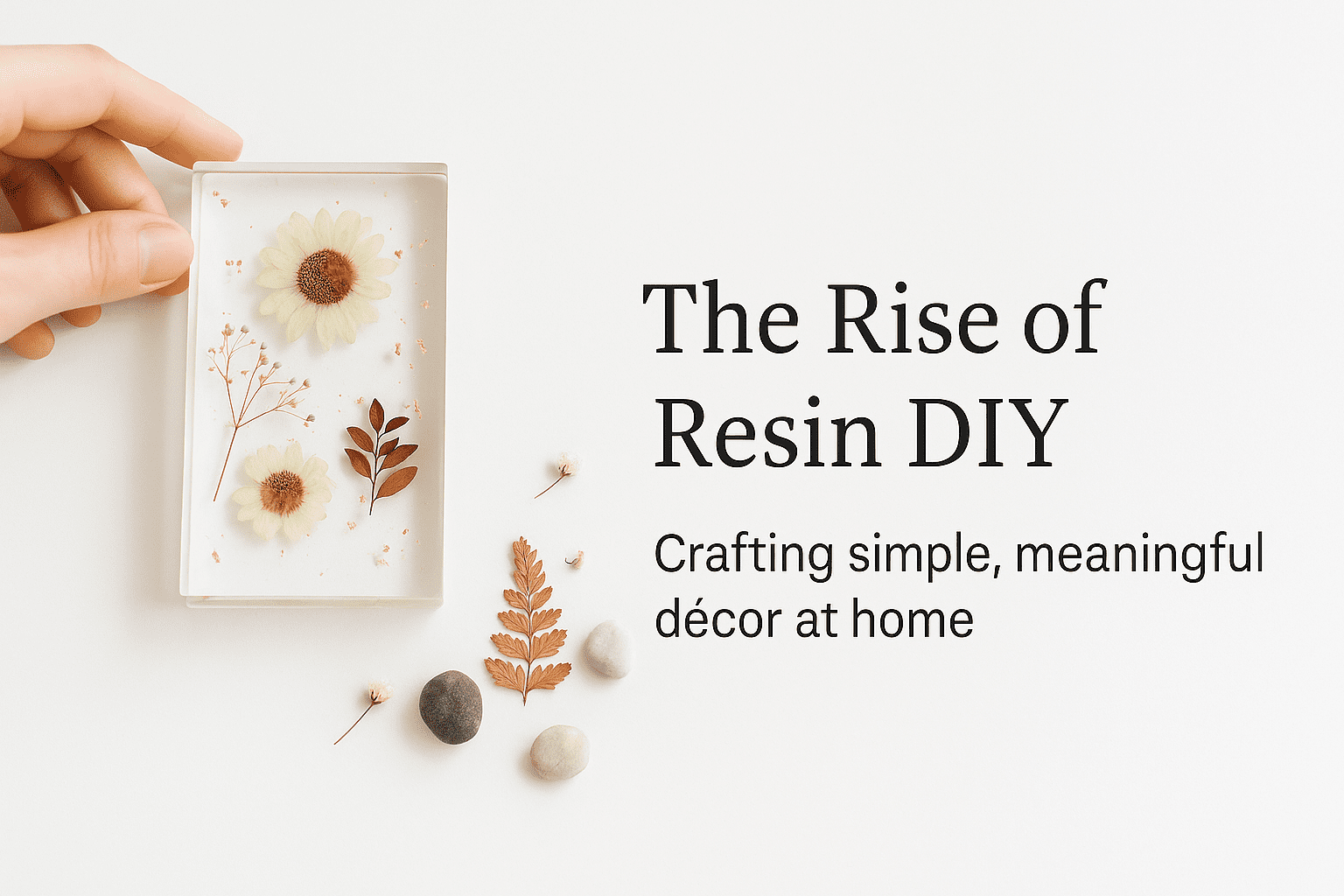
As the push for personalized home décor continues to grow, more people are moving away from mass-produced items and turning toward small, handcrafted pieces that carry a bit more personality. And thanks to social media, a new wave of simple, visually striking projects is gaining traction—especially those made with resin.
Across TikTok and Instagram, videos featuring crystal-clear bookends, preserved flowers, tiny keepsake blocks, and elegant resin trays routinely rack up thousands (sometimes millions) of views. What makes this trend especially appealing is that you don’t need a workshop, fancy tools, or advanced crafting skills. With just a few basic materials and a small workspace, anyone can create décor that feels personal, modern, and display-worthy.
Interestingly, this movement is also tied to the broader rise of “slow living,” a lifestyle trend encouraging people to focus on small pleasures and intentional activities. Resin crafting fits naturally into this mindset—it’s structured yet flexible, creative yet calming. For many beginners, it becomes a hobby that counters screen fatigue and offers a break from fast-paced routines.
Why Resin Has Become the Go-To for Beginners
Beyond its aesthetics, resin DIY has taken off because it solves a practical problem:
most people want to create something meaningful—but have limited time, space, and experience.
Resin hits the sweet spot:
- No complex tools required
- Minimal learning curve
- Works even on a small desk
- Finished pieces look surprisingly “professional”
Another reason beginners gravitate toward resin is the instant feedback loop.
Unlike woodworking or ceramics—which often require multiple steps or specialized skills—resin allows you to see your design take shape within minutes. The satisfaction of watching pigments swirl, flowers settle into place, or clear resin fill a mold is part of the appeal. The process itself becomes a mini-ritual that many find grounding.
What Are the Easiest Resin Projects to Start With?
For readers who want ideas they can visualize immediately, here are the most beginner-friendly projects making waves online:
1. Clear Bookends (a viral favorite)
Add dried leaves, flowers, shells, or other small elements to create functional décor with a personal twist. Because the design possibilities are endless, bookends have become a popular way for people to express their style without making something overly complicated.
2. Memory Keepsake Blocks
These can preserve travel mementos, a child’s tiny toy, a concert ticket stub, or a simple dried flower—small objects that hold emotional meaning. Many crafters say these pieces become “conversation starters” when guests notice them at home.
3. Simple Trays and Trinket Holders
With a touch of pigment or gold flakes, a small tray instantly becomes a stylish spot for keys, jewelry, or bedside essentials. These trays are practical, easy to make, and forgiving for beginners who are still learning how resin flows.
The common theme?
Low risk, high reward—and your finished project will actually look good in your home.
Why Deep-Pour Resin Makes These Projects More Successful
Not all resin formulas behave the same way.
Once beginners move from small accessories to slightly thicker items—like bookends or solid decorative blocks—the choice of resin becomes important.
Many creators recommend using deep pour epoxy resin because it can cure through thicker pours without overheating or turning cloudy. Its longer working time also gives beginners more room to adjust elements inside the mold, resulting in clearer and more stable pieces.
In addition, deep-pour resin helps preserve the natural details of embedded objects—like flower petals, wood grain, or small stones—without causing discoloration or distortion. This is one reason why nature-inspired crafts (such as “forest scene bookends” or “seaside keepsakes”) remain some of the most beloved resin projects online.
Trend reports also show that videos featuring large or thick resin pours are among the most shared on crafting feeds—suggesting that people are curious about pieces that feel more substantial and “display-ready.”
A Quick Solution for Smaller or More Detailed Projects
One of resin’s biggest advantages is its versatility.
For tiny details or fast, small-scale projects, many creators use UV-curing resin. This type of resin requires no mixing—just apply it, shape it, and harden it under UV light.
It’s ideal for:
- Securing tiny dried flowers
- Creating earrings, charms, or keychains
- Adding surface highlights
- Filling small gaps or edges on larger deep-pour pieces
This mix of materials is one reason brands like Bondcraftor often appear in crafting discussions—they offer both deep-pour and quick-curing options that complement each other in modern DIY projects.
Because UV resin sets within minutes, some creators pair it with deep-pour resin to add finishing touches, fix small imperfections, or add dimensional accents that would be difficult to achieve otherwise.
Beyond Crafting: Why Resin Creations Resonate Emotionally
This trend is not just about making décor.
It reflects two broader desires in modern life:
1. A wish to surround ourselves with objects that mean something
A resin block containing dried flowers from a memorable day can be far more meaningful than store-bought décor. When your décor holds personal value, the home begins to feel more like an extension of your identity.
2. A way to slow down, even briefly
Crafting offers a small pocket of calm—something many people crave in a fast-moving world. Watching resin settle, pigments blend, or tiny objects float into place can be surprisingly meditative.
Some creators even describe resin crafting as “visual journaling”—a way to document emotions or moments in a physical form.
Conclusion: Start Small, Make Something That Feels Like You
Resin DIY isn’t about perfection.
It’s about adding a personal touch to your home—one small project at a time. Whether it’s a transparent bookend, a preserved keepsake, or a minimalist tray, these pieces become little reminders of who you are and what you value.
You don’t need advanced skills or expensive tools.
You only need the curiosity to start—and that first small project may surprise you with how meaningful it becomes.
