
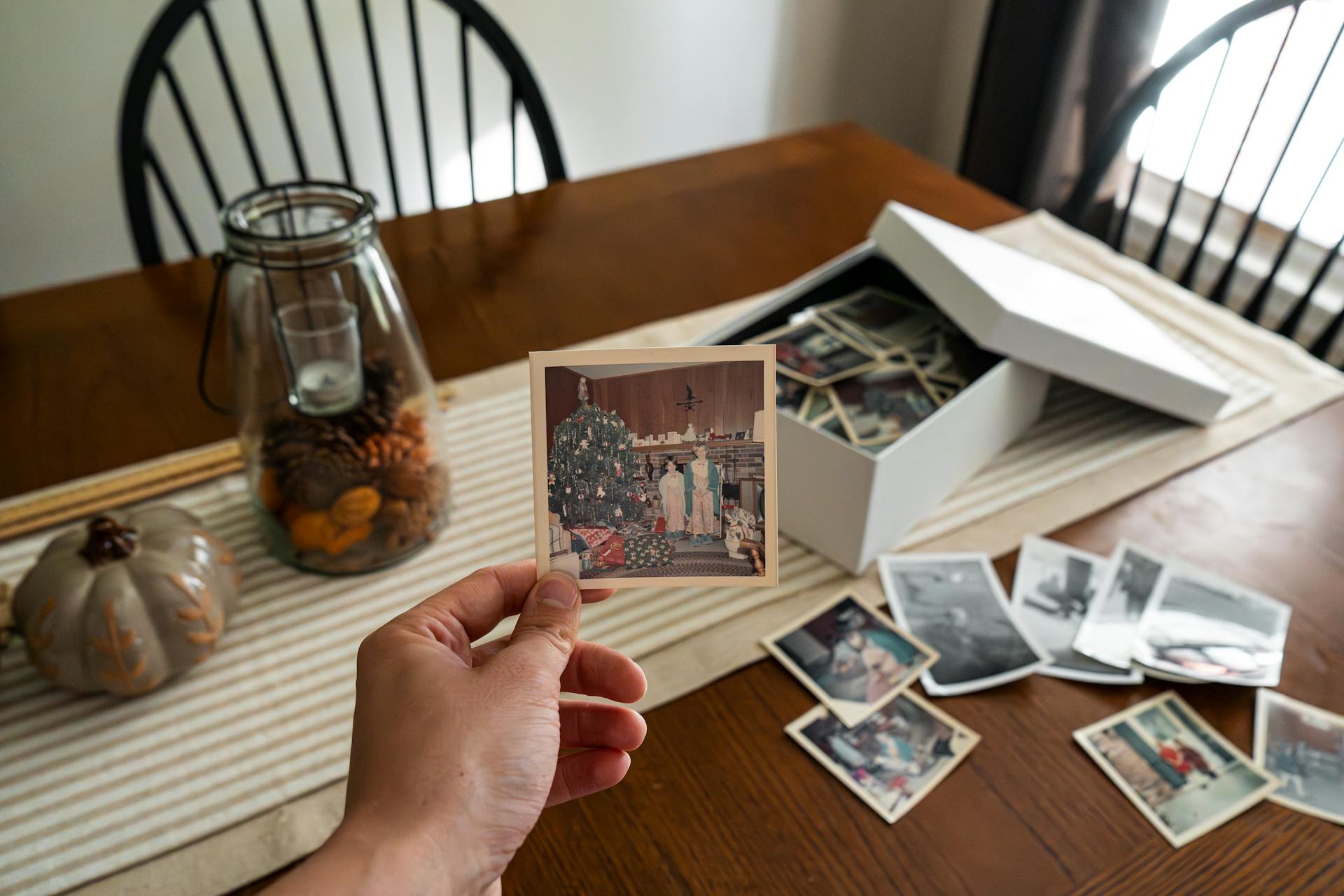
We talk about artificial intelligence in terms of productivity tools, chatbots, and self-driving cars. But one of the most emotionally powerful applications of AI is something far more personal: saving old family photographs before they disappear forever.
Millions of families around the world have shoeboxes full of fading prints, cracked negatives, and water-damaged snapshots. These are not just pictures. They are the only visual record of grandparents, childhood homes, and moments that can never be recreated. Every year that passes, the physical originals degrade a little more. And once they are gone, they are gone for good.
The good news is that modern AI has reached a point where damaged photos can be repaired automatically, with results that would have required hours of professional Photoshop work just a few years ago. The question is no longer whether the technology works. It is whether people know it exists.
The Problem With Traditional Photo Restoration
Professional photo restoration has always been expensive. A single image can cost anywhere from $25 to over $200, depending on the level of damage. For a family with dozens or even hundreds of old photos, the cost quickly becomes prohibitive.
Beyond the price, there is the time factor. Manual restoration requires a skilled editor to painstakingly rebuild missing details, correct color shifts, and remove scratches pixel by pixel. A single complex restoration can take days. Most families simply never get around to it.
Then there is the access problem. Not everyone lives near a photo restoration studio, and shipping fragile originals through the mail introduces its own risks. The result is that most old photos sit in drawers untouched, slowly deteriorating.
How AI Changed the Game
Deep learning models trained on millions of photographs have fundamentally shifted what is possible. Modern AI Photo Restoration tools can analyze damage patterns, reconstruct missing facial features, remove scratches and stains, and even add realistic color to black-and-white images — all in under a minute.
The technology behind this is fascinating. Neural networks learn what human faces, backgrounds, and textures are supposed to look like by studying enormous datasets. When they encounter a torn or faded region in a photo, they can predict what was originally there with remarkable accuracy. Face enhancement models, in particular, have become incredibly sophisticated. They can rebuild eyes, noses, and mouths that are barely visible in the original, producing results that family members immediately recognize.
This is not a gimmick or a novelty filter. The output quality from modern photo restoration AI has reached a point where professional restorers themselves use these tools as a starting point for their work.
What to Look For in a Photo Restoration Tool
Not all AI restoration services deliver the same quality. Here are the key features that separate serious tools from toys:
Face Enhancement.
This is the most important differentiator. Faces are what we care about most in family photos, and they are also the hardest thing to reconstruct. Look for tools that specifically mention face-trained models. PhotoRestore.ai, for example, uses models trained on millions of faces to reconstruct facial details that generic enhancement tools completely miss.
Colorization.
Many old family photos are black and white or have severely faded colors. Good AI colorization does not just guess randomly. It uses contextual cues — skin tones, sky colors, clothing styles from the era — to produce natural-looking results.
Scratch and Damage Repair.
This is table stakes, but the quality varies. Better tools handle complex damage like tears, water stains, and mold spots, not just light surface scratches.
Speed and Batch Processing.
If you have a large collection, you need something that can handle volume. Waiting ten minutes per photo is not practical when you have a hundred images to process.
Privacy.
You are uploading personal family photos. Make sure the service has clear privacy policies and does not retain your images longer than necessary.
A Practical Plan for Preserving Your Family Photos
If you have been putting this off, here is a simple approach to get started:
Step 1: Gather and Scan.
Collect all physical photos in one place. Use a flatbed scanner for best results, or a smartphone scanning app like Google PhotoScan for a quick pass. Aim for at least 300 DPI resolution.
Step 2: Prioritize.
Start with the photos that matter most — the oldest ones, the ones with identifiable family members, the ones that are most damaged. These are both the most valuable and the most urgent.
Step 3: Run AI Restoration.
Upload your scans to a photo restoration service. Most modern tools let you process multiple images at once. Review the results and adjust as needed.
Step 4: Organize and Back Up.
Create a clear folder structure with names and dates. Store copies in at least two places: a cloud service and an external drive. Share restored versions with family members so the memories are distributed.
Step 5: Document Context.
While older family members are still around, ask them to identify the people and places in each photo. This context is just as irreplaceable as the images themselves.
Why This Matters Now
There is a sense of urgency here that most people do not fully appreciate. The generation that can still identify the people in century-old family photos is aging. Physical prints from the mid-twentieth century are entering a critical period of degradation. And unlike digital files, once a physical photo is destroyed, no amount of technology can bring it back.
The convergence of affordable AI and accessible scanning technology means that right now, in 2026, is probably the best time in history to tackle this project. The tools are good enough, cheap enough, and fast enough that there is no longer a valid excuse to wait.
Whether you use a dedicated service or a general-purpose photo editor with AI features, the important thing is to start. Scan the photos. Run them through photo restoration. Share the results with your family. Future generations will thank you for it.
The technology exists. The window to use it is open. The only missing piece is the decision to begin.