
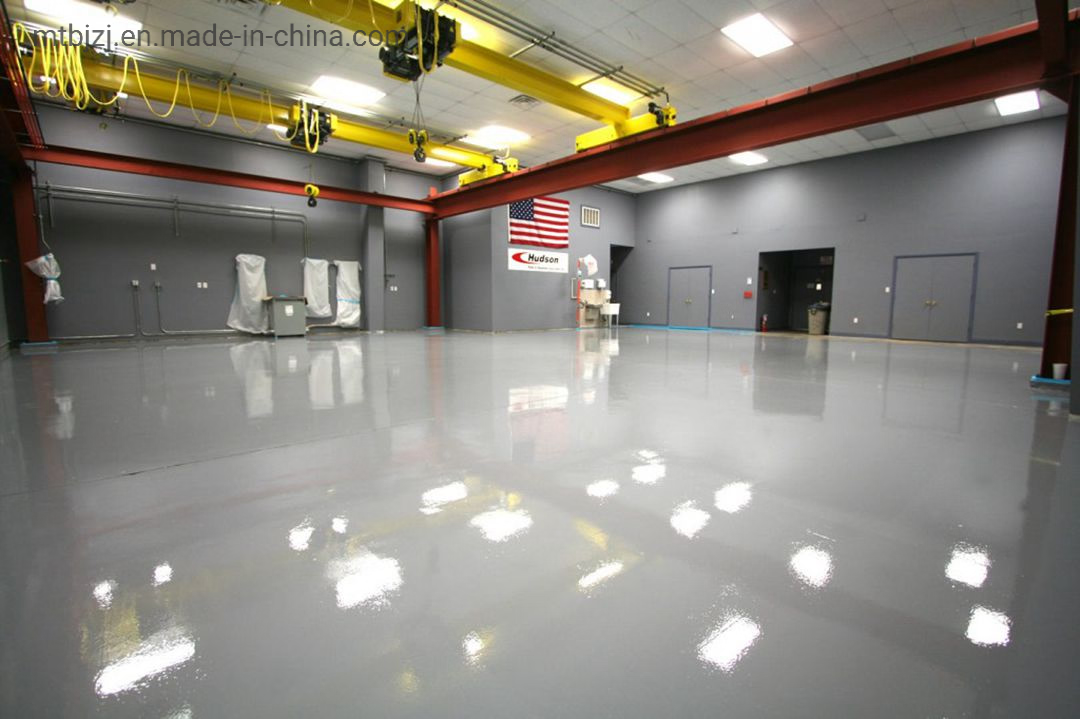
Modern construction and infrastructure development have entered a phase where durability, long-term performance, and cost efficiency are more important than ever before. Buildings today are not just static structures; they are high-performance environments that must handle continuous stress, heavy traffic, chemical exposure, and environmental changes on a daily basis. Because of these increasing demands, traditional flooring and surface protection methods are no longer enough to deliver the level of performance required in modern industries.
In this context, polyurethane concrete coating has emerged as one of the most advanced and dependable solutions for protecting and enhancing concrete surfaces. It is widely used in industrial plants, warehouses, commercial buildings, parking structures, food processing units, and even modern residential projects where surface strength and longevity are critical. This coating system is designed not only to protect concrete but also to significantly extend its lifespan while improving its functional performance under extreme conditions.
As industries continue to expand and operational demands grow, the need for high-performance surface protection systems is becoming more important, making polyurethane-based coatings a preferred choice for engineers, architects, and facility managers worldwide.
How Modern Infrastructure Is Increasing Demand for High-Performance Flooring
Today’s infrastructure is far more complex than traditional construction models. Buildings and facilities are designed to handle multiple operational functions at the same time, including heavy machinery movement, continuous foot traffic, temperature variations, and exposure to chemicals or moisture. This constant pressure on flooring systems has created a major demand for materials that can withstand long-term stress without breaking down.
Concrete, while widely used for its strength and affordability, has natural limitations. It is porous, prone to cracking over time, and vulnerable to surface damage when exposed to harsh environments. These weaknesses have pushed the construction industry to adopt advanced coating systems that enhance the durability and performance of concrete surfaces.
Why Traditional Concrete Protection Methods Are No Longer Effective
In the past, simple sealants, paints, or basic epoxy layers were commonly used to protect concrete surfaces. While these methods offered short-term protection, they often failed in demanding environments where floors were exposed to heavy loads, chemicals, or constant movement.
Over time, these traditional solutions tend to wear out, peel, or crack, leading to costly maintenance and frequent repairs. In industrial and commercial settings, such interruptions can significantly impact productivity and operational efficiency. This is why industries are now shifting toward more advanced and long-lasting solutions like polyurethane-based coatings that offer superior performance and durability.
How Polyurethane Chemistry Enhances Surface Protection
Polyurethane coatings work by forming a strong, flexible, and seamless protective layer over concrete surfaces. This layer bonds tightly with the substrate, creating a barrier that protects against moisture, chemicals, abrasion, and mechanical impact.
One of the most important advantages of this system is its elasticity. Unlike rigid coatings, polyurethane can expand and contract with the surface, allowing it to absorb minor structural movements without cracking. This makes it highly suitable for environments where temperature fluctuations or heavy loads are common.
Additionally, its chemical resistance makes it ideal for industries where spills of oils, acids, or industrial chemicals are frequent, ensuring long-term surface integrity.
Key Advantages of Polyurethane Concrete Coating Systems
- Excellent resistance to chemicals, oils, and industrial fluids
- High durability under continuous heavy traffic and mechanical load
- Flexible structure that prevents cracking and surface failure
- Seamless and smooth finish for easy cleaning and hygiene control
- Long service life with reduced maintenance and repair costs
- Strong adhesion to concrete surfaces for long-term stability
These benefits make polyurethane coatings a highly efficient and reliable choice for environments that require both performance and longevity.
Where Polyurethane Concrete Coatings Are Most Commonly Used
Polyurethane coatings are used across a wide range of industries due to their versatility and durability. In industrial environments such as manufacturing plants, they help protect floors from chemical exposure, machinery movement, and constant operational stress.
In logistics and warehouse facilities, these coatings provide a durable surface that can handle continuous forklift traffic and heavy storage loads. In parking structures, they offer protection against vehicle wear, oil spills, and weather-related damage.
They are also widely used in food processing units and pharmaceutical facilities where hygiene, cleanliness, and resistance to bacterial growth are extremely important. Even in modern residential and commercial spaces, polyurethane coatings are being used to create sleek, durable, and easy-to-maintain flooring systems.
Common Problems Faced by Unprotected or Poorly Coated Concrete
Unprotected concrete surfaces often deteriorate quickly when exposed to harsh conditions. One of the most common issues is surface erosion caused by continuous friction and heavy usage over time.
Another major problem is chemical penetration, which can weaken the internal structure of concrete and lead to long-term damage. Moisture absorption is also a significant concern, as it can result in cracks, stains, and structural weakening, especially in environments with high humidity or temperature variation.
Without proper protection, concrete surfaces require frequent maintenance, which increases operational costs and reduces overall efficiency.
How Polyurethane Coating Improves Long-Term Cost Efficiency
Although polyurethane coatings may require a higher initial investment compared to traditional flooring methods, they offer significant long-term cost savings. Their durability reduces the need for frequent repairs, replacements, and maintenance work.
This makes them highly cost-effective for industrial and commercial facilities where downtime and repair costs can be extremely expensive. Over time, the extended lifespan of coated surfaces provides better return on investment and operational stability.
Future Trends in Surface Protection Technology
The future of surface protection is moving toward smarter, more sustainable, and high-performance materials. Researchers are continuously improving polyurethane formulations to enhance durability, environmental resistance, and application efficiency.
Future coatings are expected to offer faster curing times, improved eco-friendly compositions, and enhanced resistance to extreme industrial conditions. There is also growing interest in hybrid coating systems that combine polyurethane with other advanced materials to achieve even higher performance standards.
Conclusion
Modern construction and industrial environments demand flooring solutions that are strong, durable, and capable of performing under continuous stress. Traditional protection methods are no longer sufficient to meet these requirements, especially in high-demand operational settings.
polyurethane concrete coating has established itself as a highly reliable and advanced solution that combines flexibility, chemical resistance, and long-term durability in one system. Its ability to protect concrete surfaces while reducing maintenance costs makes it an essential part of modern infrastructure development.
As industries continue to evolve, polyurethane coating systems will play an even more important role in ensuring stronger, longer-lasting, and more efficient flooring solutions for the future.