
When most American business readers think of Pakistan, electrical engineering is rarely the first industry that comes to mind. That perception is increasingly at odds with reality. Over the past decade, a segment of Pakistan’s manufacturing and engineering sector has quietly built a level of technical credibility that is drawing attention from international clients, global technology principals, and procurement teams looking beyond traditional supply markets.
The evidence is not anecdotal. It is found in the formal authorisation agreements that companies like ABB and SIEMENS, two of the world’s most technically rigorous electrical engineering brands, have extended to selected Pakistani manufacturers and system integrators. It is found in the project portfolios of those companies, which include multinational corporations, national utility operators, and international hospitality groups. And it is found in the compliance frameworks those companies operate under, which mirror the IEC standards applied in North America, Europe, and across the developed world.
The Certification Gap That Separates Credible Vendors from the Rest
In any market, the gap between a vendor who claims international quality and one who can demonstrate it through verifiable third-party authorisation is significant. In electrical engineering, that gap has direct consequences for safety, reliability, and long-term operating cost.
ABB and SIEMENS do not award authorisation agreements casually. Their licensed manufacturer and system integrator programmes require applicants to meet prescribed standards in design processes, component sourcing, quality management, and testing capability. Companies that hold these designations have been independently assessed and are subject to ongoing audits. The authorisation is not a marketing label. It is a contractual relationship with enforceable technical requirements.
Among the compliance frameworks that credible Pakistani electrical engineering companies operate under, the most internationally recognised include IEC 61439, which governs low-voltage switchgear and controlgear assemblies and sets verified limits for temperature rise, short-circuit performance, and insulation integrity; IEC 60947, which covers the individual devices within those assemblies; and IEC 62271, applicable to medium-voltage equipment. These are the same standards referenced by engineers and procurement managers in the United States and Europe when specifying electrical infrastructure for industrial and commercial projects.
Bilal Switchgear Engineering: A Pakistani Company Built on International Standards
Lahore-based Bilal Switchgear Engineering (Pvt) Ltd. is one of the clearest examples of what internationally accredited electrical engineering looks like in Pakistan. Established in 1978 and operating for over four decades, the company holds a rare combination of credentials: it is simultaneously an ABB-licensed manufacturer and a SIEMENS System Integrator, two designations that are independently awarded, independently maintained, and independently audited.
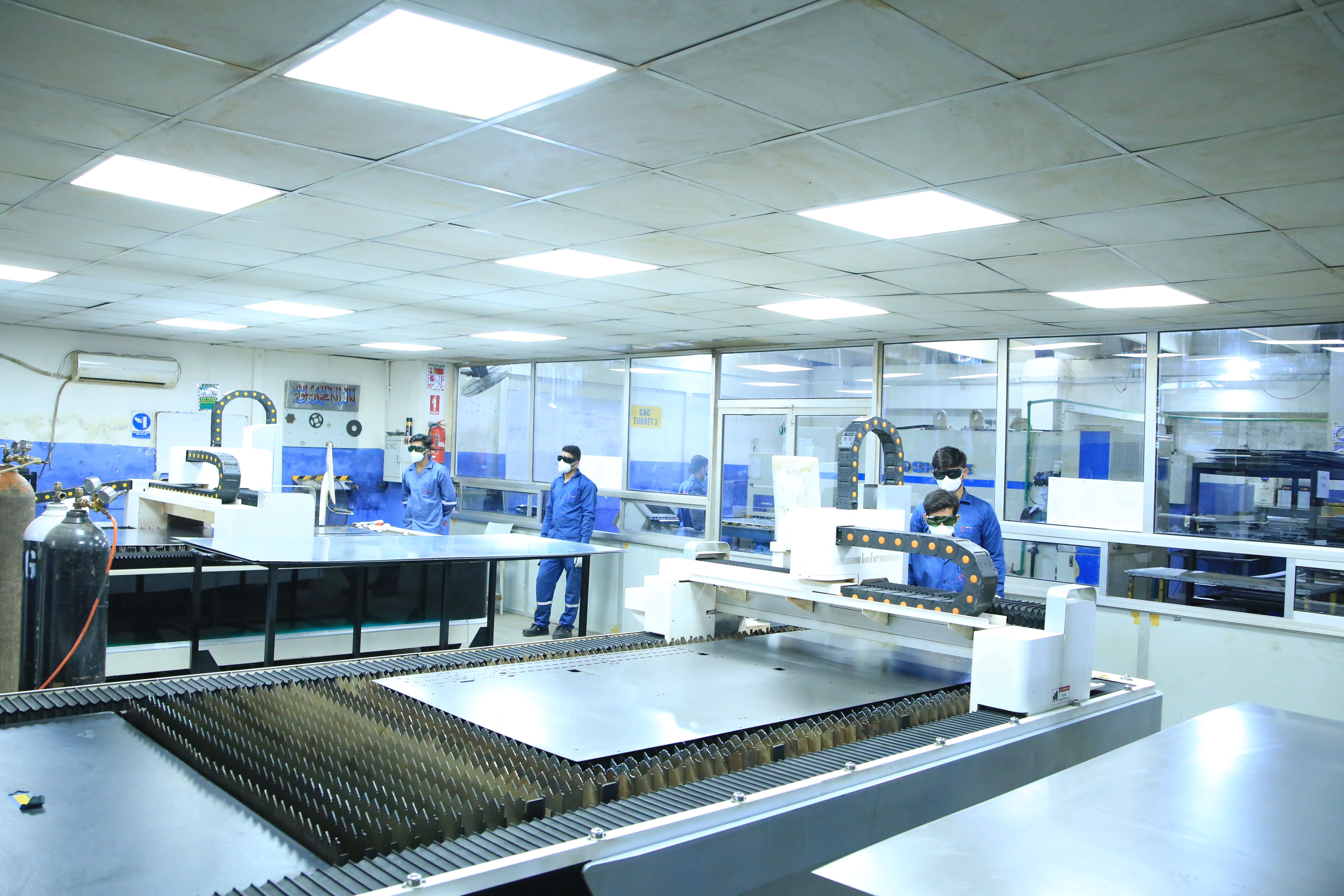
The practical implication is that the switchgear panels and integrated electrical systems Bilal Switchgear produces are built using genuine ABB and SIEMENS components, assembled according to prescribed engineering processes, and tested against the same IEC benchmarks that govern equivalent products manufactured in Germany, Switzerland, or the United States. The country of manufacture is Pakistan. The standard of manufacture is international.
The company’s compliance profile covers:
- IEC 61439 for low-voltage switchgear and controlgear assemblies
- IEC 60947 for low-voltage switchgear and controlgear devices
- IEC 62271 for medium-voltage switchgear
- PSQCA compliance under Pakistan’s national quality authority for locally manufactured electrical equipment
A Project Record That Speaks a Universal Language
For an international audience evaluating any engineering company, client names matter because they function as independent quality references. Coca-Cola, GEPCO, and Marriott are not clients that award contracts without due diligence. Each operates under its own procurement standards, its own engineering specifications, and in the case of the multinational brands, its own global compliance requirements.
Bilal Switchgear Engineering has delivered switchgear and power distribution solutions for all three. Coca-Cola’s bottling operations demand continuous production uptime, zero tolerance for electrical failure, and compliance with food-grade manufacturing environment standards. GEPCO’s utility grid infrastructure requires panel assemblies built to national grid specifications and capable of sustained performance under Pakistan’s variable grid conditions. Marriott’s commercial hospitality environment demands power reliability that directly protects both guest experience and brand reputation.
These are not easy references to earn. They are the kind of references that communicate capability in a language that procurement managers in any country understand.
What This Means for the Broader Picture of Pakistan’s Engineering Sector
Pakistan’s engineering sector is not uniformly at this level. As in any market, capability varies widely and the presence of credible players does not mean every vendor in the space meets the same standard. What the existence of companies like Bilal Switchgear Engineering does demonstrate is that the ceiling for Pakistani electrical engineering is considerably higher than the country’s international reputation currently reflects.
For international businesses evaluating supply chain diversification, or for global engineering projects with a South Asian footprint, this matters. The question is not whether Pakistan can produce internationally compliant electrical engineering. The question is knowing where to find the companies that do.
The answer, in the case of switchgear manufacturing and system integration, starts with verified authorisation from the principals who set the global standard. ABB and SIEMENS do not extend their names to companies that cannot perform. Their authorised partners in Pakistan, with Bilal Switchgear Engineering among the most established, carry that credibility by right rather than by claim.
Final Word
The story of Pakistan’s electrical engineering sector is one that international business media has been slow to tell. Companies operating at the level of Bilal Switchgear Engineering have been building their credibility project by project, certification by certification, for decades. The international recognition is simply catching up.
For readers interested in exploring what internationally certified electrical engineering from Pakistan looks like in practice, Bilal Switchgear Engineering’s capabilities, compliance documentation, and project history are available at bilaleng.com. Their switchgear manufacturing and system integration services are detailed at the services page.
