

Every time a commercial aircraft lands safely, a military helicopter completes its mission, or a turboprop touches down without incident, one discipline made it possible: Aircraft MRO (Maintenance, Repair & Overhaul).
Aviation consistently records the lowest accident rates of any major form of transportation. According to the International Air Transport Association (IATA), the global jet accident rate in 2023 was just 0.29 accidents per million flights. That safety record is not accidental, it is the direct result of rigorous, regulated, and expertly performed aircraft component repair and overhaul programs carried out every single day across the world.
What Is Aircraft MRO?
MRO stands for Maintenance, Repair, and Overhaul, a broad category of technical services that ensures every aircraft system and component continues to operate safely, reliably, and in full regulatory compliance.
The global aircraft MRO market is valued at over $100 billion and is one of the fastest-growing sectors in aviation. It encompasses three distinct functions:
- Maintenance — Routine inspections, preventive servicing, and scheduled checks that keep aircraft airworthy between flights.
- Repair — Diagnosing and correcting component faults before they escalate into operational failures.
- Overhaul — A comprehensive restoration process involving full disassembly, inspection, repair, reassembly, and testing to return a component to its original performance specification.
Together, these three functions form the foundation of flight safety.
How Aircraft MRO Directly Protects Aviation Safety
1. Regulatory Compliance and Airworthiness
Aviation is one of the most heavily regulated industries in the world. Every aircraft operating in commercial or military service must comply with strict standards set by authorities including the FAA (Federal Aviation Administration) and EASA (European Union Aviation Safety Agency).
Aircraft MRO providers that hold FAA and EASA approvals are authorized to perform, certify, and document repair and overhaul work in a way that satisfies these requirements. Without certified MRO support, an operator cannot legally or safely continue flight operations.
NAASCO, founded in April 1984, has maintained FAA and EASA approved repair station status for over 40 years. With a leadership team carrying more than 250 years of combined electrical, mechanical, and avionics expertise, the company has spent four decades helping operators meet and exceed airworthiness requirements.
2. Detecting Failures Before They Happen
One of the most critical roles of Aircraft MRO is proactive fault detection. Components can develop wear, corrosion, and electrical degradation long before a failure becomes visible or operational.
Routine maintenance programs — combined with advanced testing methods used at a qualified airplane repair shop — allow technicians to identify issues such as:
- Brush and commutator wear inside aircraft starter generators
- Contact degradation in aircraft power relays and contactors
- Wiring insulation breakdown and circuit faults in aircraft electrical components
- Internal wear in electro mechanical components including actuators, pumps, and motors
Catching these faults early is not just a cost-saving measure — it is a life-safety requirement.
3. Extending Component Life Through Overhaul
Aircraft component overhaul is one of the most cost-effective strategies available to aviation operators. Rather than replacing an expensive component outright, a certified airplane repair shop can disassemble, inspect, restore, and test it to return the unit to full operational specification.
NAASCO’s proprietary Sil-Met™ technology is a prime example of this approach in action. Instead of discarding entire contactors, relays, and terminal blocks when their contacts wear, Sil-Met™ restores the contact surfaces — giving the component a new service life at a fraction of the replacement cost.
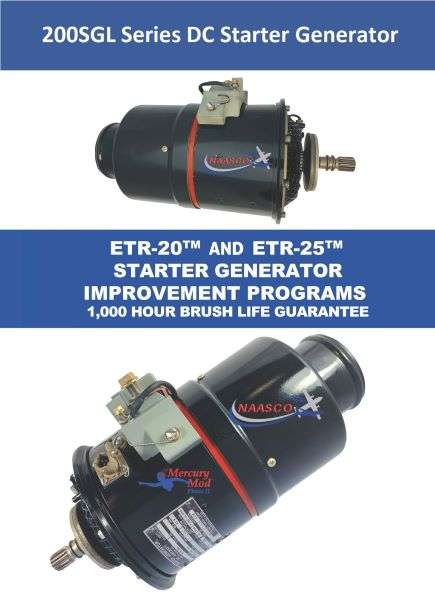
Similarly, NAASCO’s Mercury Mod™ (ETR-20™ and ETR-25™) aircraft starter generator improvements reduce commutator wear by up to 90%, extend brush life by up to 60%, and in many applications deliver over 3,000 hours of reliable service — significantly beyond standard OEM specifications.
4. Maintaining Aircraft Electrical and Electro-Mechanical Systems
Modern aircraft depend on hundreds of interconnected electrical and electro-mechanical systems. A single degraded component can affect navigation, power distribution, engine management, or flight control.
Key systems requiring regular MRO attention include:
Aircraft Electrical Components — Relays, contactors, terminal blocks, inverters, converters, and generator control units (GCUs) that manage electrical power across the aircraft.
Electro Mechanical Components — Actuators, pumps, fans, and blowers that translate electrical signals into physical motion for flight-critical functions.
Aircraft Motor Repair Solutions — AC and DC electric motors that drive fuel pumps, hydraulic systems, and environmental control equipment. Certified aircraft motor repair solutions ensure these units deliver consistent performance throughout their service life.
Aircraft Starter Generator Repair — The starter generator is responsible for both engine starting and in-flight power generation. Aircraft starter generator repair and overhaul services — including advanced programs like NAASCO’s Mercury Mod™ — are essential for maintaining fleet uptime and reducing unplanned maintenance events.
Hidden Safety Threats That MRO Uncovers
Many of the most dangerous aircraft conditions are invisible to the naked eye. Professional Aircraft MRO programs are specifically designed to find what standard inspections miss:
Structural Fatigue — Microscopic cracks developing within high-stress components after repeated flight cycles. Aircraft component overhaul programs include non-destructive testing (NDT) to identify fatigue before it progresses.
Corrosion — Moisture, salt exposure, and temperature fluctuations degrade metal surfaces over time, particularly in hard-to-reach areas. Certified repair procedures treat and prevent corrosion from compromising structural and electrical integrity.
Electrical Degradation — Insulation breakdown, loose terminations, and contact resistance buildup are subtle faults that cause intermittent or catastrophic electrical failures. Qualified aircraft parts company technicians use specialized equipment to identify these issues early.
Component Wear Beyond Visual Limits — Internal wear in motors, generators, and electro-mechanical assemblies cannot be assessed visually. A certified airplane repair shop uses bench testing, dimensional analysis, and performance simulation to evaluate components comprehensively.
What to Look for in an Aircraft MRO Partner
Not all MRO providers are equal. When selecting an aircraft parts company or repair station, operators should evaluate:
- FAA and EASA certifications — confirming regulatory compliance and documentation standards
- Proven proprietary solutions — such as NAASCO’s Mercury Mod™ and Sil-Met™ programs that go beyond standard OEM repair
- Experience across multiple aircraft types — including commercial jets, helicopters, turboprops, light jets, and military platforms
- Guaranteed turnaround times and exchange programs — to minimize aircraft-on-ground (AOG) situations
- Comprehensive warranty and quality assurance — ensuring every repaired component is fully traceable
Conclusion
Aircraft MRO is not a background function it is the active force that makes aviation the safest form of long-distance travel in the world. From aircraft component overhaul and aircraft starter generator repair to the servicing of aircraft electrical components and electro mechanical systems, every MRO task contributes directly to flight safety and operational reliability.
NAASCO has been at the forefront of aircraft MRO since 1984. As an FAA and EASA approved repair station with over 250 years of combined team expertise, NAASCO delivers proven, proprietary solutions — including Mercury Mod™, ETR™, and Sil-Met™ technologies — that help operators reduce costs, extend component life, and keep their fleets airworthy.
Submit an RFQ today and speak with NAASCO’s team about your aircraft maintenance and overhaul requirements.
Frequently Asked Questions About Aircraft MRO
What is aircraft component overhaul?
Aircraft component overhaul is the process of fully disassembling, inspecting, repairing, reassembling, and testing a component to restore it to its original airworthy specification. It differs from repair, which addresses a specific fault, and maintenance, which involves routine servicing.
How does Aircraft MRO improve aviation safety?
MRO improves aviation safety by ensuring that all aircraft systems and components are inspected, tested, and restored on a regular schedule — catching degradation, wear, and faults before they result in in-flight failures.
What is aircraft starter generator repair?
Aircraft starter generator repair involves restoring the electrical and mechanical performance of a starter generator unit. Advanced programs like NAASCO’s Mercury Mod™ go further — improving brush life, reducing commutator wear by up to 90%, and extending the time between overhauls (TBO) to over 3,000 hours.
What are electro mechanical components in aviation?
Electro mechanical components are aircraft systems that convert electrical input into physical mechanical output. Examples include actuators, pumps, motors, fans, and blowers. These components require regular inspection and certified aircraft motor repair solutions to maintain reliable performance.
Why choose an FAA-approved airplane repair shop?
An FAA-approved airplane repair shop has demonstrated that its facilities, procedures, personnel, and quality systems meet the standards required by federal aviation regulations. This ensures that all repaired components are airworthy, properly documented, and legally certifiable for return to service.