
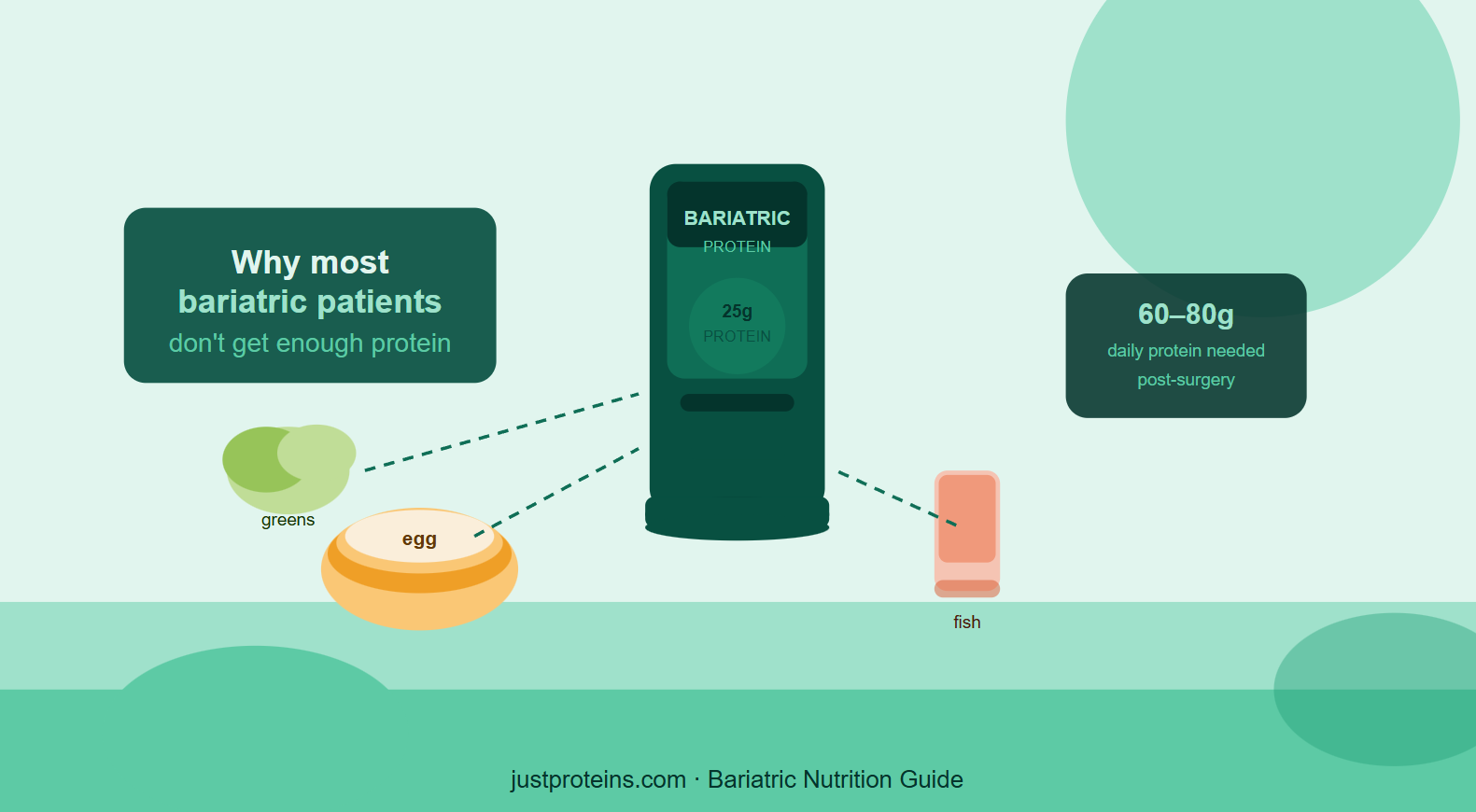
Protein deficiency is one of the most common nutritional complications following bariatric surgery — yet it remains one of the most preventable. Understanding why it happens and how to close the gap is critical for long-term recovery.
60–80g – Minimum daily protein needed post-surgery
<30ml – Stomach capacity in the first weeks post-op
Up to 30% – Muscle loss risk without adequate protein intake
The post-surgery protein gap
After procedures like gastric bypass or sleeve gastrectomy, the stomach is physically reduced to a fraction of its original size. This means the volume of food that can be consumed at any one sitting drops dramatically — from several cups to just a few tablespoons in the early recovery phase.
The problem? The body’s protein requirements don’t reduce alongside stomach capacity. In fact, protein needs often increase during this period as the body works to heal surgical wounds, preserve lean muscle during rapid weight loss, and support immune function. This creates a structural gap between what the body needs and what it can realistically consume through food alone.
Why this matters
When the body doesn’t receive enough dietary protein, it begins breaking down muscle tissue to meet its amino acid needs — a process called catabolism. This can lead to fatigue, weakness, slower metabolism, hair thinning, and impaired wound healing.
Why food alone often isn’t enough
Even with careful meal planning, many bariatric patients struggle to hit their protein targets through whole foods alone. High-protein foods like chicken, eggs, and legumes require meaningful portions — portions that frequently exceed early post-surgery stomach capacity or trigger discomfort such as nausea or a feeling of fullness too quickly.
This is compounded by the fact that altered digestion can reduce the rate at which proteins are broken down and absorbed. In some bariatric procedures, portions of the digestive tract responsible for nutrient absorption are bypassed entirely — meaning even consumed protein may not be fully utilized by the body.
The role of specialized protein supplementation
Bariatric-specific protein powders are designed to address exactly this gap. Unlike standard protein supplements formulated for athletes and fitness use, these products are built around the physiological realities of post-surgical digestion.
- High protein density in small servings
Bariatric formulas deliver 20–30g of protein per serving using protein isolates — a concentrated, low-carb, low-fat source that takes up minimal volume while maximizing nutritional yield.
2. Engineered for easier digestion
Many bariatric powders include digestive enzymes that begin breaking protein into smaller peptides before it reaches the gut — reducing bloating, discomfort, and improving absorption efficiency in a sensitive post-surgical digestive system.
3. Complete amino acid coverage
Formulas typically include both BCAAs (leucine, isoleucine, valine) and essential amino acids (EAAs) to protect against muscle breakdown and support tissue repair during the rapid weight-loss phase.
4. Built-in micronutrient support
Because bariatric surgery can impair absorption of vitamins and minerals, good-quality bariatric protein powders are fortified with calcium, vitamin D, iron, zinc, and B-complex vitamins to help prevent deficiencies that whole-food intake alone cannot reliably cover.
Practical tips for meeting daily protein goals
Supplementation alone isn’t a complete strategy. The most effective approach combines bariatric-specific protein powders with smart whole-food choices and meal timing.
- Prioritize protein at every meal — eat it first before vegetables or carbohydrates
- Sip protein shakes between meals rather than during meals to avoid filling stomach capacity
- Choose soft, easily digested protein sources in early recovery: eggs, Greek yogurt, soft fish, blended soups with legumes
- Track daily intake using a food diary or app to stay accountable to protein targets
- Consult your bariatric dietitian to adjust targets as recovery progresses
Dietitian tip
Many bariatric care teams recommend consuming protein in small, frequent intakes spread across 5–6 mini-meals or snack windows per day, rather than 2–3 large sittings — making it much easier to cumulatively meet daily targets without overwhelming the reduced stomach.
Choosing the right protein powder after surgery
Not all protein powders marketed as “bariatric” deliver equally. When evaluating a product, pay attention to these criteria:
- Primary protein source should be whey isolate or hydrolysate — not concentrate
- Sugar content should be near-zero to reduce dumping syndrome risk
- Look for added digestive enzymes in the ingredient list
- Fortification with vitamins and minerals adds meaningful value vs. protein-only formulas
- Avoid products with excessive artificial sweeteners, fillers, or high carbohydrate loads
Unlike regular protein powders built for gym performance, the best bariatric formulas function closer to a medical nutrition product – designed not just to build muscle, but to support whole-body recovery in a physiologically challenged state.
Frequently asked questions
How soon after surgery should I start using bariatric protein powder?
Most bariatric care teams recommend introducing protein supplements within the first days post-surgery, typically in the liquid phase. Always follow your surgeon’s or dietitian’s specific protocol.
Can I use a regular protein powder instead of a bariatric-specific one?
Regular protein powders can supplement intake but are not formulated for the digestive and nutritional needs of post-surgical patients. They may contain added sugars, higher fat content, and lack the micronutrient fortification that bariatric patients require. Bariatric-specific formulas are a safer and more targeted choice during recovery.
What happens if I consistently miss my protein targets?
Sustained protein deficiency after bariatric surgery can lead to muscle loss, fatigue, hair thinning, poor wound healing, weakened immunity, and slower metabolic rate. It can also make long-term weight maintenance more difficult. Consistent protein intake is one of the most important factors in successful surgical outcomes.
Is plant-based protein a viable option for bariatric patients?
Plant-based proteins can be included but require careful selection. Many plant proteins are incomplete — lacking one or more essential amino acids — and have lower digestibility scores than whey isolate. If choosing plant-based options, look for blended formulas (pea + rice, for example) that together provide a complete amino acid profile.