
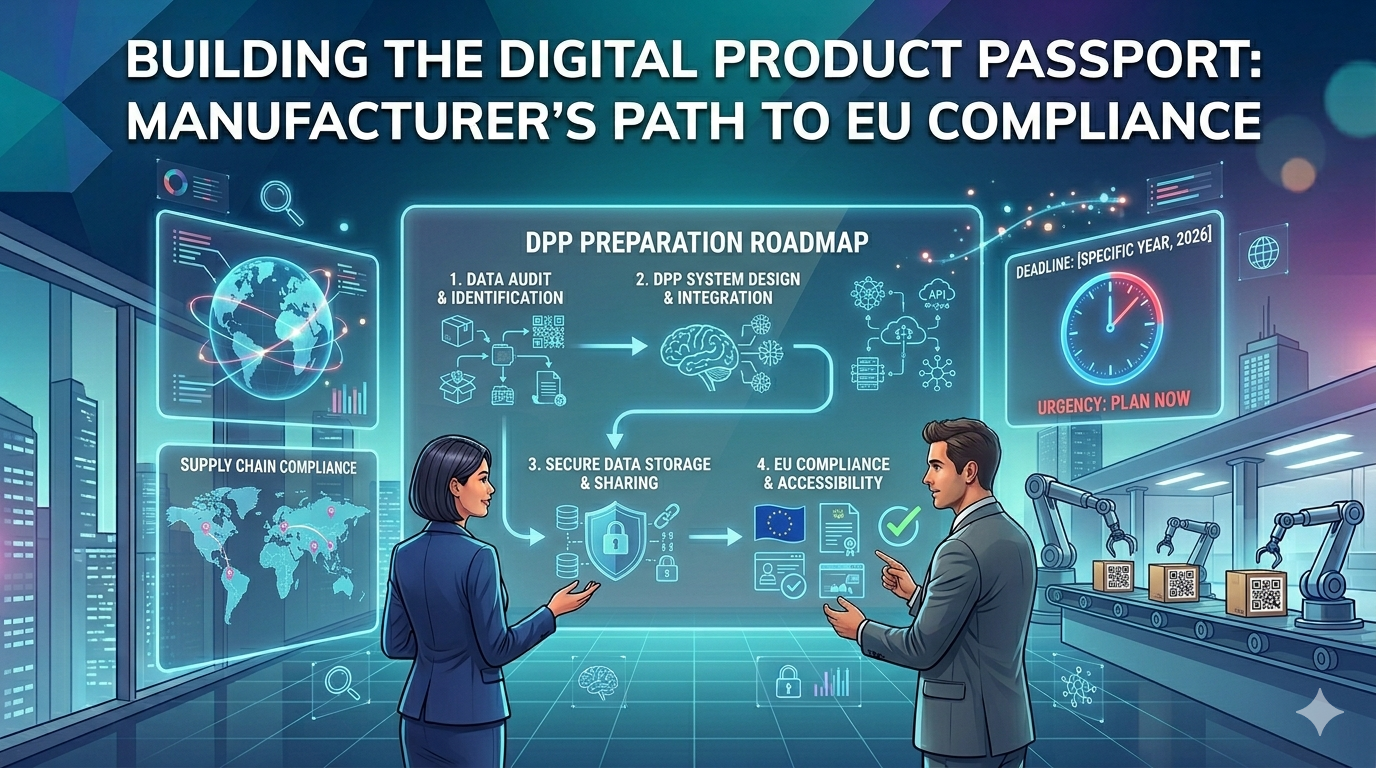
Manufacturers across global industries are entering a new phase of compliance, transparency, and sustainability reporting. As the European Union continues introducing stricter environmental and circular economy regulations, businesses that manufacture, distribute, or export products into EU markets are under increasing pressure to improve product traceability and lifecycle visibility.
One of the most significant initiatives driving this shift is the Digital Product Passport (DPP).
The Digital Product Passport is expected to become a foundational requirement for multiple industries, including textiles, electronics, batteries, automotive, consumer goods, and industrial manufacturing. Its purpose is to create a transparent and standardized digital record containing important product-related information such as material sourcing, sustainability data, repairability, recycling details, carbon footprint metrics, and supply chain history.
For manufacturers, this is no longer just a future concept. Compliance deadlines are approaching, and organizations that delay preparation may face operational disruptions, compliance risks, and reduced competitiveness in international markets.
This is where digital product passport software development becomes critically important.
Modern DPP platforms help manufacturers centralize product information, automate traceability processes, improve sustainability reporting, and prepare for evolving EU regulatory frameworks. At the same time, many enterprises are also integrating intelligent automation, analytics, and AI development services to make DPP ecosystems more scalable and efficient.
As regulatory complexity increases, digital infrastructure is becoming essential for manufacturers operating in global supply chains.
Understanding the Need for Digital Product Passports
Traditional manufacturing and supply chain systems were not designed to support the level of transparency now expected by regulators and consumers. Product data often exists across disconnected systems, spreadsheets, ERP platforms, supplier documents, and third-party databases.
This fragmented approach creates several major challenges:
- Limited visibility into raw material sourcing
- Difficulty tracking supplier sustainability data
- Inconsistent lifecycle documentation
- Manual compliance reporting processes
- Poor traceability across global supply chains
The Digital Product Passport aims to solve these problems by creating a structured digital identity for products throughout their lifecycle.
Instead of storing information in isolated systems, DPP platforms consolidate data into a unified environment that can be accessed by manufacturers, regulators, suppliers, distributors, and consumers where applicable.
This allows businesses to improve:
- Product transparency
- Sustainability reporting
- Circular economy participation
- Regulatory compliance
- Supply chain accountability
However, implementing these capabilities requires more than standard software infrastructure. Enterprises increasingly need custom digital product passport software development that aligns with their industry requirements, operational workflows, and compliance obligations.
Why EU Compliance Deadlines Matter
The European Union’s sustainability initiatives are reshaping manufacturing standards across international markets. Regulations connected to the Ecodesign for Sustainable Products Regulation (ESPR) are expected to introduce Digital Product Passport requirements across multiple sectors over the coming years.
For manufacturers exporting to Europe, these requirements could directly affect market accessibility.
Businesses that fail to maintain adequate traceability and sustainability documentation may face:
- Delays in product approvals
- Increased compliance audits
- Supply chain disruptions
- Regulatory penalties
- Reduced customer trust
- Barriers to entering EU markets
Many organizations underestimate the technical preparation required for DPP implementation. Building compliant systems involves:
- Data architecture planning
- Product lifecycle mapping
- Supplier data integration
- Compliance workflow automation
- Security and governance controls
- QR code and digital identity systems
- Cross-platform integration
Because of this complexity, manufacturers are increasingly beginning digital product passport software development initiatives well before regulations become fully mandatory.
Early preparation provides organizations with more time to optimize operations, train teams, and standardize sustainability processes.
The Growing Importance of Product Traceability
One of the biggest drivers behind DPP adoption is the growing demand for end-to-end traceability.
Modern consumers, regulators, and enterprise buyers increasingly want visibility into:
- Where products come from
- How products are manufactured
- Which materials are used
- Whether suppliers follow sustainability practices
- How products can be repaired or recycled
Traditional supply chains were not built for this level of transparency.
In many cases, manufacturers still rely on fragmented supplier reporting systems and manual documentation processes. This creates significant inefficiencies and increases the likelihood of compliance errors.
Digital product passport software development addresses this challenge by creating centralized systems that track product information from sourcing to disposal.
These systems can include:
- Material traceability databases
- Supplier verification workflows
- Sustainability data repositories
- Lifecycle tracking systems
- Compliance reporting dashboards
- QR-based product access interfaces
For manufacturers operating across multiple regions and suppliers, this level of centralized visibility is becoming essential.
How AI Is Strengthening Digital Product Passport Systems
As DPP platforms become more data-intensive, enterprises are increasingly integrating AI-powered capabilities into their compliance infrastructure.
Modern DPP ecosystems are not limited to static databases. Many organizations now use AI development services to automate analysis, improve data accuracy, and optimize operational workflows.
AI technologies can help manufacturers:
- Detect missing compliance data
- Analyze supplier risk patterns
- Automate sustainability reporting
- Identify inconsistencies in documentation
- Forecast regulatory risks
- Improve supply chain visibility
For example, AI systems can automatically review supplier submissions and identify gaps in environmental reporting requirements before audits occur.
Similarly, machine learning models can analyze manufacturing and sourcing data to identify inefficiencies affecting sustainability goals.
As compliance requirements continue expanding, AI-driven automation is becoming an important part of scalable DPP implementation.
The Role of AI Chatbots in Compliance Operations
One of the emerging trends within enterprise DPP infrastructure is the use of conversational AI systems.
Large manufacturers often manage massive volumes of compliance data across multiple departments, suppliers, and products. Accessing this information quickly can become difficult when teams rely on traditional dashboards or manual database searches.
To improve accessibility, many enterprises are integrating AI chatbot development services into DPP environments.
AI chatbots can help internal teams:
- Retrieve product lifecycle information
- Access compliance records instantly
- Verify supplier certifications
- Track sustainability metrics
- Simplify internal audits
- Improve cross-team communication
For example, instead of manually navigating multiple systems, compliance managers could ask a chatbot questions such as:
- “Which suppliers are missing sustainability documentation?”
- “Show battery recycling compliance status for Q2.”
- “What products are pending DPP validation?”
The chatbot can retrieve and organize information in real time, significantly reducing operational friction.
These conversational interfaces are particularly useful for enterprises managing large-scale compliance ecosystems across multiple geographies.
Why Database Intelligence Matters for DPP Platforms
Digital Product Passport systems generate enormous amounts of structured information.
This includes:
- Product metadata
- Material sourcing records
- Environmental impact data
- Logistics information
- Supplier certifications
- Repairability records
- Recycling instructions
- Carbon footprint metrics
Managing this information efficiently requires intelligent database architecture.
To simplify enterprise access to large compliance datasets, organizations are increasingly implementing AI database chatbot development solutions within DPP systems.
These AI-powered systems allow users to interact with compliance databases using natural language instead of complex queries or manual reporting tools.
This improves operational efficiency across departments including:
- Sustainability teams
- Procurement teams
- Compliance managers
- Product development teams
- Supply chain analysts
For manufacturers managing thousands of SKUs across global markets, conversational database intelligence can significantly improve data accessibility and decision-making speed.
Why Legacy Systems Are Becoming a Risk
Many manufacturers still operate on outdated infrastructure that was never designed for modern sustainability reporting requirements.
Legacy systems often create challenges such as:
- Inconsistent data structures
- Poor supplier integration
- Limited scalability
- Manual reporting dependencies
- Fragmented traceability workflows
As DPP regulations evolve, these limitations can quickly become operational liabilities.
Digital product passport software development helps organizations modernize outdated systems while creating future-ready compliance infrastructure.
Modern DPP platforms are typically built with:
- API-driven architecture
- cloud scalability
- centralized data management
- real-time synchronization
- modular compliance workflows
- automation capabilities
This flexibility allows manufacturers to adapt more efficiently as regulatory frameworks continue changing.
The Competitive Advantage of Early DPP Adoption
While compliance is a major driver behind DPP implementation, forward-thinking manufacturers are also recognizing the competitive advantages of early adoption.
Organizations investing early in digital product passport software development can strengthen:
- Brand transparency
- customer trust
- sustainability positioning
- operational efficiency
- supplier accountability
- long-term scalability
In industries where environmental accountability is becoming a purchasing factor, transparent product ecosystems can also support stronger market differentiation.
Additionally, businesses that establish robust compliance infrastructure early may experience fewer disruptions as regulations expand globally.
Instead of reacting to compliance mandates under pressure, proactive organizations can gradually optimize their operations and supply chain workflows over time.
Preparing for the Future of Sustainable Manufacturing
The future of manufacturing is increasingly connected to transparency, sustainability, and digital traceability.
Digital Product Passports are expected to become a foundational component of this transition, particularly in industries with complex global supply chains and growing environmental obligations.
For manufacturers, preparation involves more than regulatory awareness. It requires investment in scalable digital infrastructure capable of handling evolving compliance demands.
This is why digital product passport software development is becoming an essential priority for enterprises operating in international markets.
At the same time, the integration of technologies such as AI development services, AI chatbot development services, and AI database chatbot development is helping organizations build more intelligent, automated, and accessible compliance ecosystems.
As EU sustainability frameworks continue evolving, manufacturers that invest early in digital transformation will be better positioned to manage compliance complexity, improve operational transparency, and maintain long-term competitiveness in global markets.
Final Thoughts
The transition toward Digital Product Passports represents a major shift in how manufacturers manage product data, sustainability reporting, and supply chain accountability.
For businesses exporting to Europe or operating within regulated industries, waiting until compliance deadlines arrive may create unnecessary operational and regulatory challenges.
Digital product passport software development provides manufacturers with the infrastructure needed to centralize traceability, automate reporting, improve lifecycle visibility, and support future sustainability initiatives.
As regulations continue evolving, organizations that combine DPP systems with intelligent technologies such as AI automation, conversational interfaces, and database intelligence will likely gain stronger operational resilience and long-term adaptability.
In the coming years, Digital Product Passports are expected to move from compliance requirement to core business infrastructure across global manufacturing ecosystems.