

Problem:
Many forex traders rely on indicators but still get blindsided by sudden price moves.
Agitation:
A perfect technical setup can fail in minutes after a central bank announcement. Stops get hit. Trends reverse. Confusion follows.
Solution:
Interest rates explain why currencies move. Once you understand how rates, expectations, and capital flows interact, forex price action starts making sense—and becomes tradable.
What Are Interest Rates in the Forex Market?
Interest rates are the cost of borrowing money in an economy.
In forex, they are set by central banks and influence how attractive a currency is to global investors.
Key points:
- Central banks control benchmark interest rates
- Rates guide lending, borrowing, and investment
- Forex markets react to both current rates and future expectations
Why Interest Rates Matter in Forex Trading
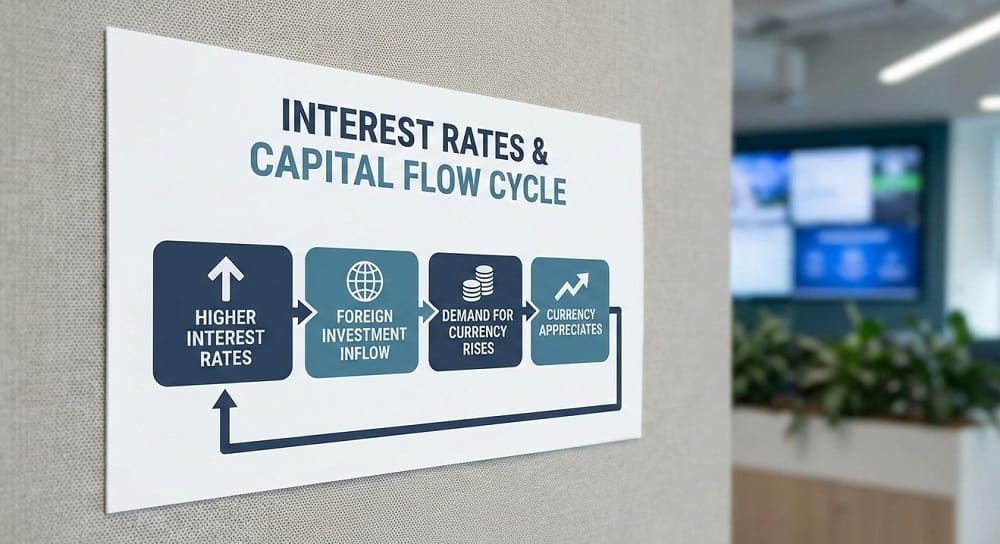
Interest rates matter because they directly affect currency demand.
When a country offers higher returns:
- Foreign capital flows in
- Demand for the currency increases
- The currency tends to strengthen
When returns fall:
- Capital exits
- Demand weakens
- The currency often depreciates
In short:
Higher interest rates attract money. Lower rates push money away.
How Interest Rate Differentials Drive Currency Strength
Forex trading is relative. One currency is always compared to another.
An interest rate differential is the difference between two countries’ rates.
This gap is what fuels long-term currency trends.
High-Yield vs Low-Yield Currencies
| High Interest Rate Currency | Low Interest Rate Currency |
|---|---|
| Attracts foreign capital | Sees capital outflows |
| Supports long-term strength | Tends to weaken |
| Popular for carry trades | Used as funding currency |
This is why pairs like AUD/JPY or USD/JPY can trend for years.
The Role of Central Banks in Forex Price Movements
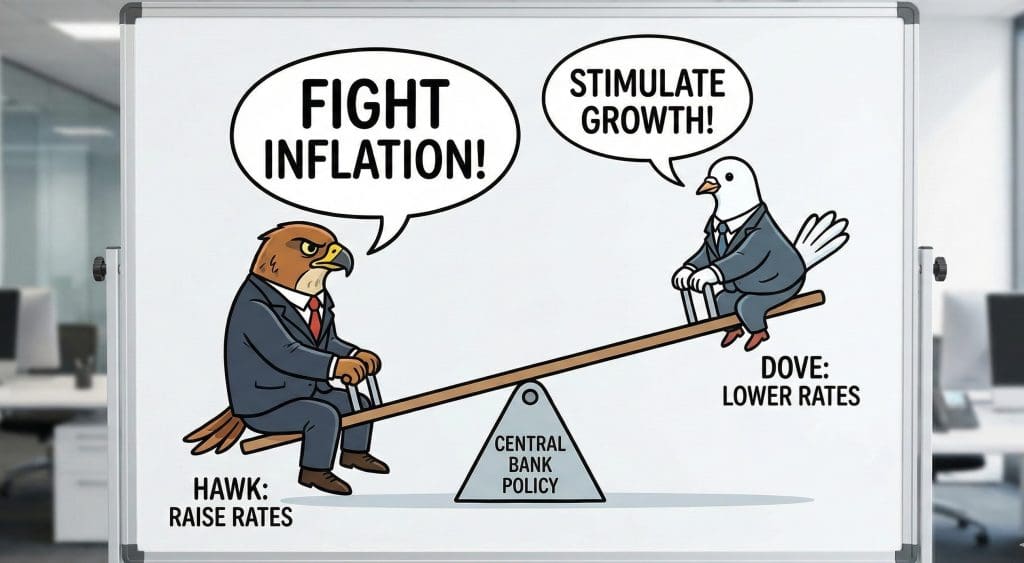
Central banks are the most powerful players in forex.
The most influential include:
- Federal Reserve (USD)
- European Central Bank (EUR)
- Bank of Japan (JPY)
- Bank of England (GBP)
They move markets through:
- Rate hikes and cuts
- Policy statements
- Forward guidance about future rates
Forex reacts fast because capital moves fast.
Interest Rate Expectations vs Actual Rate Changes
This is where most traders get it wrong.
Markets don’t trade on news.
They trade on expectations.
If a rate hike is expected:
- Price often moves before the announcement
- The actual decision may cause little reaction
If expectations change:
- Volatility spikes
- Trends can reverse instantly
Why Currencies Fall After Rate Hikes
- The hike was already priced in
- Forward guidance signals slower growth
- Inflation outlook weakens
How Interest Rates Shape Forex Trading Strategies
Interest rates influence both short-term trades and long-term positioning.
Common Rate-Based Strategies
- Carry trades: Buy high-yield, sell low-yield currencies
- News trading: Trade volatility around rate decisions
- Macro positioning: Hold trades based on policy direction
Interest rates work best when combined with:
- Price structure
- Risk sentiment
- Clear central bank bias
Interest Rates, Risk Sentiment, and Forex Volatility
Interest rate changes don’t exist in isolation.
They interact with risk sentiment:
- Risk-on: Higher rates support growth currencies
- Risk-off: Capital flows into safe havens like USD and JPY
Rate hikes during weak economies often increase volatility, not strength.
Key Takeaways for Forex Traders
- Interest rates explain why trends exist
- Expectations matter more than announcements
- Differentials drive long-term moves
- Central banks shape market direction
- Fundamentals and price action work best together
If you want deeper macro-driven trading insights and market education, platforms like https://www.sarowarjahan.com/ regularly publish analysis that bridges fundamentals with real-world trading logic.
FAQ: Interest Rates and Forex Trading
Why do interest rates affect forex trading?
Interest rates affect forex trading because higher rates attract foreign investment, increasing currency demand and value.
Currencies reflect capital flows, not just economic headlines.
How do interest rate hikes impact currency value?
Interest rate hikes usually strengthen a currency by offering higher returns to investors.
However, if hikes are expected, the impact may already be priced into the market.
What is an interest rate differential in forex?
An interest rate differential is the difference between two countries’ interest rates.
It drives carry trades and explains why some currency pairs trend long term.
Which central bank decisions matter most in forex trading?
Decisions from major central banks like the Fed, ECB, and BoJ matter most.
They influence global liquidity, risk sentiment, and major currency pairs.
Can forex traders profit from interest rate changes?
Yes, traders profit by positioning around expectations, not just announcements.
Carry trades, macro trends, and news volatility all stem from rate dynamics.
