
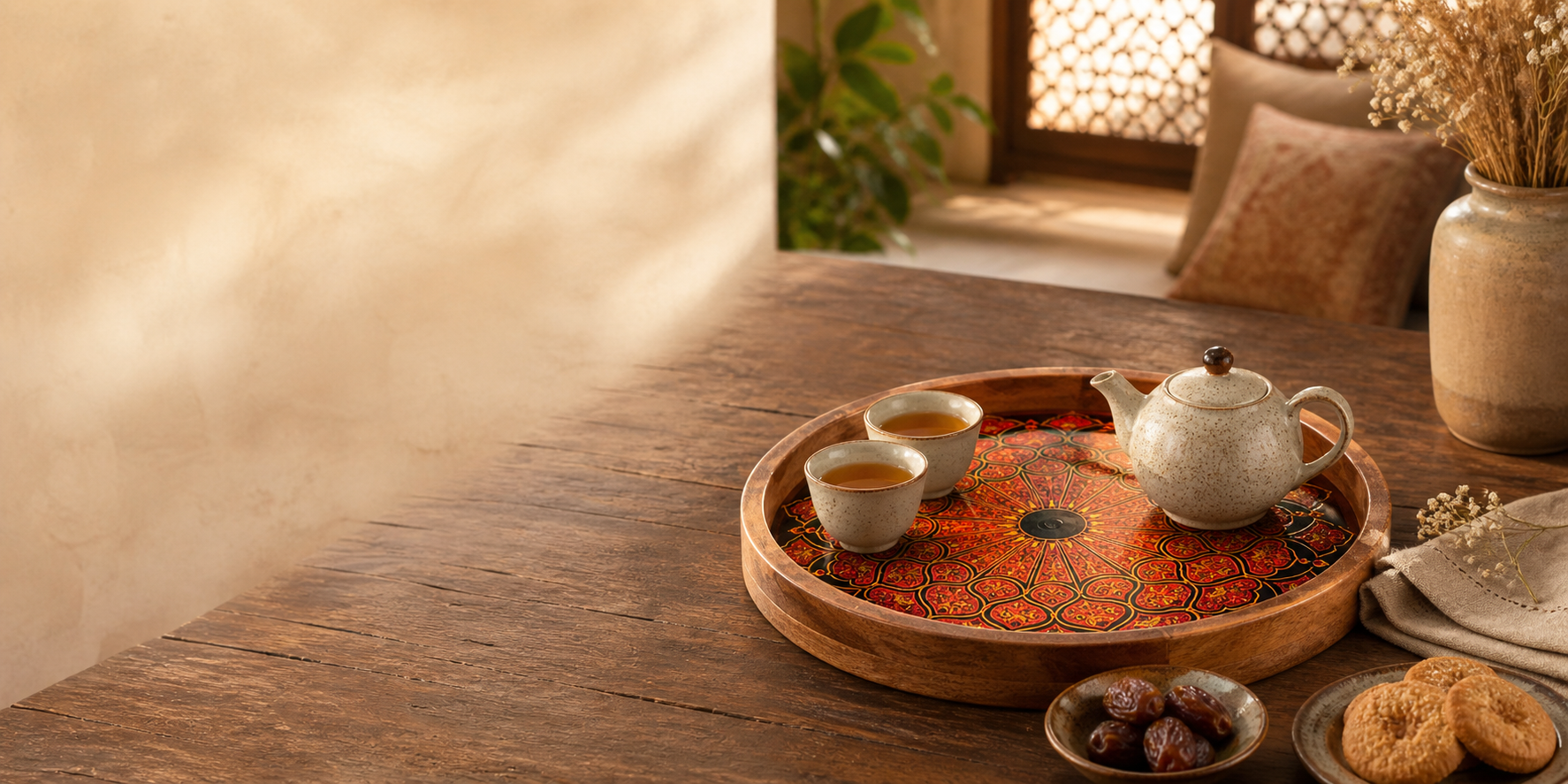
Most of us know within thirty seconds of entering a room whether someone cared about our arrival or simply made space for it. The difference rarely comes down to expensive furniture or elaborate decoration. It comes down to the small things, and a few small things communicate thoughtful hosting as naturally as handmade wooden trays placed with intention. Not staged. Not formal. Just considered.
The First Five Minutes Set Everything
Before you’ve exchanged more than a greeting, the room has already made its impression.
A guest walks in, sets their bag down, and their eyes move across the space without meaning to. They land on the bedside table first, always the bedside table, then the dresser, then whatever sits nearest the door. These surfaces are where the room reveals itself. Not the paint colour or the curtains.
A bare bedside table communicates something specific: the room was cleared, not prepared. A guest feels the difference between a room that was tidied for them and one that was thought about for them, and that feeling arrives before any conscious assessment.
A wooden serving tray changes that. Not because it’s decorative, but because it required a decision. Someone chose what to put on it. Someone considered what this guest might reach for in the first hour. The tray is evidence of that thinking; it tells a guest, without a word, that they were pictured here before they arrived.
What the Handmade Wooden Trays Actually Do to a Room
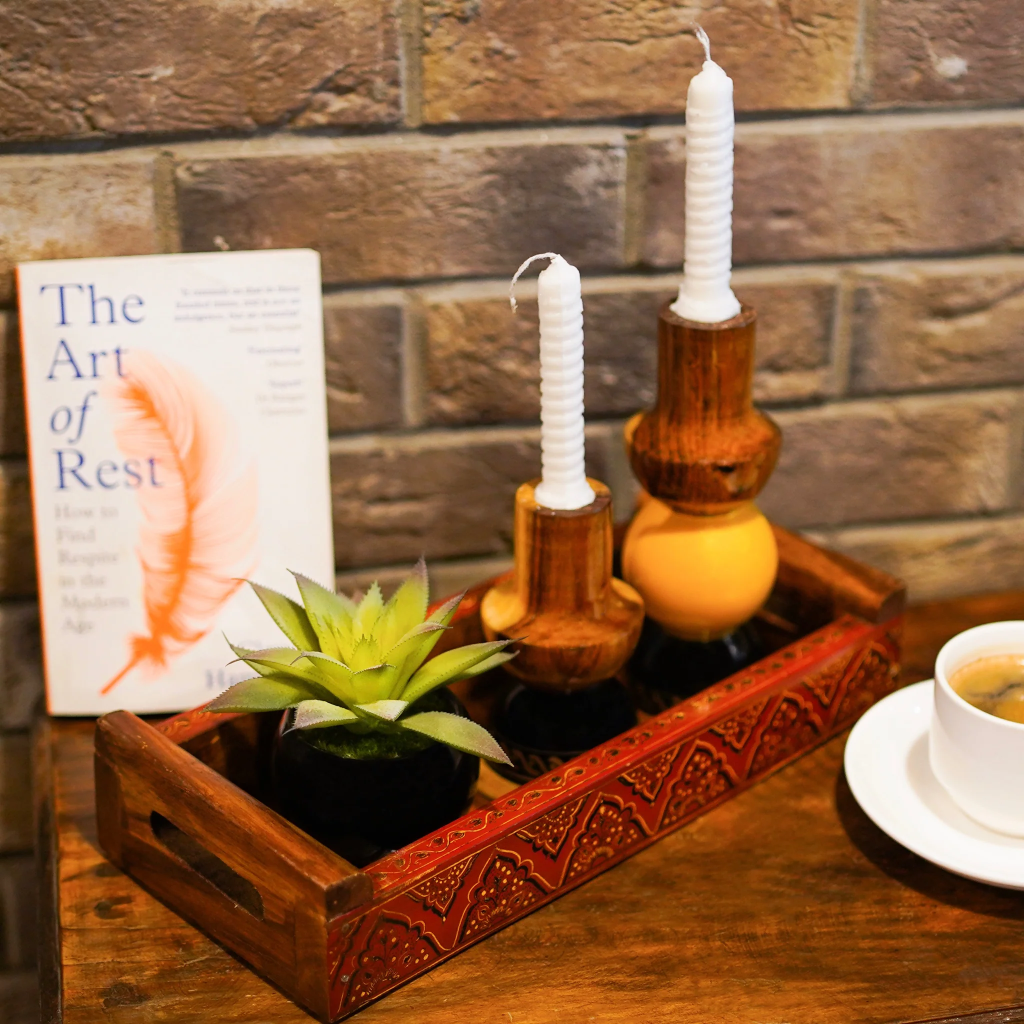
Without a tray, a candle and a carafe of water are just objects sharing a surface, useful, maybe, but arbitrary. Put the same objects on a wooden tray, and something shifts. The boundary it creates turns a collection into a composition. The guest reads it differently: this was arranged. This was for me.
That shift is disproportionate to the effort involved, which is part of what makes a tray such a quietly powerful hosting detail.
Wood matters here in a way marble or acrylic doesn’t. Pick up a well-made wooden serving tray, and it has weight not heaviness, but substance. The grain runs across the surface with the irregularity of something that grew rather than was manufactured. The finish has depth rather than just shine. A guest doesn’t consciously catalogue any of this. But the hand knows, and the eye knows, even when the mind is elsewhere.
A handmade tray carries one additional quality no mass-produced alternative can replicate: the evidence of how it was made. A softened corner. A slight variation in the edge. These aren’t flaws; they’re the signature of someone who made something rather than ran something through a process. Guests feel that quality without being able to name it, the same way you feel the difference between a meal cooked for you and one reheated.
Thoughtful Hosting Versus Performed Hosting
There’s a version of hosting that announces itself. The welcome basket in cellophane. The towels were folded into fans. Every detail matches, every surface coordinated. It’s generous, and it creates a faint obligation. The guest feels they must appreciate it visibly, and must rise to the occasion of it.
Thoughtful hosting is quieter. It doesn’t require the guest to perform gratitude because it doesn’t perform generosity. The charger is already there. The water is already poured. The candle sits on a round wooden tray on the bedside table as if the room has always been this way, not set up for company, but simply ready for a person.
Wood belongs in this second category because it doesn’t perform. Marble makes a statement. Chrome demands acknowledgement. Wood simply sits there, warm and present, asking nothing, making the guest feel comfortable rather than impressed.
Among serving trays in Pakistan, wooden ones carry this quality most naturally. The chai tray was brought to a guest without being asked. The tea-serving wood tray arrived before the conversation had properly started. There’s a cultural familiarity to it that bypasses formality. A handmade wooden tray in a guest room taps into that same register, unhurried, unperformed, genuinely warm.
What to Put on It
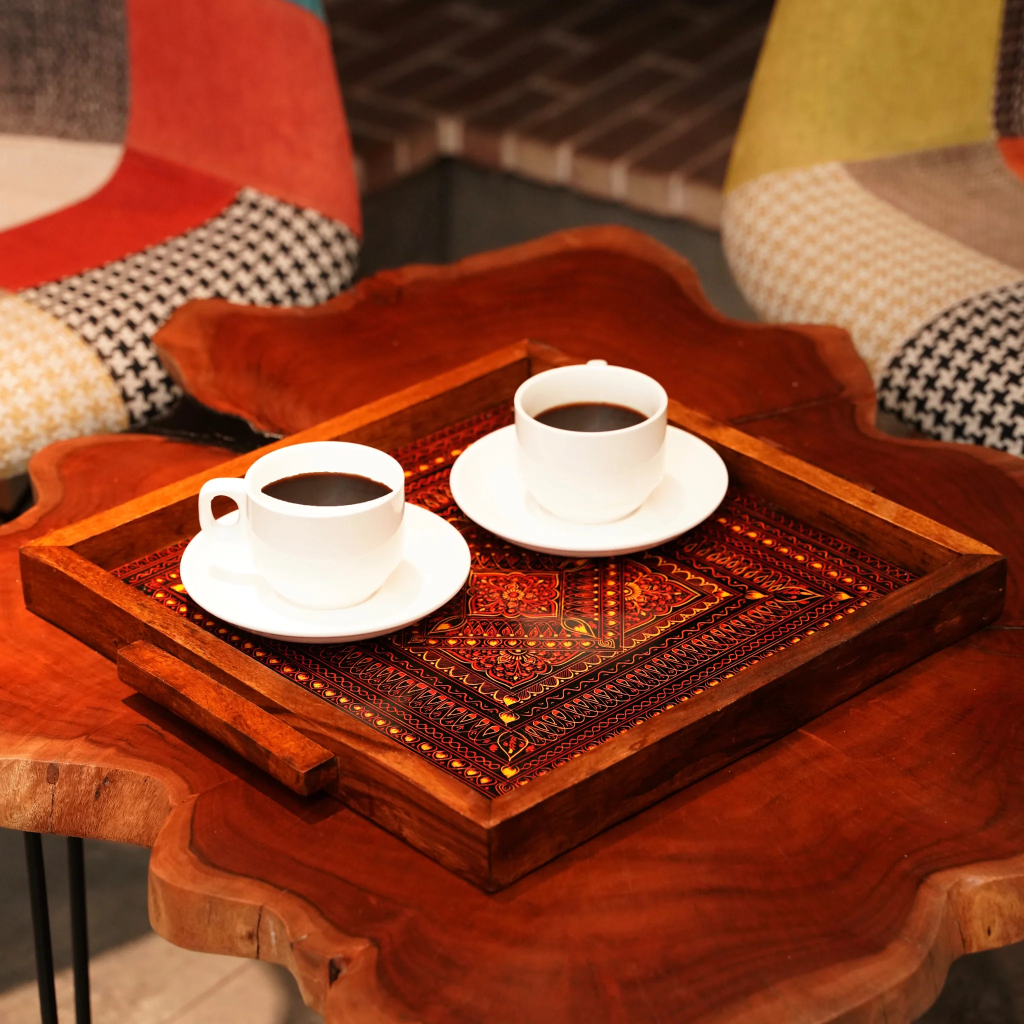
The tray is the foundation. What goes on should be edited to three to five things a guest might actually reach for, not a display that feels too considered to touch.
The essentials: A small candle or candle stand. A glass already filled, or a carafe with an upturned glass beside it, that small gesture of the upturned glass, waiting to be used, communicates more than a full minibar would. A charging cable coiled neatly at the edge.
The details that elevate: A small dish for rings or a watch. A single stem in a narrow vase if the room has morning light. On a round wooden tray, vary the heights slightly. A candle stands alongside a low dish, creating a layered look that feels assembled rather than placed.
A coffee tray dressed with a small kettle and two ceramic cups turns a corner of the guest room into something that feels like an offering. The guest wakes up and the first thing they see is evidence that their morning was considered.
Keep everything within reach. The moment a guest has to move something to get to what they need, the tray stops being thoughtful and starts being decorative.
Why Wood Outlasts Every Other Choice
Most accent pieces carry an expiry date. The brass finish that felt current three years ago. The sage green that arrived everywhere at once. You can date a room by its surfaces.
Wood sits outside this cycle entirely, not because it’s neutral, but because it reads as natural rather than stylish. A handmade wooden tray bought today will not look dated in a room redesigned around a different palette four years from now. It will look like itself, which is all it ever needed to do.
It also ages honestly in a way synthetic materials don’t. A scratch on an acrylic tray is damaged. The same mark on a well-made wooden tray is historical evidence of mornings and evenings and guests who came and set their things down here. The best wooden serving trays in Pakistan are handmade precisely because of this: a machine-finished surface wears badly. A hand-finished one wears into something richer.
You’re not buying something that will need replacing. You’re buying something that will need keeping.
The Room Remembers, Even When the Guest Forgets
A guest won’t come home and tell someone about your tray. What they’ll say, if they say anything, is that the room felt nice, that it felt like someone had thought about them.
The tray is part of what created that feeling. Quietly, without credit, doing what the best hosting details always do: working invisibly so the guest feels only the result.
Udaari Craft makes handmade wooden trays crafted by local Pakistani artisans, the kind that carry weight, age honestly, and belong in a guest room the way the best hosting details always do. Explore their collection and find yours.