

Last June, my friend Sarah spent $8,000 on her Woodinville wedding venue. Gorgeous place, perfect weather, everything planned down to the napkin colors. Then 22 of her 60 guests showed up 45 minutes late because they couldn’t find parking at the winery, got stuck in weekend I-5 traffic, and three people gave up entirely and went home.
The reception started without a third of the guests. The photographer missed key shots. The caterer had to reheat everything.
According to a 2024 survey by Seattle Events Magazine, transportation issues derail or significantly impact roughly 40% of group events in the greater Seattle area. And here’s the kicker: most of these problems are completely preventable. People just don’t think about logistics until it’s too late.
Let’s talk about what actually goes wrong and how to fix it.
The Real Problems Nobody Talks About
Problem 1: The Parking Desert Effect
Try parking 15 cars at Canlis on a Friday night. Or finding spots for your corporate team near the Space Needle during tourist season. Or literally anywhere in Pioneer Square after 6 PM.
Seattle has 1.7 parking spaces per 1,000 square feet of commercial space, compared to the national average of 4.2. That gap creates real problems.
Here’s what happens in practice: Your group of 20 agrees to meet at a downtown restaurant at 7 PM. The first person arrives at 6:45 and circles for parking. By 7:15, they’re in a garage eight blocks away, walking in the rain. Person number twelve arrives at 7:40 after checking four garages. Three people are still circling at 8 PM.
Parking costs range from $25 to $45 for evening events downtown. Multiply that by 20 people and you’ve just added $500-900 to your event cost. Plus 2-3 hours of cumulative time wasted, which nobody ever factors into their budget.
And that’s assuming everyone finds parking. In neighborhoods like Ballard or Fremont on weekend nights, some people legitimately give up and go home.
Problem 2: The “I’ll Just Uber” Myth
Uber and Lyft are great for getting one or two people from point A to point B. For groups? The math gets ugly fast.
Example: You’re organizing a bachelor party. Eight guys need to get from Capitol Hill to a Mariners game. Sounds simple, right?
Reality check: You need 2-3 cars. Base surge pricing on game nights runs 1.8x to 2.4x normal rates. Each car costs $35-50 one way. Round trip: $140-240 per vehicle. Total: $280-720 for the night. And that’s before anyone’s had a drink.
But cost isn’t even the worst part. The worst part is coordination.
Car #1 arrives in 4 minutes. Car #2 shows an 11-minute wait. Car #3 cancels because the driver doesn’t want to deal with game traffic. Now you’re re-requesting, two guys are already in car #1 waiting (meter running), and everyone’s texting “where are you?” Nobody knows if they should wait or just go.
I watched this exact scenario play out last October. The group eventually arrived at T-Mobile Park in three waves over 40 minutes. They missed the first two innings and one guy’s car got stuck in post-game traffic for an extra hour on the way back.
Problem 3: The Designated Driver Dilemma
Let’s be honest about this. Somebody has to volunteer to not drink, drive everyone around, deal with drunk people in their car, and get home at 2 AM exhausted.
That person is doing a favor worth at least $200-300 when you factor in gas, wear on their vehicle, parking fees, and their time. But more importantly, they’re sacrificing their entire evening. At a wine tour in Woodinville? They’re tasting nothing. At a celebration dinner? They’re drinking water while everyone else orders that $18 cocktail.
The social dynamics get weird too. Groups often pressure the person who “doesn’t drink much anyway” or whoever has the biggest car. Sometimes the same person ends up doing it repeatedly because they’re reliable.
And there’s a darker side nobody wants to discuss. According to Washington State Patrol data, DUI arrests in King County spike 340% during major event weekends. When groups don’t have a solid transportation plan, people make bad decisions. Someone who “feels fine” after three drinks gets behind the wheel. It’s not theoretical.
Problem 4: Seattle’s Geography Works Against You
Seattle isn’t a grid. It’s a collection of neighborhoods separated by water, hills, and exactly two functional highways that turn into parking lots between 3-7 PM.
Getting from Bellevue to downtown means crossing one of three bridges. Lake Washington traffic at 5 PM? Add 40 minutes to whatever Google Maps tells you. The 520 bridge toll is $4.90 during peak hours, each way.
Woodinville wine tours are particularly brutal. It’s 25 miles from downtown Seattle, but that translates to 45 minutes on a perfect day and 90 minutes on summer weekends when everyone has the same idea. There’s no public transit option. Zero.
And don’t get me started on ferry schedules. Planning a corporate retreat on Bainbridge Island? You’re now dealing with departure times every 50 minutes, a 35-minute crossing, and the very real possibility of missing your boat if someone’s running late. The last ferry back leaves at 11:50 PM. Miss it and you’re staying overnight or paying for a very expensive rideshare around through Tacoma.
The worst part? These aren’t edge cases. This is Tuesday.
What Actually Works: Tested Solutions
The Pre-Planning Framework
Before you book anything, answer these three questions:
1. How many people need to move together?
Below 6: You have flexibility. Above 12: Individual cars stop making sense. Between 6-12: You’re in the messy middle where decisions matter most.
2. Will alcohol be involved?
If yes, eliminate any plan that relies on someone driving. Full stop. This isn’t negotiable.
3. What’s your true budget?
Not the number you want to spend. The number that includes parking, surge pricing, tips, backup plans, and your time. Most people underestimate by 40-60%.
Option 1: Coordinated Rideshare Strategy
This can work, but you need discipline.
When it makes sense: Small groups (4-8 people), flexible timing, sober events, tech-savvy group willing to coordinate actively.
The real cost: For 8 people, downtown to Woodinville: 2 XL vehicles at $75-95 each way with no surge = $300-380 round trip. Factor in 1.5x surge probability on weekends = $450-570. Plus tips: $540-665 total.
How to do it right:
- Designate one person as “transportation coordinator”
- Request all cars simultaneously, not one at a time
- Set a firm meeting point, not “we’ll figure it out”
- Build in 15-minute buffer for arrival differences
- Have a backup plan if someone cancels
Truth check: This works about 70% of the time. The other 30%, someone’s car is late, someone changes their mind about leaving, or surge pricing doubles mid-event and nobody wants to pay for the return trip.
Option 2: Professional Group Transportation
Here’s what most people don’t calculate: the break-even point for professional transportation is lower than you think.
The actual math: A luxury SUV from a professional service costs $150-250 for a 3-hour booking. That’s 6-7 passengers comfortably. Per person cost: $25-42.
Compare that to the rideshare scenario above: $68-83 per person with surge pricing. Or individual parking downtown: $25-45 per car, plus gas, plus time.
For groups of 10+, a party bus or small coach runs $500-900 for 4-5 hours. Sounds expensive until you do the per-person breakdown: $50-90 per head. That includes door-to-door service, no parking fees, designated professional driver, and nobody checking their phone every five minutes asking “where are you?”
The unexpected benefits nobody mentions:
- Everyone arrives together. No stragglers, no “we’ll catch up later”
- The party starts in the vehicle, not at the venue
- No designated driver guilt or logistics
- Professional drivers know the traffic patterns and have alternatives
- Insurance and licensing are handled
- Fixed price, no surge surprises
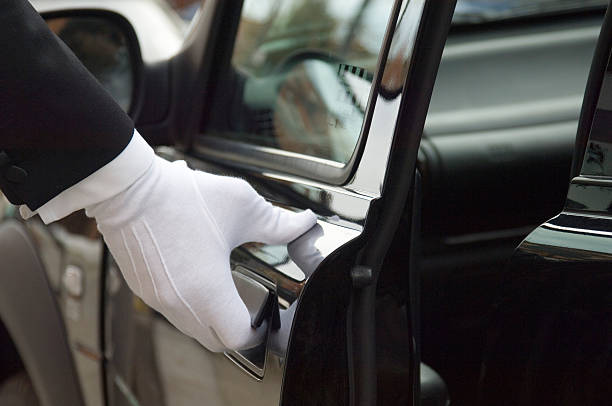
Companies like limo service Seattle handle corporate events, weddings, wine tours, and airport runs daily. They’ve seen every scenario and have contingency plans you haven’t thought of.
When this is the right move: Groups of 8+, events with alcohol, tight timing requirements, high-value events where being late matters, multi-stop itineraries, anyone traveling from out of town unfamiliar with Seattle traffic.
Option 3: The Hybrid Approach
Sometimes you can split the difference.
Scenario: Corporate team building with 25 people. Most live locally, but five are flying in from other offices.
Hybrid solution: Arrange professional transportation for the out-of-town crew from SeaTac airport directly to the event venue. Local staff handles their own transportation. This ensures your VIP guests arrive on time and don’t spend 40 minutes figuring out Link Light Rail connections.
Another example: Wedding with ceremony in Seattle, reception in Woodinville. Book professional transportation for the wedding party and elderly relatives who shouldn’t drive. Let other guests coordinate their own rideshares or carpools. Provide them with a detailed info sheet including parking tips and recommended departure times.
The key: identify the critical path. Who absolutely must arrive on time? Who can’t be dealing with logistics that day? Solve for them first.
The Hidden Cost Calculator
Let’s break down what each option actually costs for a typical scenario: 12 people, downtown to Woodinville wine tour, 5-hour event.
| Method | Direct Cost | Hidden Costs | Total Per Person | Stress Factor |
| Individual Cars(4 cars, split) | Gas: $80Parking: $160 | 4 designated drivers sacrifice their dayCoordination time: ~45 minDUI risk | $20 base(+ impossible-to-measure social cost) | High |
| Rideshare(3 XL vehicles) | $540-760(with surge) | Coordination effortWait timesReturn trip uncertainty30% chance of problems | $45-63 | Medium-High |
| Professional Service(Party bus or van) | $650-850 | NoneFixed priceNo surprises | $54-71 | Low |
Notice how the “expensive” option is actually within $10 per person of the rideshare option, with dramatically lower stress.
The time factor: Time spent organizing rideshares, dealing with parking, coordinating multiple vehicles, and managing group logistics averages 2-4 hours of collective effort. At even a modest $25/hour value, that’s $50-100 of hidden cost that nobody tracks.
The experience factor: Sarah’s wedding guests who arrived 45 minutes late? They missed the cocktail hour, the first dance photos, and spent their first hour at the reception apologizing and feeling awkward. What’s that worth? You can’t put a dollar figure on it, but it’s not zero.
Action Plan by Event Type
Corporate Events (10-50 people)
Best bet: Professional transportation, no question.
Why: Your employees’ time is valuable. Clients or VIP guests showing up late looks terrible. Alcohol is often involved. Someone will inevitably expense their rideshare incorrectly. Just book a coach or multiple vehicles and be done with it.
Book: 3-4 weeks ahead for standard dates, 6-8 weeks for holiday parties.
Weddings
Critical factors: Timeline precision matters more than cost. Photos happen at specific times. Vendors are on a schedule.
Minimum recommendation: Professional transportation for wedding party and immediate family. Provide detailed parking/rideshare guidance for other guests.
Ideal: Shuttle service for all guests between hotel blocks and venues.
Book: 8-12 months ahead for summer weddings, 3-6 months for off-season.
Wine Tours (Woodinville/Walla Walla)
Non-negotiable: Professional driver. DUI checkpoints are common on weekend afternoons on SR-202 near Woodinville wineries.
Typical setup: 6-14 people, 4-6 hour booking, multiple winery stops.
Cost range: $500-1,200 depending on vehicle type and duration.
Pro tip: Drivers familiar with Woodinville know which wineries have the best pacing, where parking is terrible, and how to optimize your route. This isn’t about getting from A to B, it’s about maximizing the experience.
Book: 4-6 weeks ahead for weekends, 2-3 weeks for weekdays.
Airport Groups (Corporate Travel/Family Reunions)
The scenario: Multiple people arriving on different flights need to get to the same hotel or event.
Option A: Individual rideshares = everyone pays $45-70 from SeaTac to downtown.
Option B: Coordinate a professional service to do multiple airport runs or wait for everyone and transport together.
Break-even point: Groups of 4+ save money with option B.
Hidden benefit: Professional drivers track flights and adjust pickup times automatically. Rideshare drivers absolutely will not wait if you’re delayed.
Bachelor/Bachelorette Parties
Reality: These events have the highest transportation failure rate because plans change constantly and alcohol is involved early.
Best strategy: Book professional transportation with flexible routing. The ability to change venues mid-event without coordinating three separate rideshares is worth the cost.
Typical cost: $600-1,000 for 8-12 people, 6-8 hours.
Per person: $50-85, which is less than most people will spend on drinks anyway.
Bottom Line
Transportation planning isn’t sexy. It doesn’t show up in your event photos. Nobody remembers great logistics, they only remember when logistics fail.
But here’s what I’ve learned from watching dozens of Seattle events succeed or fall apart: the groups that make it look effortless? They’re the ones who spent 30 minutes up front doing the math, being honest about their needs, and booking the right solution.
The groups that struggle? They’re the ones who said “we’ll figure it out” and assumed everything would work itself out. Sometimes it does. Often it doesn’t.
Your time has value. Your guests’ experience matters. Your peace of mind is worth something. And in Seattle specifically, where traffic is brutal, parking is scarce, and geography works against you, transportation needs to be part of your event plan from day one.
Not an afterthought.
Do the math for your specific situation. Factor in the hidden costs. Consider the stress level you’re willing to tolerate. Then make a decision and commit to it.
Sarah’s doing another event next month. This time she booked transportation first, venue second. Lessons learned.