
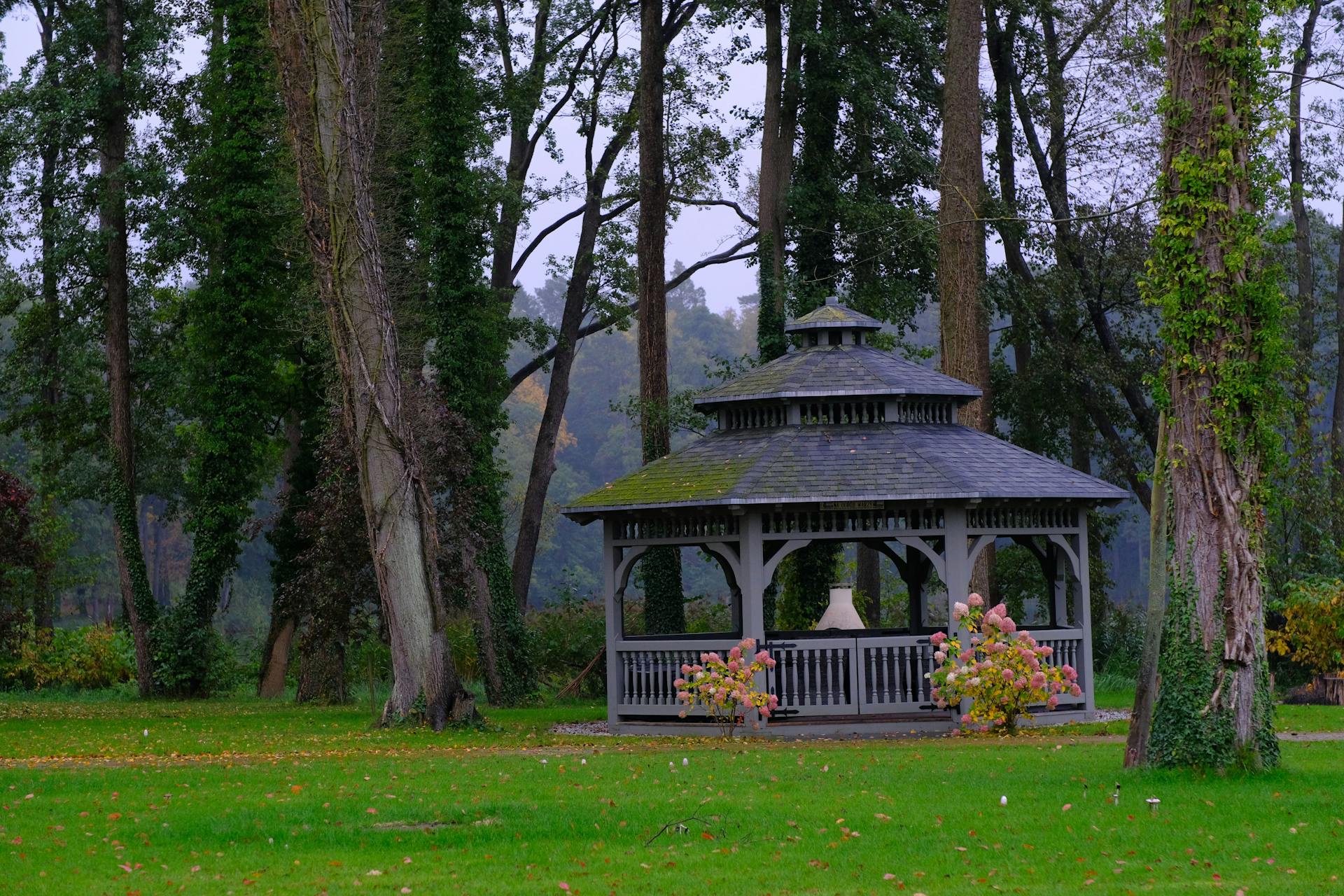
There is something quietly determined about the Essex homeowner. Wedged between the pull of London’s commuter belt and the wide, flat skies of the estuary, people here tend to make the most of what they have — including their gardens. In recent years, that tendency has accelerated into something rather more considered: a wholesale rethinking of what outdoor space is actually for.
The pandemic played its part, of course. Extended periods at home encouraged millions of people across the country to look again at their gardens — not as places to park a lawnmower, but as genuine extensions of the home itself. In Essex, where suburban plots in towns like Chelmsford, Colchester, Brentwood, and Billericay often run to a generous size, the case for doing something purposeful with the garden has rarely felt stronger.
The results have been striking. From Epping to Southend, from Saffron Walden down to the Thames estuary, Essex gardens have been quietly transformed. Sheds have given way to studios. Patios have been extended. And increasingly, homeowners are investing in dedicated garden buildings — structures that offer not just additional square footage, but a genuine shift in how a household operates day to day.
The appeal of a dedicated outdoor building
There are as many reasons to install a garden building as there are homeowners doing so. For some, the driver is purely practical: a growing family that has outgrown its living space, a home office that has migrated from the kitchen table and needs a room of its own, or a workshop for a hobby that has become increasingly difficult to contain. For others, the motivation is more atmospheric — the desire to have somewhere to retreat, to think, to disconnect from the rhythms of the main house without actually leaving the property.
What the two camps share is an appreciation for permanence and quality. There is a meaningful difference between a flat-pack plastic shed from a DIY warehouse and a well-crafted timber structure that has been designed to sit sympathetically in the garden, to weather well, and to offer a genuine sense of space and shelter. The latter does not merely serve a function; it changes how you feel about your outdoor space entirely.
“A well-chosen garden building does not merely add utility — it redefines the relationship between the household and the garden.”
For homeowners considering their options, the range of garden buildings available today is considerably broader than it was even a decade ago. Timber-framed structures now come in a variety of styles — from the clean, contemporary lines favoured by those who want something architectural in feel, to the more traditional chalet or log cabin aesthetic that suits a country garden or a period property. The breadth of choice means that, done thoughtfully, a garden building can feel like a natural extension of the house rather than an afterthought.
Summer buildings: a long-term investment in enjoyment
Of all the garden building categories, the summer house occupies a particular place in the imagination. It is the structure most associated with leisure — with long evenings, with guests, with the slower rhythms of the warmer months. In a county with a climate as variable as Essex’s, the ability to sit outdoors without being at the mercy of the weather is not a small thing.
Modern summer buildings in Essex have moved well beyond the rather spartan summer houses of previous generations. Insulated glazing, hardwearing cladding, and thoughtful internal finishes mean that many are now usable throughout the year — functioning as reading rooms in winter, entertaining spaces in summer, and everything in between. The best examples are built with the same care as any domestic extension, and they tend to add a comparable sense of value to the property.
For families, a summer building also creates something invaluable: separation. The ability to have a space that belongs to the adults, or that the children can use independently, without it eating into the core living space of the house, is a practical luxury that quickly becomes indispensable.
Garden offices and studios: work, creativity, and the case for distance
The normalisation of remote and hybrid working has made the garden office one of the most sought-after domestic improvements of recent years. The commute from the kitchen to a well-appointed studio at the bottom of the garden is, for many people, the most civilised arrangement imaginable: close enough to be convenient, separate enough to mean something.
That separation matters more than it might initially appear. Research consistently suggests that working from home carries a risk of blurring the boundaries between professional and personal life — a risk that a dedicated structure, physically distinct from the main house, significantly mitigates. Closing a door and walking back across the lawn at the end of the working day creates a ritual of transition that a makeshift home office in a spare bedroom simply cannot replicate.
Purpose-built garden offices and studios are designed with this in mind. Full insulation, power and data connections, heating, and soundproofing are standard requirements for anyone intending to use the space professionally. Many homeowners also make provision for a small kitchenette or WC, transforming the building into something approaching a self-contained workspace. For the self-employed, the freelancer, or the remote worker who spends the majority of their week at home, such a facility is not a luxury — it is, increasingly, a necessity.
Essex and the outdoor living moment
It would be easy to frame all of this as a post-pandemic phenomenon and leave it there. But the appetite for better outdoor living in Essex runs deeper than a single event. The county’s character — semi-rural in its northern reaches, coastal and open in the east, suburban and well-connected in the south and west — has always encouraged a certain investment in home. Essex households tend to stay put; they tend to improve rather than move. The garden building fits neatly into that tradition.
There is also something to be said for the economics. At a time when moving home is expensive and disruptive, adding a quality garden structure at a fraction of the cost of a conventional extension — and without the planning complications that a rear extension often involves — represents a compelling proposition. Most garden buildings under a certain size do not require planning permission at all, meaning that the process from initial enquiry to installation can be considerably more straightforward than homeowners might expect.
For Essex residents considering the possibilities, the starting point is usually a conversation about how the space will actually be used. A building that works beautifully as a yoga studio will have different requirements from one that needs to function as a professional workspace or a social hub for weekend entertaining. Getting that question right before anything is ordered or installed is the difference between a building that earns its place in the garden and one that quietly disappoints.
The outdoor living moment in Essex is, in that sense, less a trend than a maturation — a collective recognition that the garden is not peripheral to domestic life, but central to it.