
You did everything right.
Your page ranks #1 on Google. Traffic is solid. Authority looks strong.
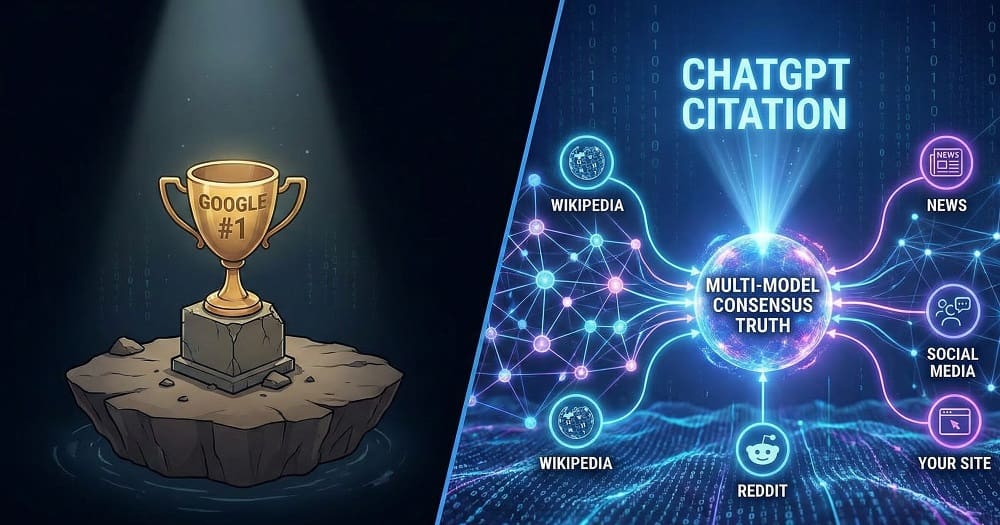
Then you ask ChatGPT a simple question in your niche and your brand is missing.
That gap isn’t random. It’s not a bug. And it’s not because your content is “low quality.”
It’s because AI answer engines don’t reward rankings.
They reward agreement.
This article explains what’s really happening, why consensus now determines AI visibility, and how to adapt before this blind spot costs you relevance.
Ranking #1 on Google but Invisible on ChatGPT: What’s Actually Happening?
Google and ChatGPT solve different problems.
Google answers:
Which page best matches this query?
AI answer engines answer:
What version of reality is safest to repeat?
That difference changes everything.
When ChatGPT generates an answer, it doesn’t “pick a winner.”
It synthesizes patterns across its training and retrieval layers.
If your perspective isn’t reinforced elsewhere, it gets filtered out.
Not penalized.
Just ignored.
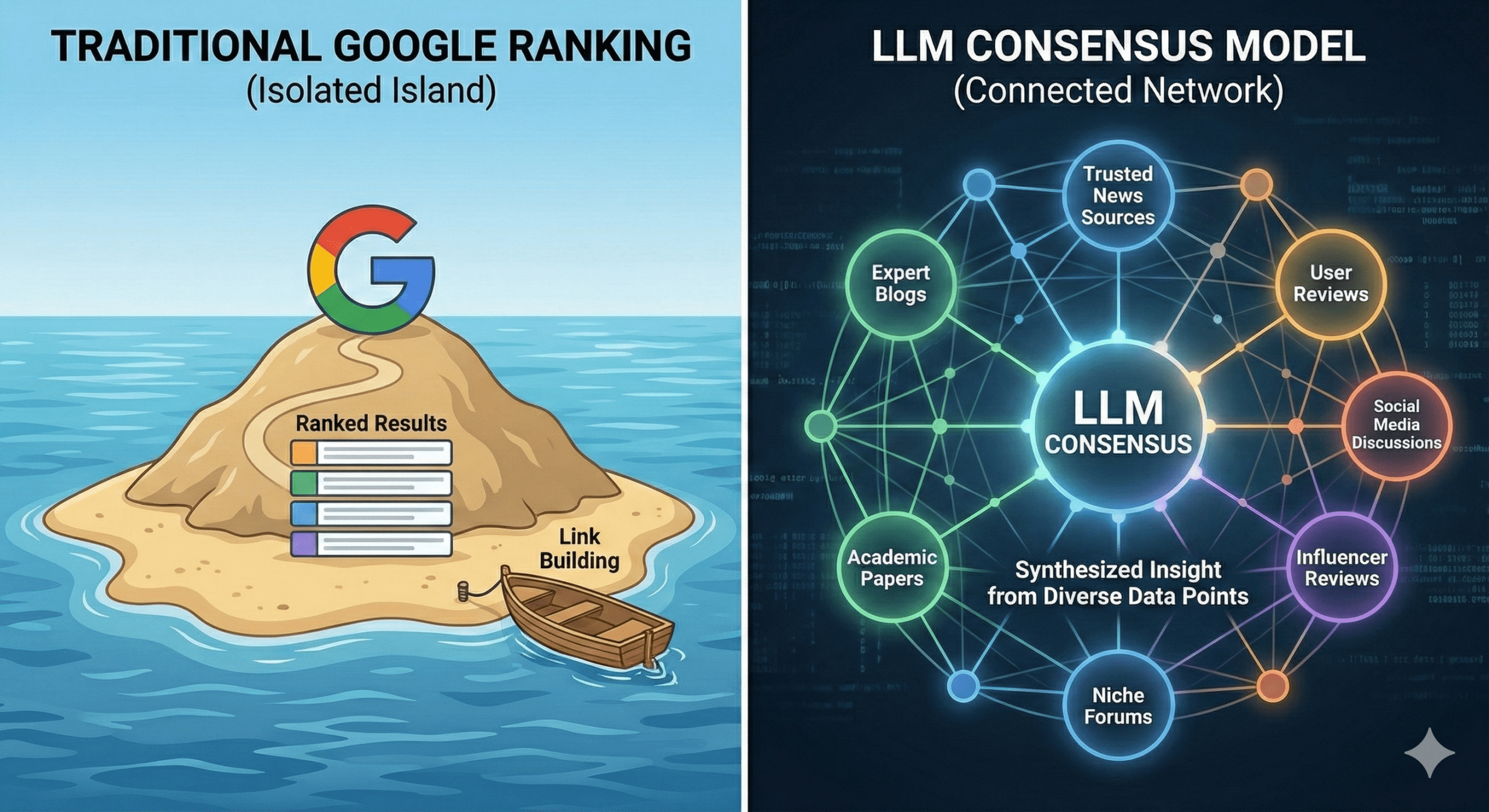
Google Ranks Pages. AI Synthesizes Reality.
Google is a retrieval engine.
AI models are probability engines.
They don’t ask:
- Who ranks first?
- Who has the best page?
They ask:
- What do multiple trusted sources agree on?
- Which entities appear consistently?
- What version minimizes the risk of being wrong?
If your content stands alone, it increases uncertainty.
LLMs are designed to avoid that.
Why AI Answer Engines Don’t Care About Your #1 Ranking
Ranking signals don’t transfer cleanly into AI systems.
Backlinks, CTR, freshness—useful for Google.
Mostly irrelevant for synthesis models.
AI answer engines rely on:
- Repetition across sources
- Entity consistency
- Semantic alignment
- Historical agreement
A single high-ranking page is a data point.
Multiple agreeing sources form a pattern.
Models prefer patterns.
The Cost of Being Wrong Is Higher Than Being Incomplete
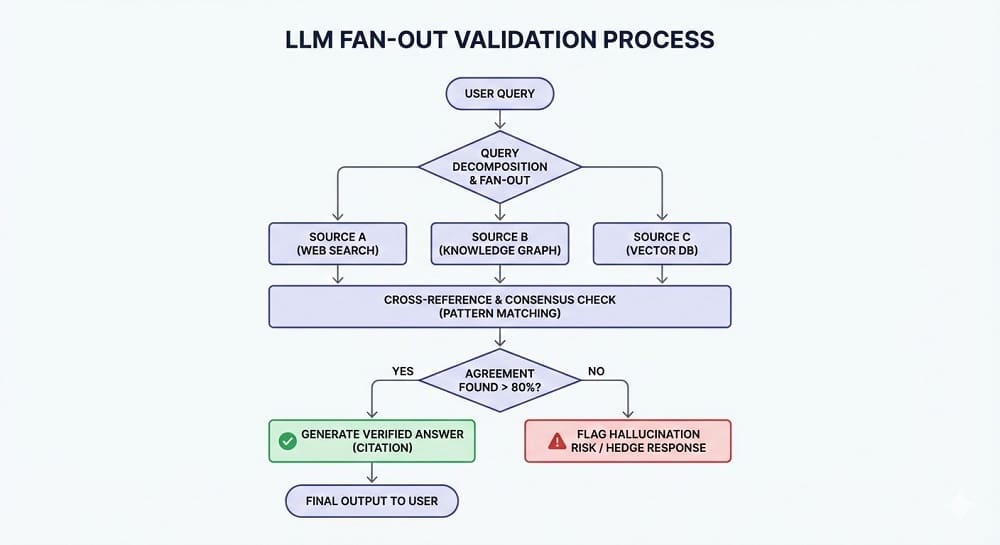
LLMs are optimized to reduce hallucinations.
That leads to one rule:
If the model isn’t confident, it stays silent.
So when your brand:
- Appears on one site
- Frames ideas differently than the consensus
- Introduces new terminology without reinforcement
…the model chooses omission over risk.
What “Consensus” Means in AI Search (And Why It’s the New Keyword)
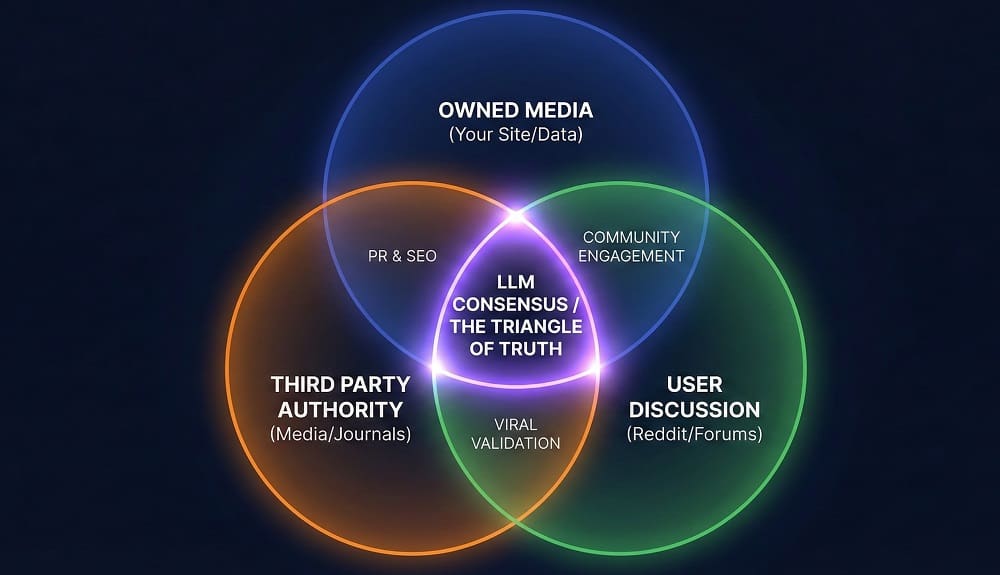
Consensus isn’t popularity.
It’s cross-source agreement.
In AI systems, consensus forms when:
- Multiple authoritative sources say similar things
- Entities are described consistently
- Claims appear repeatedly in similar contexts
Think of consensus as statistical trust.
Not who said it best.
Who said it together.
Consensus vs Originality: Why AI Punishes Lone Experts
This is uncomfortable, but true.
AI systems are not designed to reward originality.
They are designed to reward verification.
That means:
- Unique insights ≠ repeatable insights
- Novel framing ≠ safe framing
- Lone experts ≠ reliable patterns
Being first is less valuable than being confirmed.
How Large Language Models Decide Which Brands Exist
From an AI perspective, brands don’t “rank.”
They either:
- Exist as stable entities
- Or fade into statistical noise
LLMs rely on:
- Knowledge Graphs
- Entity embeddings
- Citation frequency
- Contextual repetition
If your brand:
- Is mentioned the same way across sites
- Appears alongside known entities
- Is categorized consistently
…it becomes easier for the model to reference you.
Mentions, Citations, and Repetition: The Hidden Ranking Layer
For AI visibility:
- One backlink means little
- One article means less
- One opinion means nothing
What matters is redundancy with authority.
Repetition reduces uncertainty.
Uncertainty triggers exclusion.
Why E-E-A-T Alone Doesn’t Make You AI-Visible
E-E-A-T evaluates you.
Consensus evaluates everyone else agreeing with you.
That gap explains why many experts disappear in AI answers.
E-E-A-T vs Consensus Signals
| E-E-A-T (Search-Focused) | Consensus (AI-Focused) |
|---|---|
| Author credentials | Cross-source agreement |
| Backlinks | Repeated mentions |
| On-page expertise | Entity consistency |
| Brand authority | Corroborated narratives |
Authority Without Agreement Is Still Untrusted
You can be correct.
You can be qualified.
You can be published.
If others don’t reinforce your version, AI models hesitate.
This isn’t judgment.
It’s math.
How to Optimize for Consensus (Not Just Rankings)
This is where strategy shifts.
The goal is no longer:
“How do I outrank competitors?”
It becomes:
“How do I align with the version of truth AI already trusts?”
Key actions:
- Use terminology already dominant in your niche
- Match entity descriptions used by authoritative sites
- Reinforce the same claims across multiple platforms
- Avoid unnecessary contrarian framing
From Optimization to Corroboration
Classic SEO optimized pages.
AI optimization reinforces patterns.
That requires:
- Distribution, not isolation
- Consistency, not cleverness
- Agreement, not novelty
The New SEO Stack: Ranking, Validation, Repetition
SEO hasn’t died.
It’s been layered.
The modern stack looks like this:
- SEO – Earn discoverability
- Consensus – Earn legitimacy
- AI Mentions – Earn persistence
Traffic is optional.
Being cited is not.
Why Traffic Is Optional but Mentions Are Permanent
Clicks fluctuate.
Rankings change.
But once AI models repeatedly reference your brand, you become part of the default answer set.
That’s durable visibility.
Final Thought: If You’re Not Agreed With, You’re Invisible
AI doesn’t reward effort.
It rewards alignment.
The future of visibility belongs to brands that:
- Say what others already confirm
- Reinforce trusted narratives
- Understand that consensus is the new keyword
Being right is table stakes.
Being agreed with is the real ranking factor.
FAQ (Optimized for AI Answers)
Why does my site rank #1 on Google but not appear in ChatGPT?
AI models don’t rank pages—they synthesize consensus.
If your content lacks cross-source agreement or consistent entity validation, it’s excluded to reduce uncertainty, even if it ranks first on Google.
ChatGPT prioritizes corroborated information over individual authority. Rankings alone don’t provide enough confidence.
What is “consensus” in AI search?
Consensus is cross-source agreement across authoritative content.
AI models prefer information repeated consistently across trusted sources, as repetition lowers hallucination risk and increases confidence in the answer.
It’s a statistical trust signal, not a popularity metric.
How do AI models choose which websites to mention?
They favor entities that appear consistently across multiple sources.
Mentions, citations, and contextual repetition matter more than backlinks or rankings.
The more stable the pattern, the safer the reference.
Is SEO still relevant in the age of ChatGPT?
Yes—but it’s no longer sufficient.
SEO earns discoverability, while consensus earns AI visibility.
You need both to stay relevant in search and answer engines.
How can I optimize content for AI answer engines?
Focus on entity clarity, repetition, and alignment with trusted narratives.
Avoid isolated claims. Reinforce ideas across platforms so AI models can safely repeat them.
The goal is verification, not differentiation.
