
Bookmatching is one of those techniques that instantly elevates a stone installation. When done right, it creates a mirror effect where two slabs reflect each other like an open book. You see it often in marble. You see it in some quartzites. But when it comes to granite, especially Colonial White Granite, things get complicated very quickly.
Many buyers assume bookmatching is just about placing two slabs side by side. In reality, it depends heavily on the internal structure of the stone, the way rough stone blocks are cut, and how consistent the mineral flow is within the quarry. Colonial White Granite does not naturally cooperate with this process. That is why bookmatching in this material is rare and often difficult to execute on a large scale.
If you are planning to source colonial white granite slabs for a project and expecting a bookmatched finish, it is important to understand what you are dealing with. This article breaks down the real reasons behind the challenge and what buyers should consider before making decisions.
Understanding the Nature of Colonial White Granite
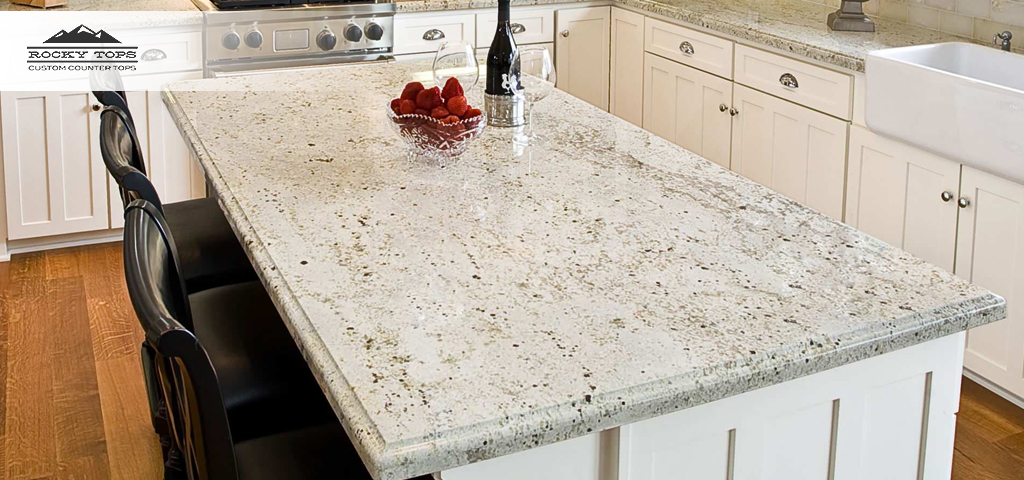
Colonial White Granite is known for its soft white to light gray background mixed with scattered black and brown mineral clusters. Unlike stones with strong directional veins, this granite has a more random pattern.
At first glance, that randomness looks attractive because it feels natural and balanced. But from a bookmatching perspective, it creates a problem. Bookmatching relies on symmetry. Colonial White Granite rarely offers that kind of predictable pattern flow.
The mineral distribution does not follow clean lines. Instead, it appears in patches and clusters that shift across the slab in ways that are difficult to mirror.
Why Directional Flow Matters for Bookmatching
For bookmatching to work effectively, a stone needs a clear directional pattern. This could be long veins or flowing lines that continue across slabs when cut sequentially.
In Colonial White Granite, the pattern behaves differently. The movement is subtle and often broken. There is no strong grain direction that can be followed consistently when cutting from rough stone blocks.
Even when slabs are cut from the same block, the pattern may not align in a way that creates a mirror image. Instead of symmetry, you get variation. And variation does not translate into a clean bookmatch.
The Role of Rough Stone Blocks in the Process
Everything starts at the block level. Rough stone blocks determine what kind of slabs you can produce. If the block itself does not contain consistent pattern movement, no amount of cutting technique can create a perfect bookmatch.
Colonial White Granite blocks often show irregular mineral distribution. Some areas may have dense clusters while others remain lighter and more open. When these blocks are sliced, each slab reveals a slightly different composition.
A granite slab supplier and exporter who understands this will usually avoid promising bookmatched results unless they have identified a very specific block with favorable characteristics.
Cutting Technique and Its Limitations
Bookmatching requires sequential slab cutting. This means slabs are cut in order from the same block so that adjacent slabs share similar features.
While this method works well with stones that have strong linear patterns, it does not guarantee results with Colonial White Granite. Even sequential cuts may not produce mirror images because the internal pattern lacks continuity.
In some cases, you might get partial alignment where certain areas reflect each other. But achieving full slab symmetry across the entire surface is extremely rare.
Color Variation Adds Another Layer of Complexity
Colonial White Granite is not just about pattern. Color variation also plays a role. Some slabs may lean more toward white while others show more gray or brown tones.
When attempting bookmatching, even slight color differences become noticeable. A mirrored layout loses its visual impact if one side appears warmer or darker than the other.
This is why buyers who expect uniform bookmatched designs often feel disappointed when working with this material.
Why Marble Succeeds Where Granite Struggles
It helps to compare Colonial White Granite with marble. Marble typically has more fluid vein structures that run consistently through the block. These veins create natural symmetry when slabs are cut sequentially.
Granite, on the other hand, forms under different geological conditions. Its mineral composition leads to a more granular and less directional appearance.
That fundamental difference explains why bookmatching is common in marble but rare in granites like Colonial White.
Practical Challenges During Slab Selection
Even if a quarry produces a block with relatively consistent pattern, selecting slabs for bookmatching is still a careful process.
Buyers must review multiple colonial white granite slabs side by side. They need to check whether any two slabs share enough visual similarity to create a mirrored effect.
This process takes time and often results in limited usable pairs. For large projects requiring multiple bookmatched sets, the challenge increases significantly.
A reliable granite slab supplier and exporter will present slab bundles honestly rather than forcing unrealistic expectations.
Installation Difficulties
Let us assume you manage to find slabs that appear bookmatch capable. The next challenge is installation.
Granite slabs are heavy and require precise alignment. Even a slight shift during installation can disrupt the mirrored effect. Because Colonial White Granite lacks strong visual lines, aligning patterns becomes even more difficult.
Installers must spend extra time adjusting placement, which increases labor costs and project timelines.
Cost Implications of Attempting Bookmatching
Bookmatching in Colonial White Granite is not only difficult but also expensive. Since only a small percentage of slabs may qualify for matching, material waste increases.
You may need to purchase more slabs than required just to find suitable pairs. This raises overall project costs.
For buyers sourcing rough stone blocks or finished slabs in bulk, it becomes important to weigh the visual benefit against the financial impact.
When Partial Matching Makes More Sense
Instead of aiming for perfect bookmatching, many designers choose partial matching or pattern blending.
This approach focuses on maintaining overall harmony rather than strict symmetry. Slabs are selected to complement each other without forcing a mirrored layout.
With Colonial White Granite, this method often produces better results. The natural variation becomes a design feature rather than a limitation.
Working with the Right Supplier
Choosing the right granite slab supplier and exporter makes a big difference when dealing with complex requirements like this.
Experienced suppliers understand the limitations of Colonial White Granite and guide buyers accordingly. They help identify slabs with similar tone and distribution rather than promising unrealistic bookmatched results.
They also maintain proper records of rough stone blocks so buyers can trace slab origin and ensure consistency in future orders.
Realistic Expectations Lead to Better Results
The biggest mistake buyers make is expecting every stone to behave the same way. Colonial White Granite has its own character. It offers softness, balance, and versatility, but not perfect symmetry.
Understanding this early helps you make smarter design decisions. Instead of forcing the material into a concept that does not suit it, you can work with its natural strengths.
Final Thoughts
Bookmatching is rare and challenging in Colonial White Granite because the stone does not have the directional structure required for consistent symmetry. Its beauty lies in its randomness, not in mirrored perfection.
From the nature of rough stone blocks to cutting limitations and installation challenges, every stage adds complexity to the process.
If you plan to use colonial white granite slabs in your project, focus on selecting high quality slabs with balanced color and pattern rather than chasing perfect bookmatches.
Work closely with a knowledgeable granite slab supplier and exporter who understands the material and can guide you toward practical solutions.
In the end, Colonial White Granite delivers elegance in its own way. Not through symmetry, but through natural variation that feels authentic and timeless.