
Manufacturing has always been a balancing act between efficiency and flexibility. Factories are built for repetition: the same part, the same process, the same output, run thousands of times over. Yet customers increasingly want the opposite: products tailored to their exact needs, delivered without the long lead times or inflated costs that custom work used to require. For decades, these two forces pulled manufacturers in opposite directions. Today, a growing number of them are resolving that tension with the help of interactive 3D configurators tools that sit at the intersection of design, sales, and production.
Customers now interact directly with a process that once belonged entirely to the back office. They often do this before manufacturers produce a single part. This shift is changing how companies sell products. It is also changing how manufacturing teams plan, quote, and produce them.
From Paper Specs to Interactive Design
Traditionally, ordering a custom manufactured product meant a lengthy back-and-forth. A customer would describe what they wanted, a sales engineer would translate that into technical drawings, and several rounds of revisions would follow before anyone agreed on a final design. This process could take days or weeks, and it relied heavily on the customer’s ability to interpret two-dimensional drawings and imagine how they’d translate into a finished, physical object.
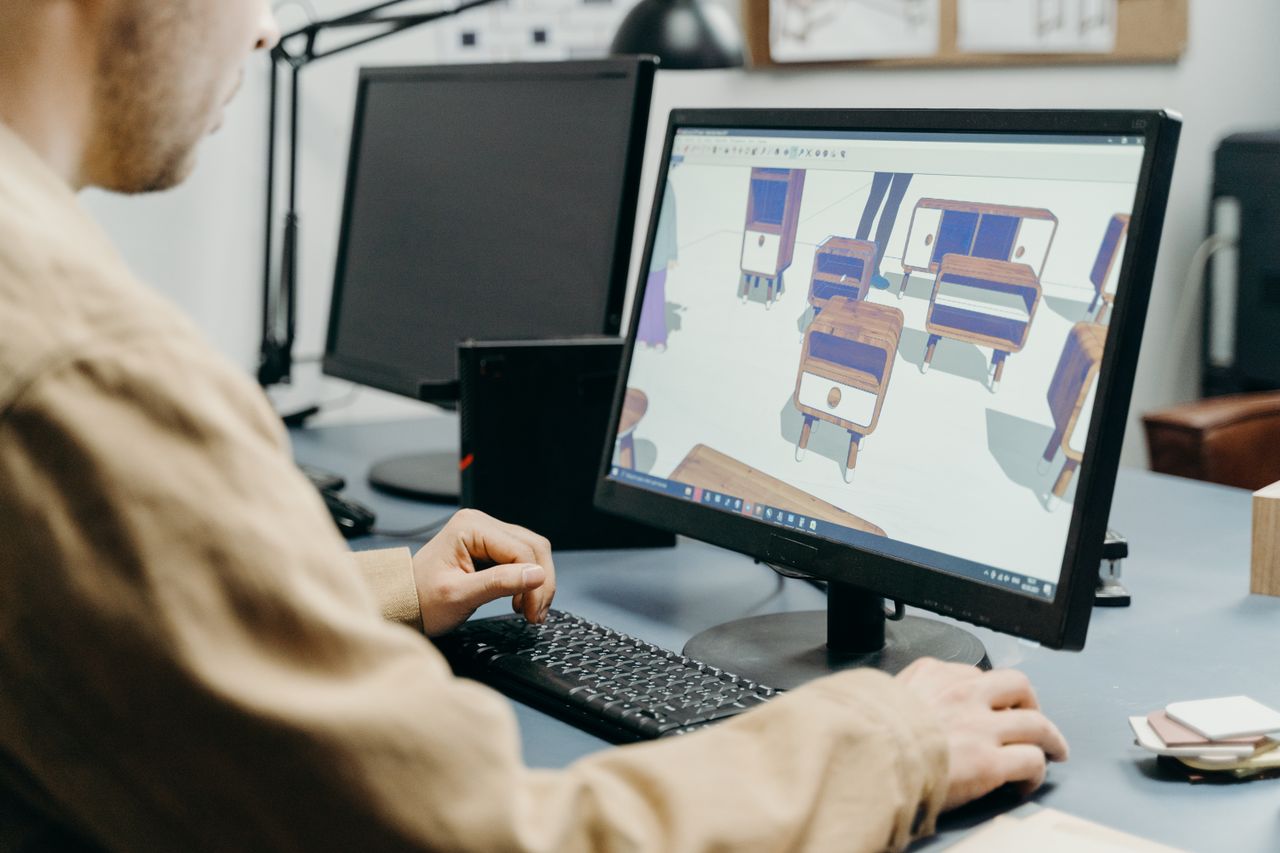
The 3d configurators have largely rewritten this process. Instead of relying on drawings and email chains, manufacturers now let customers or sales teams build a product interactively, selecting dimensions, materials, and features from a live digital model that updates instantly. What once took a back-and-forth of emails can now happen in a single sitting, with the customer able to see, adjust, and finalize a design in real time.
This is particularly valuable in industries where products have a high degree of variability: industrial equipment, packaging, furniture manufacturing, metal fabrication, and building components, to name a few. A single product line might have thousands of possible configurations once you account for size, material, mounting options, and finish. Trying to manage that complexity through static catalogs or manual quoting is slow and prone to error. A configurator handles that complexity behind the scenes, presenting only the choices relevant to what the customer has already selected and ruling out combinations that aren’t manufacturable.
Reducing Errors Before They Reach the Shop Floor
One of the most practical benefits of configurator technology appears after a customer places an order. It extends far beyond the customer experience. 3D Configurators build material compatibility, dimensional limits, and structural constraints directly into the system. These built-in rules reduce ordering errors. They help customers and sales teams avoid ordering products that manufacturers cannot build.
This matters because errors caught early are inexpensive, while errors caught late are not. A dimension mismatch spotted during design takes a few seconds to fix. If manufacturers discover the mismatch after they have already cut, welded, or molded the part, they may have to scrap materials and repeat the work. This increases labor costs and forces customers to wait longer for a corrected order. 3D Configurators validate designs during the design phase instead of later in the process. This approach helps manufacturers avoid mistakes that manual specification processes once made difficult to prevent.
This also changes the role of sales and engineering teams. Rather than spending time double-checking whether a requested configuration is even feasible, staff can focus on higher-value conversations with customers, trusting that the system has already filtered out impossible combinations.
The Role of 3D Visualization in Building Trust
3D Configuration alone solves only half the problem. A customer may select every option correctly. However, they still need to see what they are building. Without a visual preview, a gap can remain between what they expect and what the manufacturer produces. This is where 3d visualization becomes just as important as the configuration logic itself.
Modern visualization tools let customers rotate, zoom, and inspect a rendered model of their exact configuration, often with realistic materials and lighting that closely mirror the finished product. For manufacturers producing industrial or technical products, this level of visual clarity does more than look impressive. It directly reduces miscommunication. A customer specifying a custom enclosure can see exactly where the ventilation slots, mounting brackets, and access panels will sit. This preview helps the customer identify potential issues before production begins instead of after manufacturing starts.
Visualization also plays a growing role in internal manufacturing workflows, not just customer-facing ones. Engineering and production teams use the same 3D models to generate work instructions, verify assembly sequences, and communicate design intent to operators on the shop floor. A single accurate 3D model, once built, can serve multiple purposes: sales tool, design validator, and production reference, all from one source of truth.
This consistency reduces the kind of miscommunication that used to be common when sales teams worked from simplified drawings while engineers worked from more detailed technical specifications. When everyone works from the same visual model, they reduce the risk of miscommunication. Sales teams, engineers, and production staff can carry the same details from the quote through to the shop floor
The 3D Customizer and the Push Toward Mass Personalization
While 3D configurators are often built around a defined set of manufacturable options, some manufacturers are pushing further into open-ended personalization through what’s often called a 3d customizer. Unlike a configurator that walks a customer through a fixed decision tree, a customizer allows for more flexible input: custom text, unique proportions, user-uploaded artwork, or combinations of features that go beyond a predefined menu.
This approach is becoming more common in sectors like consumer packaging, promotional products, and even certain segments of industrial equipment where branding or unique specifications matter. A company ordering custom packaging, for example, might want to upload its own logo and adjust its placement directly on a 3D model of the box or container, seeing exactly how it will look before committing to a print run.
Building a reliable customizer is a more complex engineering challenge than a standard configurator because the system has to account for a wider range of possible inputs while still ensuring the final design remains manufacturable. Businesses usually set these boundaries behind the scenes. They define minimum text sizes for engraving, safe zones for uploaded artwork, and tolerances for custom dimensions. These limits give customers creative freedom. They also prevent customers from designing products that manufacturers cannot produce as specified. When manufacturers get this balance right, the tool feels open and flexible from the customer’s side while still protecting production feasibility on the back end.
Why This Shift Matters for Competitiveness
Beyond the operational benefits, there’s a competitive dimension driving manufacturers toward these tools. Buyers, both consumer and industrial, increasingly compare their purchasing experience across sectors rather than judging it only against direct competitors. Someone accustomed to configuring a car or a pair of sneakers online brings that same expectation to industrial procurement, even when they’re ordering a custom bracket or a piece of factory equipment.
Manufacturers who haven’t adapted to this expectation often find themselves losing deals not because their products are inferior, but because the buying process itself feels slower and more cumbersome than what a competitor offers. A quote that takes two weeks to generate manually is a hard sell against a competitor who can produce an accurate, visualized, and priced configuration in minutes.
There’s also a data dimension worth considering. Every customer configuration generates valuable data, even if it does not lead to a purchase. Businesses can identify demand patterns, see which features customers commonly select together, and track which options they abandon. They can also identify where customers hesitate during the configuration process. This kind of insight can inform product development, help prioritize which variants to keep in stock, and highlight gaps in a current product line that weren’t obvious from sales data alone.
Implementation Isn’t Without Its Challenges
None of this comes for free. Building an accurate configurator or customizer requires detailed 3D modeling of every product variant and the engineering rules that govern how those variants interact. For manufacturers with large, complex product catalogs, this can be a significant upfront investment in both time and technical expertise.
Keeping these systems accurate over time is an ongoing responsibility as well. If a manufacturer changes a supplier, adjusts tolerances, or discontinues a material, the configurator needs to reflect that change immediately, or it risks generating orders for combinations that no longer exist. This requires closer coordination between engineering, procurement, and digital teams than many manufacturers have historically maintained, since these departments haven’t always needed to communicate this frequently in the past.
Performance and usability also matter more than they might initially seem. A configurator must be accurate, fast, and easy to use. Sales teams and customers are unlikely to adopt a system that feels slow, confusing, or difficult to use on a tablet or shop-floor terminal. They need a tool they can rely on every day.
Looking Ahead
As 3D modeling and rendering technology continues to become more accessible, configurators and customizers will likely extend even further into manufacturing workflows, potentially linking directly to production scheduling and automated quoting systems. Some manufacturers are already experimenting with configurations that feed straight into CNC programming or automated cutting instructions, shortening the path from customer decision to physical production even further.
Companies of all sizes now use these tools. Large, well-funded businesses no longer have exclusive access to them. As the underlying technology becomes cheaper and easier to implement, manufacturers of nearly every size are finding that interactive, visual, and personalized design tools aren’t just a nice-to-have for the sales team. They’re becoming a practical requirement for staying competitive in an industry where customers expect clarity, speed, and precision before they ever place an order.