
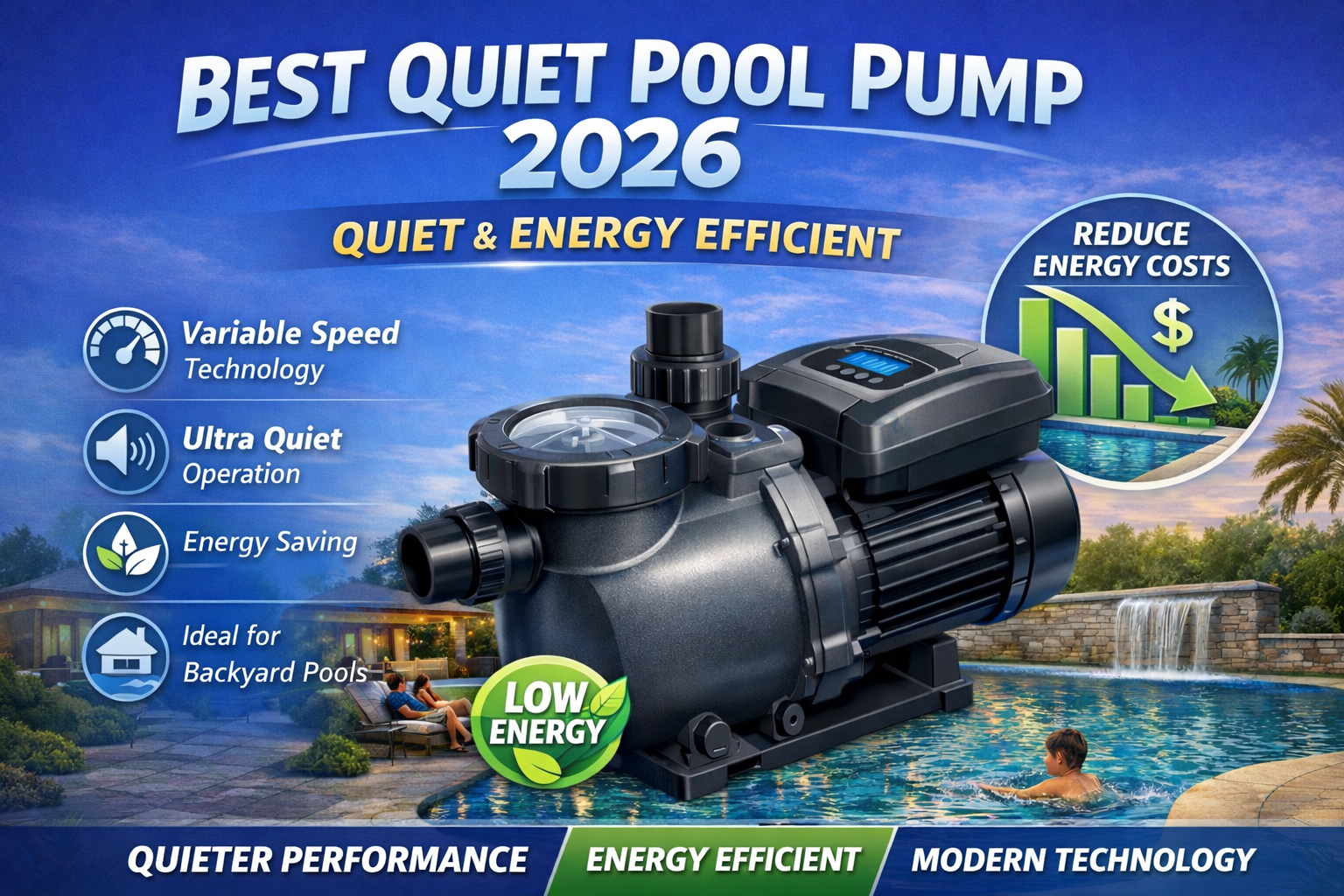
Pool pumps keep water circulating and filtration systems working properly, but older models often produce constant humming or vibration. That noise can easily disrupt the calm atmosphere most people expect from their backyard pool.
Modern pump technology has changed significantly in recent years. Many homeowners are now searching for the best quiet pool pump 2026 to maintain clean water while reducing noise and improving energy efficiency. Newer pumps operate more smoothly, use less electricity, and are designed to support quieter outdoor environments.
Before choosing a new pump, it helps to understand why quiet pool technology has become such an important feature for modern pool systems.
Why Quiet Pool Pumps Are Becoming the Preferred Choice
Traditional single-speed pumps operate at full power every time they run. This constant high-speed operation often produces unnecessary noise and consumes more energy.
Newer pumps rely on quiet variable-speed pool pump technology. Instead of running at one constant speed, these pumps adjust their motor speed depending on the filtration needs of the pool.
Benefits of variable speed technology include:
- Reduced motor noise during daily filtration cycles
- Lower electricity consumption
- Improved circulation and filtration performance
- Longer equipment lifespan due to less motor strain
Running a pump at lower speeds during normal operation dramatically reduces sound levels, creating a quieter pool environment throughout the day.
Features That Make a Pool Pump Quiet
Not all pumps are built the same. Several design features contribute to quieter operation and improved performance.
1. Variable Speed Motor Systems
A variable speed motor allows the pump to run at different RPM levels. Lower speeds produce far less vibration and sound compared to traditional fixed-speed pumps.
2. Inverter Technology
Advanced inverter systems help regulate motor performance. This technology allows the pump to gradually adjust speed instead of switching abruptly between power levels.
3. Durable Internal Components
Well-engineered pumps use high-quality bearings and precision-built motors that reduce friction and vibration during operation.
4. Noise-Reducing Pump Housing
Pump casings designed with sound-absorbing materials help contain operational noise and maintain quieter performance.
These features work together to create the quietest pool pump possible for residential environments.
Benefits of an Energy-Efficient Pool Pump
Noise reduction is only one advantage of upgrading your equipment. Many quiet pumps are also designed to operate with much lower energy consumption.
An energy-efficient pool pump can provide several long-term benefits:
- Lower electricity bills
- Reduced environmental impact
- More consistent water circulation
- Less strain on filtration systems
Variable-speed pumps typically consume far less electricity than single-speed models because they spend most of their operating time running at lower speeds.
For households running filtration systems daily, this improvement in efficiency can significantly reduce overall energy costs.
Quiet Pool Pumps and the Australian Lifestyle
Backyards play an important role in outdoor living across the country. Pools are often located close to patios, entertaining areas, and neighboring properties. Because of this, demand for quiet pool pumps in Australia continues to grow.
A quieter pump provides several practical advantages:
- Less disturbance during early morning or evening filtration cycles
- More comfortable outdoor spaces for relaxation and entertaining
- Reduced noise impact in residential neighborhoods
- Better compatibility with modern energy-efficient homes
As pool technology advances, homeowners increasingly prefer equipment that supports both quiet operation and energy efficiency.
Modern Pool Pump Technology in 2026
Innovations in pump engineering have made it possible to combine quiet operation with strong performance. Many modern pumps use advanced inverter systems and optimized motor designs to improve both efficiency and reliability.
For example, technologies used in systems like the InverFlow Plus demonstrate how modern pump design can deliver efficient water circulation while maintaining lower sound levels. These types of systems highlight how pool equipment continues to evolve with improved energy performance and quieter operation.
Final Thoughts
Many pool pumps promise quiet operation but struggle to maintain efficiency and consistent performance. Modern variable speed technology is changing that by delivering smoother circulation, lower noise levels, and better energy use.
Solutions like the InverFlow Plus reflect this shift in pool equipment design, combining quiet operation with reliable performance. For homeowners researching the best quiet pool pump 2026, exploring newer pump technologies can help create a more efficient and peaceful pool environment.
At Madimack, innovation in pool technology focuses on creating equipment that balances performance, efficiency, and quieter operation. The brand continues to develop advanced systems built around inverter-driven motors and energy-conscious engineering, helping modern pool equipment operate more smoothly while reducing electricity consumption.
FAQs
1. What is the quietest type of pool pump?
Variable speed pool pumps are usually the quietest option available today. A quiet variable-speed pool pump adjusts its motor speed depending on the pool’s filtration needs. Because the motor can run at lower speeds for most daily tasks, it produces much less noise compared to traditional single-speed pumps.
2. How loud is a typical pool pump?
Older single-speed pool pumps can generate noise levels between 70 and 90 decibels, which is similar to the sound of a household vacuum cleaner. Newer pumps designed for quiet operation often run at significantly lower levels, typically around 40 to 50 decibels, depending on the model and installation setup.
3. Are variable-speed pool pumps more energy efficient?
Yes, variable speed pumps are widely considered an energy-efficient pool pump option. They use adjustable motor speeds to circulate water efficiently, allowing the pump to run at lower power levels for most of the day. This reduces electricity consumption and can lower overall operating costs.
4. Are quiet pool pumps suitable for Australian homes?
Quiet pool pumps are well-suited for residential properties across Australia. Many homes have outdoor entertaining areas located close to pool equipment, so reducing noise can make the space more comfortable. Choosing quiet pool pumps Australia homeowners rely on can help maintain a peaceful backyard environment.
5. What should I consider when choosing the quietest pool pump?
When selecting the quietest pool pump, it is important to consider factors such as motor technology, energy efficiency, pump size, and overall build quality. Pumps with variable speed motors and advanced inverter technology typically provide quieter operation and improved energy performance.