
The idea of the best audiophile bluetooth speakers once seemed contradictory. Audiophile listening was traditionally rooted in wired systems large speakers, dedicated amplifiers, and carefully treated listening environments. Bluetooth, by contrast, was designed for convenience, not fidelity.
But that gap has been steadily closing.
Advances in wireless transmission, driver engineering, acoustic design, and power efficiency have transformed what Bluetooth speakers are capable of. Today, some wireless systems can deliver a listening experience that approaches and in certain conditions rivals traditional hi-fi setups.
Still, not every premium speaker qualifies as “audiophile.” Many products emphasize loudness, boosted bass, or exaggerated clarity. True audiophile performance is something different: it is about accuracy, balance, resolution, and realism.
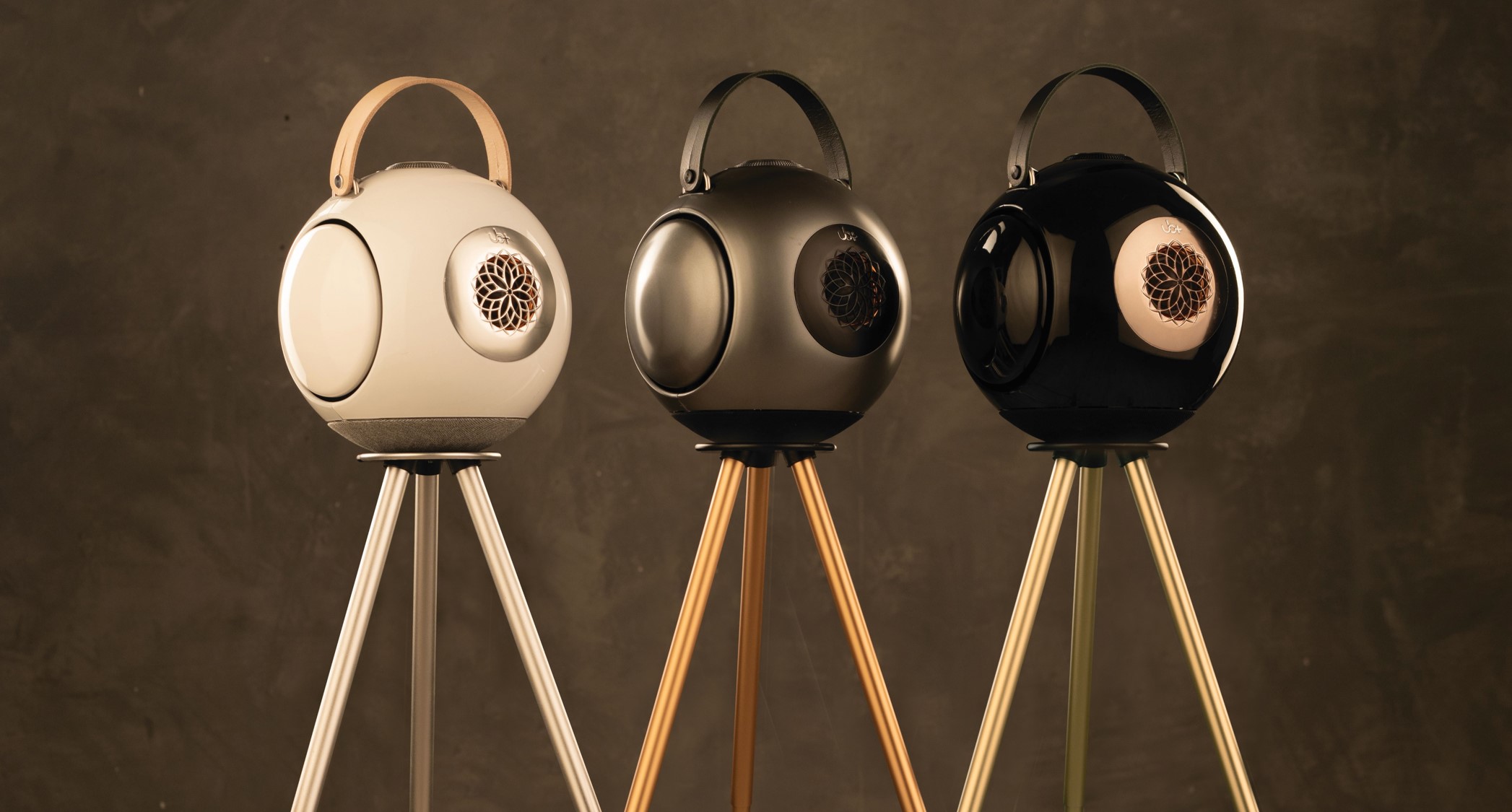
This article explores what defines the best audiophile bluetooth speakers, explains the engineering principles behind high-fidelity wireless audio, and examines how advanced systems like the UB+ dB1 DOUBLEBASS achieve superior results through physics-driven acoustic design rather than digital manipulation.
What “Audiophile” Really Means in a Wireless Context
To understand the best audiophile bluetooth speakers, we need to clarify what “audiophile” actually represents.
Audiophile sound is not about impressiveness it is about truthfulness. The goal is to reproduce music exactly as it was recorded, without adding or subtracting anything.
This means:
- No artificial bass boost
- No exaggerated treble
- No compression that alters dynamics
- No coloration that changes tonal balance
Instead, audiophile speakers aim for:
- Neutral frequency response
- High resolution and detail retrieval
- Precise imaging and spatial accuracy
- Low distortion across all volumes
- Faithful dynamic range reproduction
In essence, an audiophile speaker disappears, allowing the music itself to take center stage.
The Core Challenges of Wireless Audiophile Sound
Creating audiophile-grade sound in a Bluetooth speaker involves overcoming several technical challenges.
Wireless Transmission and Signal Integrity
Bluetooth audio relies on compression to transmit data wirelessly. Even with advanced codecs, there is always some level of data reduction.
For a speaker to qualify as audiophile-grade, it must:
- Preserve as much detail as possible
- Minimize artifacts from compression
- Maintain timing accuracy
- Avoid introducing additional distortion
This requires precise tuning and high-quality internal processing.
Compact Form Factor vs Full-Range Sound
Audiophile systems typically use multiple drivers and large enclosures to cover the full frequency spectrum.
Wireless speakers must achieve similar results in a much smaller form. This creates challenges in:
- Producing deep bass
- Maintaining midrange clarity
- Delivering extended treble
The solution lies in efficient acoustic design rather than brute force.
Power and Energy Constraints
High-fidelity sound requires precise and often energy-intensive driver movement. In a battery-powered system, this must be balanced with efficiency.
A well-designed audiophile Bluetooth speaker manages:
- Energy distribution across frequencies
- Driver efficiency
- Thermal stability
- Consistent performance over time
Acoustic Environment Limitations
Unlike dedicated listening rooms, wireless speakers are used in varied environments desks, living rooms, outdoor spaces.
This means the speaker must maintain consistent performance across different acoustic conditions.
The Foundations of Audiophile Speaker Engineering
To achieve true high-fidelity sound, several key engineering principles must be followed.
Driver Accuracy and Control
The driver is the core component of any speaker. Its job is to convert electrical signals into sound waves.
In audiophile systems, the driver must:
- Move with precision and consistency
- Respond quickly to signal changes
- Maintain linear behavior across frequencies
- Minimize distortion
Advanced drivers use high-quality materials and engineering techniques to achieve these goals.
Frequency Balance and Tonal Neutrality
Audiophile speakers must reproduce sound evenly across the frequency spectrum.
Bass should be deep but controlled. Midrange should be natural and clear. Treble should be detailed without harshness.
This balance ensures that no part of the music is overshadowed.
Enclosure Design and Acoustic Integrity
The enclosure is not just a housing—it is a critical part of the acoustic system.
Poor enclosure design can introduce:
- Resonance distortion
- Standing waves
- Energy loss
- Frequency imbalance
High-end systems use advanced geometries to eliminate these issues and improve sound quality.
Dynamic Range and Transient Response
Dynamic range refers to the difference between the quietest and loudest sounds.
Transient response refers to how quickly a speaker reacts to sudden changes, such as drum hits.
Audiophile speakers must excel in both areas to deliver a realistic listening experience.
Why Most Bluetooth Speakers Are Not Audiophile
Many Bluetooth speakers are designed for mass-market appeal rather than accuracy.
They often include:
- Boosted bass for immediate impact
- Enhanced treble for perceived clarity
- DSP tuning that alters the original signal
While these features can make sound more exciting, they compromise fidelity.
Additionally, conventional designs often rely on:
- Rectangular enclosures that introduce acoustic interference
- Outward-firing drivers that do not optimize pressure usage
- Limited driver excursion due to size constraints
These factors prevent them from achieving true audiophile performance.
A New Approach: Physics-Driven Acoustic Design
The best audiophile bluetooth speakers take a different approach. Instead of relying on digital enhancement, they focus on physical acoustic principles.
The UB+ dB1 DOUBLEBASS system is an example of this philosophy.
It emphasizes:
- Mechanical precision
- Controlled air movement
- Balanced pressure distribution
- Structural stability
This results in sound that is more natural, detailed, and accurate.
Spherical Enclosure: Eliminating Acoustic Interference
One of the most significant innovations in advanced speaker design is the use of a spherical enclosure.
Unlike rectangular shapes, a sphere has no parallel surfaces. This eliminates standing waves and allows sound to propagate evenly.
The benefits include:
- Reduced resonance distortion
- Improved tonal accuracy
- More consistent frequency response
- Enhanced spatial coherence
The enclosure becomes an active part of the acoustic system.
Helmholtz-Inspired Acoustic Chamber
The system also uses a Helmholtz-inspired resonant design.
This approach leverages the natural oscillation of air within the enclosure to enhance low frequencies.
This provides:
- Deeper bass without artificial boosting
- Improved efficiency
- Natural tonal balance
- Reduced reliance on DSP
It aligns with audiophile principles by preserving the integrity of the original signal.
Inward-Firing Driver Architecture
Unlike traditional outward-firing designs, this system uses an inward-firing driver.
This directs energy into the enclosure, allowing sound to be shaped by internal pressure before being released.
This results in:
- Greater precision in bass reproduction
- Improved coherence across frequencies
- Reduced distortion
- Enhanced overall clarity
Advanced Driver Engineering
The system incorporates high-performance components:
- A 90mm neodymium magnet for strong control
- A 35mm long-stroke voice coil for extended movement
- A 20mm piston excursion capability for significant air displacement
- An aluminum shorting ring to reduce distortion
- A wide surround for stability
These features enable accurate sound reproduction across the spectrum.
Dual Symmetrical Passive Radiators
Passive radiators extend bass performance without increasing enclosure size.
In this system, two radiators are placed symmetrically on opposite sides.
This configuration provides:
- Balanced mechanical forces
- Reduced vibration
- Improved low-frequency extension
- Greater efficiency
Mechanical Amplification and Efficiency
The system uses mechanical amplification to enhance output.
The combined surface area of the passive radiators is significantly larger than the main driver, allowing more air to be moved with less effort.
This results in:
- Deeper bass
- Lower distortion
- Improved efficiency
- More natural sound
Comparative Analysis
| Feature | UB+ dB1 DOUBLEBASS | JBL | Bose | Marshall |
| Sound Philosophy | Audiophile-focused | Consumer-tuned | Consumer-tuned | Lifestyle-tuned |
| Enclosure Design | Spherical | Rectangular | Rectangular | Rectangular |
| Driver Orientation | Inward | Outward | Outward | Outward |
| Bass Approach | Mechanical + resonance | DSP-enhanced | DSP-enhanced | DSP-enhanced |
| Tonal Balance | Neutral | Bass-boosted | Warm | Colored |
| Distortion Control | High | Moderate | Moderate | Moderate |
Real-World Listening Experience
In real listening conditions, audiophile Bluetooth speakers reveal their strengths.
In quiet environments, they uncover subtle details breath in vocals, texture in instruments, spatial cues in recordings.
In complex tracks, they maintain separation between elements, preventing congestion.
At higher volumes, they preserve clarity and balance, avoiding distortion.
The result is a listening experience that feels natural, immersive, and emotionally engaging.
Defining the Best Audiophile Bluetooth Speakers
The best audiophile bluetooth speakers are defined by their ability to reproduce sound accurately and consistently.
They prioritize:
- Accuracy over exaggeration
- Balance over impact
- Detail over loudness
- Consistency over novelty
They allow listeners to experience music as it was intended.
The Future of Audiophile Wireless Audio
The future of wireless audio is focused on closing the gap between convenience and fidelity.
Key trends include:
- Higher-quality wireless codecs
- Advanced driver materials
- Innovative enclosure designs
- Reduced reliance on DSP
- Greater emphasis on acoustic engineering
As these trends continue, wireless speakers will become an increasingly viable option for audiophile listening.
Conclusion
The search for the best audiophile bluetooth speakers is not about finding the loudest or most feature-packed device. It is about finding a system that respects the integrity of sound.
True audiophile performance requires precision, balance, and a deep understanding of acoustic principles.
The UB+ dB1 DOUBLEBASS demonstrates how these principles can be applied in a wireless format. Through its spherical enclosure, inward-firing driver, dual symmetrical passive radiators, and Helmholtz-inspired resonance, it delivers a listening experience that aligns with audiophile expectations.
In a world where convenience often compromises quality, it proves that wireless audio can still achieve true high fidelity when guided by physics rather than shortcuts.