
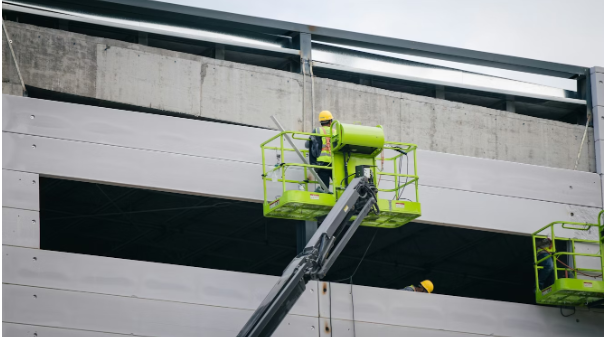
Buying an aerial work platform is an important investment for any company that needs safe, efficient, and reliable access to elevated working areas. Whether your business operates in construction, industrial maintenance, logistics, warehouse management, facility services, installation, or manufacturing, choosing the right aerial platform can directly improve productivity and workplace safety. However, the buying process should not be based only on price or lifting height. A well-informed decision requires understanding your work environment, operational needs, safety expectations, equipment type, service support, and long-term cost.
Aerial work platforms are available in different models, each designed for specific working conditions. Scissor lifts, articulating boom lifts, vertical mast lifts, tracked platforms, and diesel-powered models all serve different purposes. For this reason, before purchasing, companies should clearly define what type of height access they need and which platform will provide the safest and most efficient solution. If you are currently comparing different options, exploring aerial work platforms for sale can help you understand available models and their practical advantages.
Understanding Your Real Working Conditions
Before choosing an aerial work platform, the first step is to analyze where and how the machine will be used. Many buyers start by asking, “How high can this platform go?” While working height is important, it is only one part of the decision. You should also consider ground conditions, available space, indoor or outdoor usage, required outreach, platform capacity, maneuverability, and frequency of operation.
For example, a warehouse with narrow aisles and smooth concrete floors requires a different machine than an outdoor construction site with rough terrain. Similarly, a maintenance team working inside a factory may need a compact electric platform, while a company working on building facades may require a boom lift with horizontal reach. Understanding your real working environment helps prevent choosing a machine that looks suitable on paper but fails to perform efficiently on site.
Choosing the Right Type of Aerial Work Platform
One of the most important things to know before buying is that not all aerial work platforms are designed for the same job. Each type offers a different advantage.
Scissor lifts are ideal for vertical lifting tasks where operators need a stable platform and enough space to work with tools or materials. They are commonly used in warehouses, factories, installation projects, and maintenance operations.
Articulating boom lifts are useful when operators need to reach over obstacles or access difficult areas. Their flexible arm structure makes them suitable for complex working environments where straight vertical access is not enough.
Vertical mast lifts are compact and practical for indoor maintenance, electrical work, retail facilities, and narrow spaces. They are often preferred when maneuverability and space-saving design are important.
Tracked lifts and tracked scissor lifts can be useful on more sensitive or uneven surfaces, depending on the job site. Their structure may offer better ground adaptation in specific applications.
Diesel scissor lifts are generally preferred for outdoor, heavy-duty, and demanding working conditions where power and durability are critical.
Choosing the right model is not only about technical preference; it is about matching the machine to the task. A platform that is perfect for one business may be inefficient or unnecessary for another.
Working Height and Outreach Requirements
Working height should always be calculated carefully before purchasing. Businesses sometimes choose a platform based on maximum height without considering the actual working area. This can lead to either underperformance or unnecessary cost.
If your team only needs vertical access, a scissor lift may be the right solution. However, if the work area requires reaching over machinery, structures, obstacles, or restricted zones, horizontal outreach becomes just as important as height. In this case, an articulating boom lift may provide better access and flexibility.
The safest approach is to list all typical working points in your facility or project area. Include ceiling heights, shelving systems, roof edges, production lines, facade zones, lighting areas, and maintenance points. This allows you to select a platform that fits your real operation instead of relying only on general specifications.
Platform Capacity and Operator Needs
Another critical point is load capacity. An aerial work platform must safely carry operators, tools, equipment, and any materials required during the job. Choosing a machine with insufficient capacity can reduce efficiency and create safety risks.
Platform size also matters. Some tasks require enough space for two operators, toolboxes, installation materials, or service equipment. Other tasks may require a compact platform that can move easily in narrow areas. Before buying, consider how many people will usually work on the platform and what they will carry with them.
A good purchasing decision balances capacity, platform dimensions, and maneuverability. Larger platforms offer more working comfort, but compact models may be more efficient in restricted spaces.
Indoor, Outdoor, or Mixed Use
The working environment has a major effect on the correct machine selection. Indoor platforms usually need to be quiet, emission-free, compact, and suitable for smooth floors. Electric models are often preferred for these conditions because they are cleaner and easier to use in enclosed areas.
Outdoor platforms need stronger structures, better stability, weather resistance, and suitable driving performance. If the platform will be used on rough terrain, sloped surfaces, or construction sites, the machine must be selected accordingly.
Some companies need a platform for both indoor and outdoor operations. In such cases, it is important to choose a versatile model that can handle different environments without compromising safety or performance. If your company needs different lifting solutions for multiple applications, reviewing Platfon aerial work platform solutions can help you compare model categories more effectively.
Safety Systems and Compliance
Safety is one of the most important factors in aerial work platform selection. Since these machines are used at height, reliable safety systems are essential. Buyers should look for features such as emergency stop buttons, emergency lowering systems, overload protection, tilt protection, guardrails, stable platform design, warning systems, and precise control mechanisms.
Compliance with recognized quality and safety standards is also important. Aerial work platforms should be designed and manufactured with strong attention to operator safety, structural stability, and long-term reliability. Investing in a cheaper but low-quality platform can create risks that may cost much more than the initial price difference.
For businesses, safety is not only a legal or technical requirement. It directly affects operator confidence, work speed, accident prevention, and operational continuity.
Manufacturer Reliability and After-Sales Support
Before buying an aerial work platform, you should evaluate the manufacturer or supplier as carefully as the machine itself. A reliable machine becomes much more valuable when it is supported by strong technical service, spare parts availability, maintenance guidance, and professional after-sales support.
Ask these questions before making a purchase: Does the supplier provide technical support? Are spare parts easily available? Is there warranty coverage? Can the company guide you in choosing the right model? Is service support available when the machine needs inspection or repair?
Aerial work platforms are long-term business assets. Over time, every machine may need maintenance, spare parts, or technical assistance. Working with a professional manufacturer reduces downtime and helps keep your operations running smoothly.
Total Cost of Ownership
Price matters, but the lowest purchase price is not always the best option. The real cost of an aerial work platform includes maintenance, spare parts, energy or fuel consumption, service needs, downtime, operator efficiency, and expected lifespan.
A higher-quality platform may provide better value in the long term by reducing failures, improving safety, and increasing daily productivity. On the other hand, a low-cost machine with poor support can lead to frequent interruptions and additional expenses.
When comparing models, focus on total cost of ownership instead of only the initial price. A durable, efficient, and well-supported aerial platform can become a more profitable investment over time.
Before buying an aerial work platform, companies should carefully evaluate their working conditions, height requirements, platform type, load capacity, indoor or outdoor usage, safety systems, manufacturer reliability, and long-term operating costs. The right machine should not only reach the required height but also make daily operations safer, faster, and more efficient.
Aerial work platforms play a vital role in modern industrial and commercial operations. When selected correctly, they help businesses reduce manual effort, improve workplace safety, and complete elevated tasks with greater precision. For companies looking for dependable height access equipment, choosing the right manufacturer and the right platform model is the foundation of a successful investment.
If your business is planning to invest in professional lifting equipment, reviewing aerial work platforms for sale from Platfon is a strong starting point for comparing solutions that match different operational needs.