
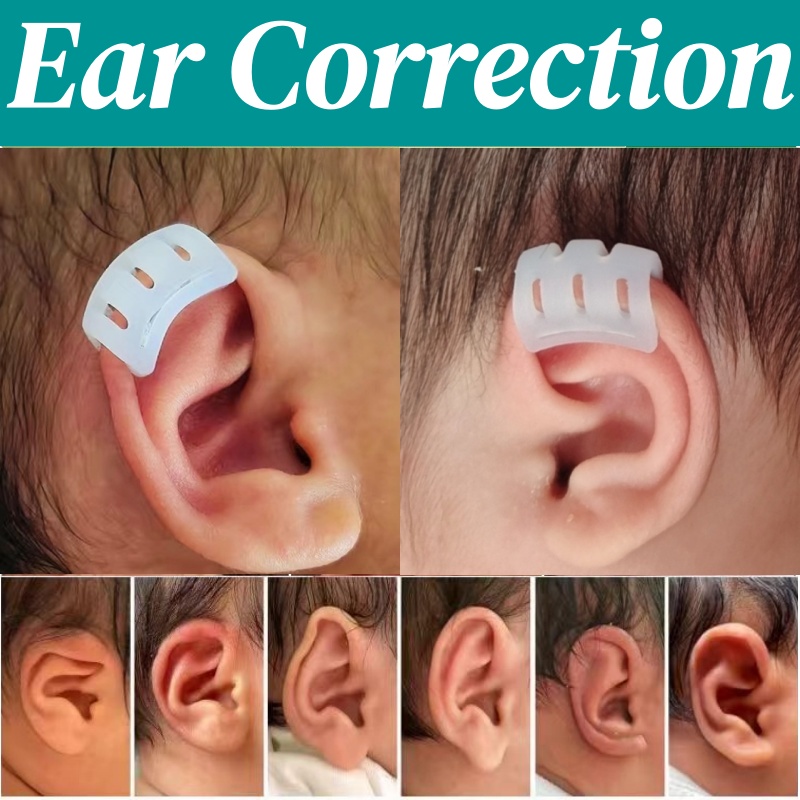
Abstract: Congenital auricular deformities affect approximately 30% of newborns globally. While some deformities were traditionally left to “self-correct,” clinical data now confirms that early intervention is the only way to ensure permanent results without invasive surgery. This article explores the biological “Golden Window” for using a newborn ear corrector and why the BabyEarFix system is most effective when initiated within the first days of life.
1. The Biological Clock: Why “Earlier is Better”
The most critical factor in successful ear molding is not the severity of the deformity, but the age of the infant. To understand why, we must look at neonatal endocrinology.
Immediately after birth, a newborn’s bloodstream contains high levels of maternal estrogen. This hormone directly influences the concentration of hyaluronic acid in the ear cartilage. Hyaluronic acid acts as a biological plasticizer, making the cartilage exceptionally malleable—almost like warm wax. As the days pass, estrogen levels drop, hyaluronic acid decreases, and the cartilage begins to “set” or harden into its permanent shape.
2. The “Golden Window”: 72 Hours to 6 Weeks
Clinical research and the BabyEarFix protocol identify the first 72 hours to 6 weeks as the “Golden Window” for a newborn ear corrector.
The 72-Hour Peak (The Platinum Window)
Starting treatment within the first 3 days of life yields the highest success rate (over 95%). At this stage, the cartilage offers zero resistance. A newborn ear corrector can often achieve full, permanent results in as little as 2 weeks.
The 2 to 6-Week Phase
During this period, the cartilage is still moldable, but the “setting” process has begun. Treatment started here typically requires 4 to 6 weeks of continuous wear to ensure the ear doesn’t “rebound” to its original shape.
Beyond 6 Weeks (The Setting Point)
Once an infant reaches 6 to 8 weeks, the maternal estrogen is largely metabolized. The cartilage becomes more elastic and rigid. While a newborn ear corrector can still work up to 3 months of age, the process is slower, requires more frequent adjustments, and the success rate begins to decline.
3. Comparing the Timeline: Efficacy vs. Age
The following table illustrates the relationship between age and the performance of the BabyEarFix system:
| Age at Start | Cartilage State | Treatment Duration | Success Rate |
|---|---|---|---|
| 0–1 Week | Peak Malleability | 2 Weeks | >98% |
| 1–4 Weeks | High Malleability | 3–4 Weeks | 95% |
| 4–8 Weeks | Moderate | 4–6 Weeks | 80% |
| 2–3 Months | Setting/Rigid | 6–8 Weeks | 50–60% |
| 6 Months+ | Rigid | Surgical Intervention | N/A |
4. Why “Wait and See” is Outdated Advice
Historically, parents were told that minor deformities like Stahl’s Ear, Protruding Ears, or Lidding would “correct themselves.” However, longitudinal studies show that only about 30% of minor deformities improve on their own, while the rest either remain the same or worsen as the ear grows.
By the time a child is old enough for surgical otoplasty (usually 5 or 6 years old), they may have already experienced psychological distress or bullying. Using a newborn ear corrector like BabyEarFix eliminates the need for future general anesthesia, surgical scars, and the associated high medical costs.
5. Deformities Targeted by BabyEarFix
The BabyEarFix system is a modular newborn ear corrector designed to address a variety of anatomical issues:
- Stahl’s Ear (Spock Ear): Flattening the abnormal third crus.
- Protruding Ears: Creating a natural antihelical fold to bring the ear closer to the head.
- Cryptotia (Hidden Ear): Pulling the ear out from under the scalp skin.
- Constricted/Cup Ear: Expanding the tight superior rim of the ear.
6. FAQ: Common Parental Concerns
Q: Is it too late if my baby is already 10 weeks old?
A: It is not necessarily too late, but it is the “last call.” At 10 weeks, the BabyEarFix system can still provide improvement, but the results may be partial rather than perfect. Early intervention remains the clinical gold standard.
Q: Does using a newborn ear corrector hurt the baby?
A: No. Because we utilize the high malleability of the early weeks, the pressure required is extremely gentle. Most infants sleep and feed normally throughout the treatment.
Q: How do I know if the correction is permanent?
A: Once the cartilage hardens (usually by the end of the treatment period), the ear will retain its new shape. The BabyEarFix mold ensures the ear “sets” in a correct anatomical position.
7. Conclusion: Seizing the Opportunity
The window of opportunity for non-surgical ear correction is brief. The “best age” to start is immediately after birth. By utilizing the BabyEarFix system within the first weeks of life, parents can provide their child with a permanent, non-invasive solution that lasts a lifetime.
Don’t wait for the cartilage to harden. Start the BabyEarFix journey during the Golden Window to ensure a beautiful, natural result for your newborn.