
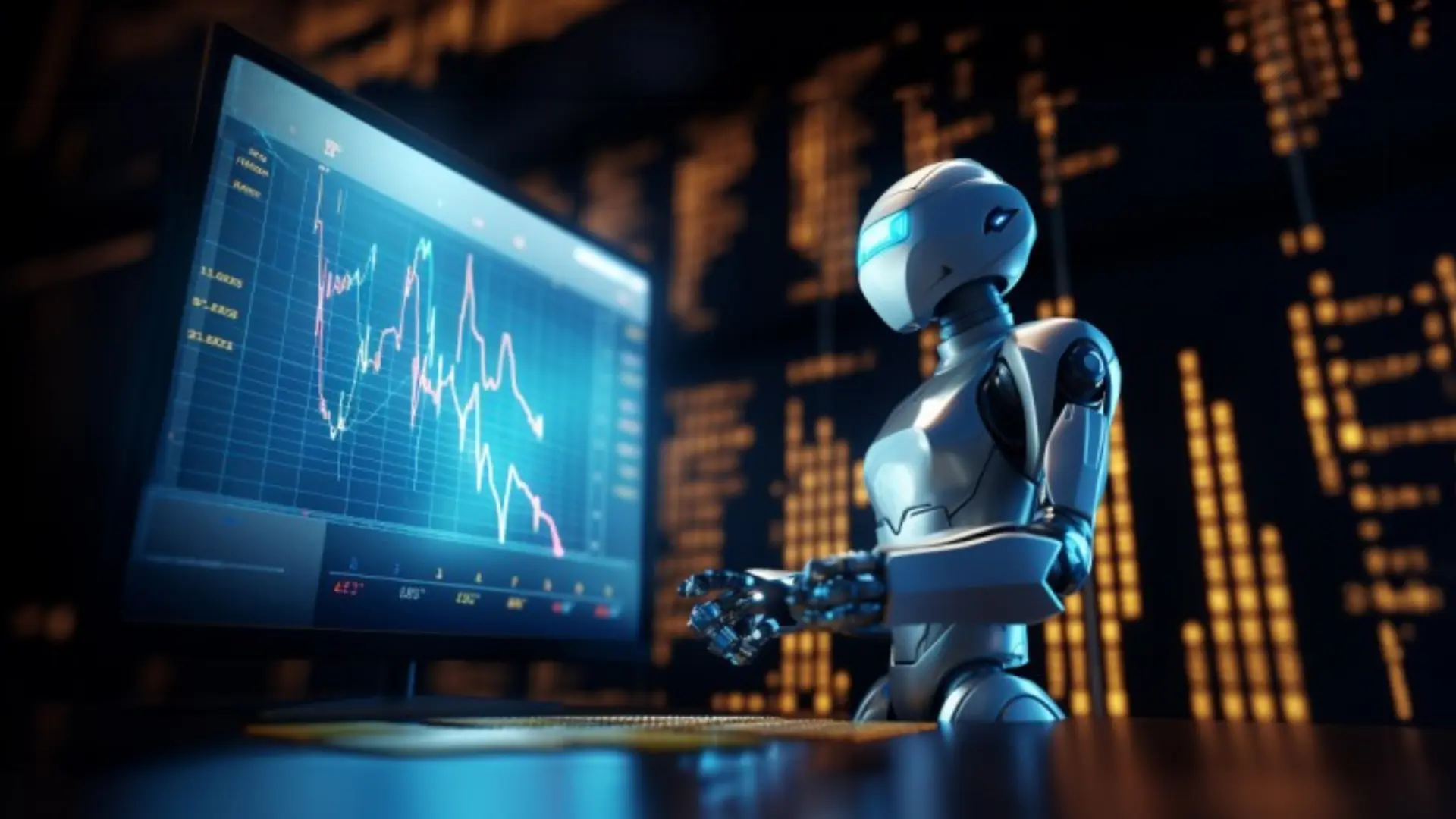
There’s a moment in trading that most people don’t talk about.
It’s not when you make a profit.
It’s not even when you take a loss.
It’s the moment right before you act.
You’re looking at the chart. Everything seems clear. The setup makes sense. But something holds you back. A second later, the market moves exactly where you expected.
And you’re left thinking:
“Why didn’t I just take the trade?”
Other times, it’s the opposite. You enter with confidence, only to close too early, or hold too long, or change your decision halfway through.
That quiet inconsistency, those small decisions, is where most traders lose.
Not because they don’t understand the market.
But because they can’t execute consistently.
And that’s the exact gap AI trading is trying to fill.
Trading Was Never the Problem. Decision-Making Is.
If you strip trading down to its fundamentals, it’s not complicated. You are simply making decisions under uncertainty, based on probability.
But the moment real money is involved, something changes.
Fear begins to influence exits.
Greed starts stretching targets.
Losses quietly affect the next decision. Over time, even a good strategy becomes unstable, not because it stopped working, but because execution became inconsistent.
This is why so many traders struggle, even after learning the basics.
Consistency is not a knowledge problem.
It’s a human limitation.
So What Is AI Trading, Really?
AI trading isn’t about replacing humans with machines.
It’s about removing the most unreliable part of trading: emotional interference.
At its core, AI trading is a system designed to observe the market, identify opportunities, and act on them based on logic rather than feeling.
It doesn’t hesitate.
It doesn’t second-guess.
It doesn’t deviate from its rules.
It simply executes.
And that changes the entire dynamic of trading.
Why This Shift Matters More Than It Seems
Most people approach trading with the idea that success comes from finding the perfect strategy.
In reality, the strategy is only part of the equation.
The real difference between profitable and unprofitable traders is consistency.
A trader might follow a plan perfectly for a few days. Then one loss leads to hesitation. One win leads to overconfidence. Slowly, the system breaks.
AI doesn’t experience that.
It doesn’t get frustrated after losses or aggressive after wins. It doesn’t wake up one day and decide to try something different.
It does the same thing, the same way, every time.
And in trading, that level of consistency is rare.
But Let’s Stay Grounded; AI Isn’t a Shortcut
It’s important to be clear about something.
AI trading platform do not remove risk.
Markets are still unpredictable. Losses still happen. There will always be periods where performance slows down or strategies face pressure.
The difference is not in eliminating uncertainty.
It’s in handling that uncertainty with discipline.
AI systems are built to manage risk through structured rules, not emotional reactions. And that distinction is what makes them more stable over time.
What’s Actually Happening Behind the System
You don’t need to understand complex models to grasp the idea.
Think of AI trading as a collection of structured approaches working together.
Some parts of the system are designed to take advantage of small, frequent movements in the market. Others focus on identifying moments when prices behave unusually. Some respond to strong directional trends, while others operate in more balanced, sideways conditions.
Instead of relying on a single way to make money, the system adapts depending on what the market is doing.
This is not a new concept. It’s how professional trading desks and hedge funds have operated for years.
The difference now is accessibility.
Where Most Platforms Lose Trust
There’s a growing number of platforms that claim to use AI.
But many of them operate like a black box.
You deposit funds. You see results. But you don’t really understand what’s happening in between.
And over time, that lack of clarity creates doubt.
In financial systems, transparency isn’t optional. It’s essential.
Because without visibility, trust becomes fragile.
How AlgoFi Approaches This Differently
AlgoFi is built with a different philosophy.
Instead of relying on a single strategy or a hidden process, it uses multiple structured approaches working together, each designed to perform under different market conditions.
The goal is not to chase quick profits, but to create a system that can operate consistently across changing environments.
Some parts of the system focus on capturing small, repeatable opportunities. Others are designed to respond to larger market movements. Together, they create a more balanced approach.
You don’t need to understand every layer to benefit from it.
But you should be able to see that it’s structured.
And if you want to understand that structure in more detail, you can explore it here:
How AlgoFi Works: Complete System Breakdown
A Shift That’s Already Happening
Most people still think of trading as something manual: charts, indicators, decisions made in real time.
But behind the scenes, the market has already evolved.
Institutional players rely heavily on automation, data, and algorithmic execution. The edge is no longer just knowledge, it’s execution quality.
AI trading is not something new being introduced.
It’s something that’s been used for years, now becoming accessible at a broader level.
Final Thought
- At its core, trading is not about predicting the future.
- It’s about making better decisions, more consistently, over time.
- And that’s where most people struggle.
- AI doesn’t eliminate uncertainty.
But it removes inconsistency. - And in a space where inconsistency is the main reason people fail, that alone is powerful.
If You Want to See It in Practice
Understanding something conceptually is one thing. Seeing it operate is different.
If you want to explore how a structured system behaves under real market conditions, AlgoFi lets you observe, analyze, and understand how decisions are made without emotional interference.
Start small. Pay attention. Let the system speak through its behavior.
