

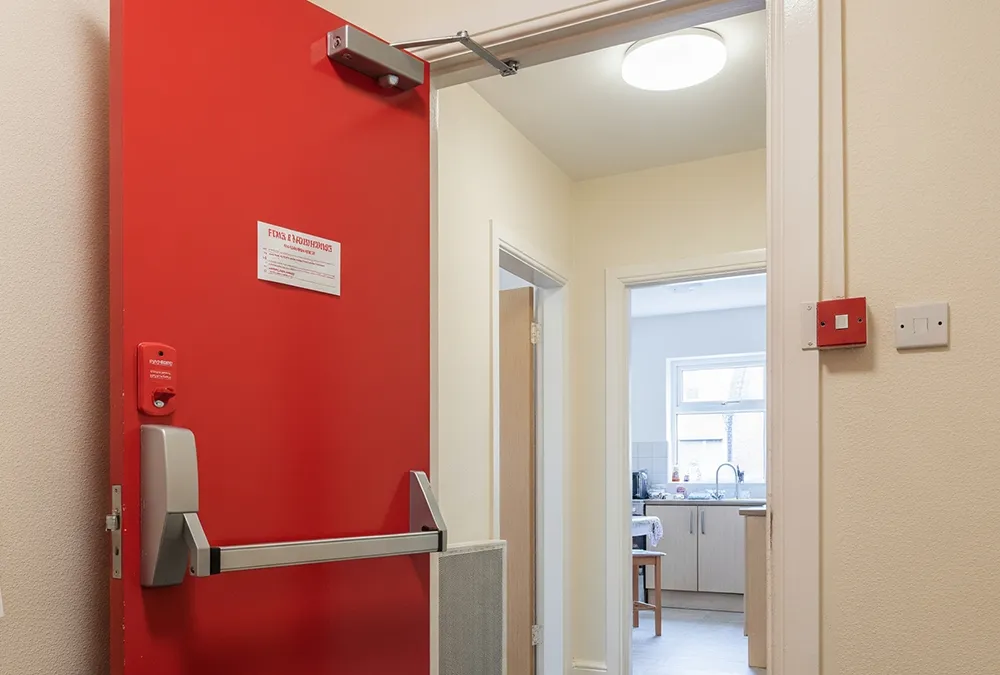
In the world of property management, especially for Houses in Multiple Occupation (HMOs), fire safety isn’t just a recommendation, it’s a legal obligation. One of the most crucial elements of this framework is the HMO fire door. These specialised doors play a vital role in containing fire and protecting lives, yet many landlords and letting agents still get the details wrong.
This guide breaks down everything you need to know about HMO fire doors, including what they are, why they matter, legal requirements, installation best practices, and how to maintain compliance year-after-year.
What Are HMO Fire Doors?
HMO Fire Doors are fire-resistant doors installed in properties occupied by multiple tenants. Their goal is simple but critical: to prevent the spread of fire and smoke between rooms and along escape routes long enough for people to evacuate safely.
HMO fire doors are not ordinary doors. They are constructed from specific fire-resistant materials and fitted with fire-rated hardware designed to withstand fire for a set period, usually 30 or 60 minutes, depending on the building’s use and local regulations.
Why Fire Doors Are Essential in HMOs
1. Life-Saving Protection
Fire doors slow the spread of fire, giving occupants more time to escape. In an HMO where residents may be asleep, cooking, or unaware of a fire hazard, this delay can be the difference between life and death.
2. Legal Compliance
Regulations require HMOs to meet strict fire safety standards. Failure to do so can lead to fines, enforcement action, or even property closure.
For a detailed look at legal requirements and standards for HMO fire doors, check out this resource: HMO Fire Door Regulations.
3. Insurance Requirements
Most building and liability insurance policies require compliance with fire safety standards, including properly installed fire doors. Non-compliance can invalidate your insurance.
Legal Requirements for HMO Fire Doors
HMO fire door standards are governed by the Regulatory Reform (Fire Safety) Order 2005 and local housing authority guidance. Key points include:
Fire Resistance Rating
Fire doors in HMOs must meet a minimum fire resistance rating: typically 30 minutes (FD30) for doors leading to communal escape routes, and up to 60 minutes (FD60) in certain buildings.
Self-Closing Mechanism
Every fire door must be fitted with an automatic closing device. Leaving fire doors open defeats their purpose.
Intumescent Seals & Smoke Seals
These seals expand in heat to block gaps around the door, preventing smoke and fire from passing through.
Certification & Identification
Approved fire doors carry labels or stamps showing their fire rating. These must remain visible and legible.
Where Fire Doors Must Be Installed in HMOs
Fire doors in HMOs must be installed in all critical areas where they can protect escape routes and slow the spread of fire. Any door leading from a bedroom into a corridor or communal space should be fire-rated, as bedrooms open directly onto escape routes. Fire doors are also essential between kitchens and escape routes because kitchens present a higher fire risk and need to be properly compartmentalised. In addition, communal hallways and staircases must be protected with fire-rated doors to ensure tenants can evacuate safely. In some properties, extra fire doors may also be recommended, such as between lounges and hallways, even where they are not strictly mandatory, to further enhance overall fire safety.
Installation Best Practices
Fire doors must be installed correctly to perform as intended, as even high-quality doors can fail during an emergency if fitted poorly. Installation should always follow the manufacturer’s specifications, as incorrect gaps or wrongly fitted hardware can seriously reduce fire resistance. Fire-rated frames and linings must be used throughout because the effectiveness of a fire door depends on the strength of the entire doorset, not just the door leaf. Intumescent strips, smoke seals, and self-closing devices are also essential and must be positioned and maintained correctly to ensure proper performance. For this reason, DIY installation should be avoided, and fire doors should be fitted by qualified professionals to guarantee safety and compliance.
Regular Maintenance and Compliance
Installing fire doors is not a one-time task, as regular maintenance is essential to ensure ongoing safety and legal compliance. Fire doors should be inspected at least once a year, with all checks and any repair work properly recorded. During inspections, it’s important to look for signs of damage such as cracks, warping, missing seals, or faulty self-closing mechanisms, all of which must be repaired immediately to maintain effectiveness. Keeping clear documentation of installations, inspections, repairs, and certifications is equally important, as it provides legal protection and supports compliance during council audits or insurance claims.
Final Thoughts
Fire safety in HMOs is a complex field, but mastering fire door requirements is one of the most effective ways to protect tenants and secure your property investment. With the right doors, proper installation, ongoing maintenance, and clear documentation, you stay compliant, protect lives, and reduce risk.
