

When it comes to negotiating salary, stats show that the majority of job seekers don’t do it. According to a recent survey by Glassdoor, 54 percent of professionals did not negotiate salary when accepting their most recent job.
Other studies, however, show that those who choose to take what is offered without negotiating are leaving money on the table. A recent Pew Research survey found that approximately 66 percent of workers in the US who entered into salary negotiations got what they were asking for. Stats show that effective negotiations result in a nearly 20 percent salary bump.
For those who want to know how to negotiate on salary, experts say the key is avoiding unnecessary compromise, especially in the early phases of the process.
“The notion that ‘give and take,’ or ‘meeting in the middle’ is a good negotiation strategy is folly,” says Jim Camp Jr., Co-owner of Camp Negotiations. “If you’ve been offered a job and find yourself preparing to negotiate your salary, your mindset going in will make or break you. The first step is avoiding the urge to compromise early. Having the courage to hold firm on your ideal compensation package may seem scary, but your willingness to hear the word ‘no’ is the start of the ‘real’ negotiation.”
Camp Negotiations helps companies to increase their bottom line by mastering negotiations. It teaches the Camp System, which is an ethical negotiation system that drives success by eliminating unnecessary compromise. The system’s principles and behaviors help users to methodically prepare, execute, and debrief throughout the life of the negotiation process.
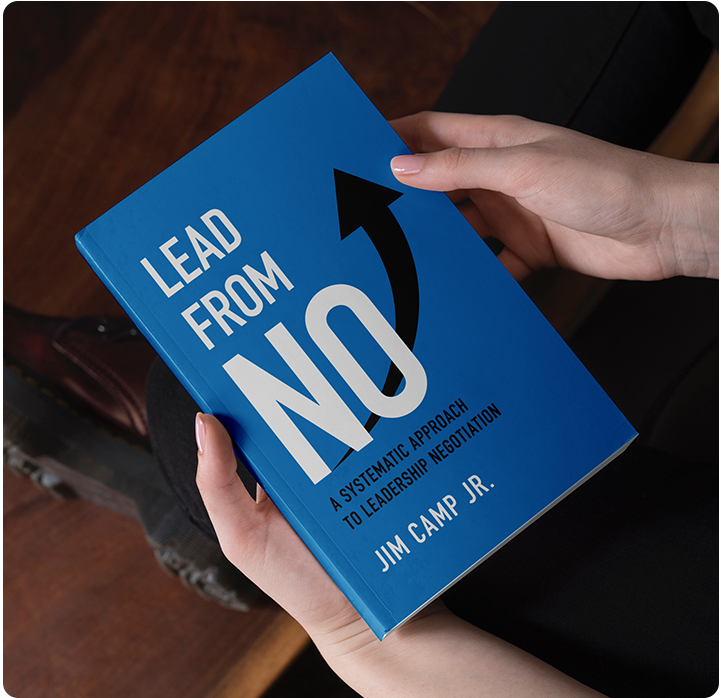
Camp, who recently retired as a Major General in the United States Air Force, is also the author of “Lead From No,” a manual on staying calm and reaching agreements in the heaviest situations. The book redefines the word “no” in the negotiation process, shifting it from a rejection to a crucial decision point that can lead to better agreements and emotional control.
In most cases, fear gets in the way of salary negotiations. Once negotiators understand the more effective steps to take, however, they can enter the process with calm and confidence.
Take time beforehand to get the right information
Negotiating optimally requires having the right information. When it comes to salary negotiations, that means doing some research on industry salary benchmarks as well as the specific company’s financial wherewithal.
Determining how to negotiate on salary also involves developing an understanding of how valuable a particular skill set is to the industry and the individual company. Applicants should find out if what they offer — degrees, certifications, experience, etc. — is in high demand in their industry or lacking in the company posting the position.
“Before you have any discussions around compensation with your new employer, fight the urge to make assumptions about what you’re worth and what they’re willing to pay,” Camp advises. “If you’re aware of the proposed salary range, do some research on how it compares in the industry.”
One of the primary goals of preparing for negotiations is determining what is an acceptable outcome. Defining your target goal can provide the determination needed to engage confidently in the process. It can also help to keep emotions in check.
“You should get aligned with exactly what you want rather than what you’re willing to accept,” Camp says. “Unfortunately for the untrained negotiator, there’s a natural tendency to cave in and settle for less when the other side expresses dissatisfaction with what you want.”
Don’t see “no” as the end of negotiations
For the untrained negotiator, a “no” is often received as the final decision. Experts know, however, that hearing “no” from the other side provides an opportunity to uncover problems and eliminate assumptions. It is often the key that unlocks the real issues impacting the negotiation process.
“Prepare yourself to say and hear the word ‘no,’” Camp advises. “Don’t panic when you hear it. It’s a decision, but one that can be changed. Perhaps your future employer is limited by company policy? Maybe the person you’re negotiating with doesn’t have the authority to pay what you’re asking? They might even be bluffing to see how you react. A ‘no’ gives you an opportunity to ask questions that uncover the real problems blocking you from your goal.”
Camp explains that negotiators should follow a “no” with pointed questions and expert listening. Questions like, “How far apart are we on this?” or “Where do we go from here?” can keep the negotiations alive even after one side has rejected the other’s requests. For the party that has been rejected, developing an understanding of what is behind the “no” is the key to knowing how to negotiate pay. It reveals how to pivot in a way that can lead to a more desirable outcome.
As the stats show, negotiating for salary is often effective, provided job seekers can find the courage to engage in the process. By taking the time to define what is reasonable and identify their own needs, applicants can be well prepared to chart a course that allows them to achieve their salary goals.
“Applying a systematic approach to the salary negotiation process leads to better focus and emotional control,” Camp says. “Adopting a system for preparation and execution will keep you centered in the company’s world, helping you uncover hurdles and understand their decision-making process.”